Japanese family-run businesses may pass on leadership not only to biological children: through the practice of mukyōshi, an adult man who marries the owners’ daughter is legally adopted as a son. He usually takes the family surname and is granted the legal status of a child of the family, which helps to preserve the company’s succession and the family line.
Briefly about the main points
- Mukoyoshi — the legal adoption of a man married to a daughter of the family.
- An adopted son-in-law usually takes the surname of his adoptive parents.
- Around one-tenth of the transfers of control took place in favour of non-family heirs.
- Osamu Suzuki was the fourth consecutive adopted head of Suzuki.
- In 2025, 62.6% Japanese companies had no successor.
Marriage is associated with becoming a legal member of a family
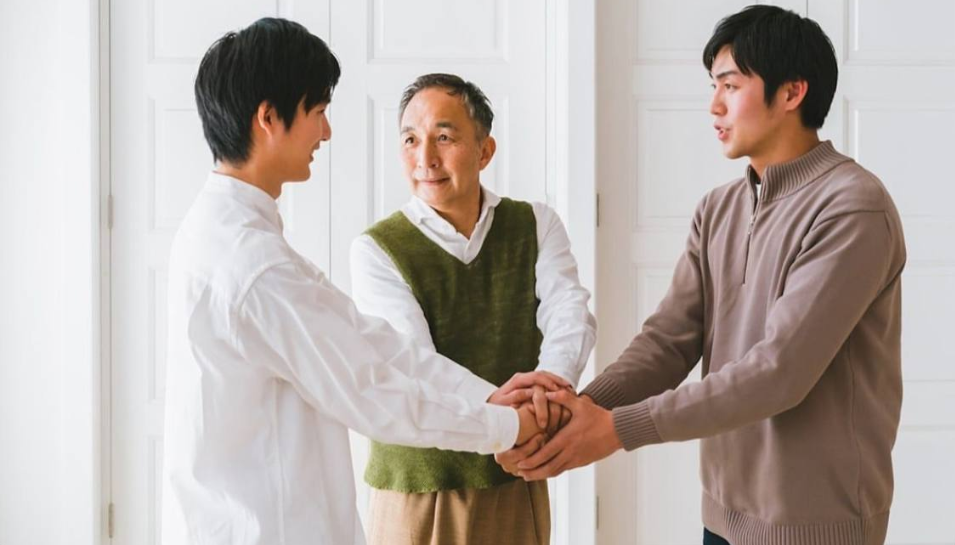
The term «mukoyōshi» literally means ‘adopted son-in-law’. According to this model A man marries the family’s daughter, and her parents arrange for him to be adopted. This is not merely a matter of changing one’s surname upon marriage: under Japanese civil law, an adopted person is granted the legal status of a child of their adoptive parents.
Historically, this arrangement helped to preserve the family name, property and family business when a family had no son capable of becoming the heir. Mukoyoshi was just one option for the adoption of adults: business-minded families could also recruit other promising candidates.
The selection of a successor may have been based on ability
For company owners, such a system offered the opportunity not to limit the search for a successor to their own biological children. Studies of Japanese family businesses cite promising managers and graduates of prestigious universities as potential successors.
Roughly one in ten of the transfers of control examined involved a son-in-law, an adopted son or an adopted son-in-law. Companies led by non-family successors performed strongly; the researchers suggested that one possible explanation was the ability to select a candidate based on their abilities rather than simply on kinship.
Suzuki was led by several generations of adopted heirs
Osamu Suzuki joined the family Suzuki as an adopted son-in-law, and in 1978 he became president of the automotive group. According to a study of Japanese family-run companies, he was the fourth consecutive adopted heir to head Suzuki Motor.
Under his leadership, Suzuki significantly expanded its international business, notably focusing on India and Maruti Suzuki. When Suzuki stepped down as chairman in 2021, he was succeeded by his biological son, Toshihiro Suzuki. INSEAD describes this as the first instance since 1957 of the top position passing directly to a blood relative of the family.
The issue of succession remains a pressing concern for companies
In traditional Japanese family businesses, the priority was often the continuity of the family and the business, rather than simply passing on wealth to the children. If the sons were unwilling or unable to take over the company, an adopted successor would keep the business within the family.
According to a study by Tokyo Shoko Research, published in 2025, 62.6% of Japanese companies did not have a designated successor. At the same time, amongst those companies that had already selected a candidate, the majority planned to hand over the business to a family member.