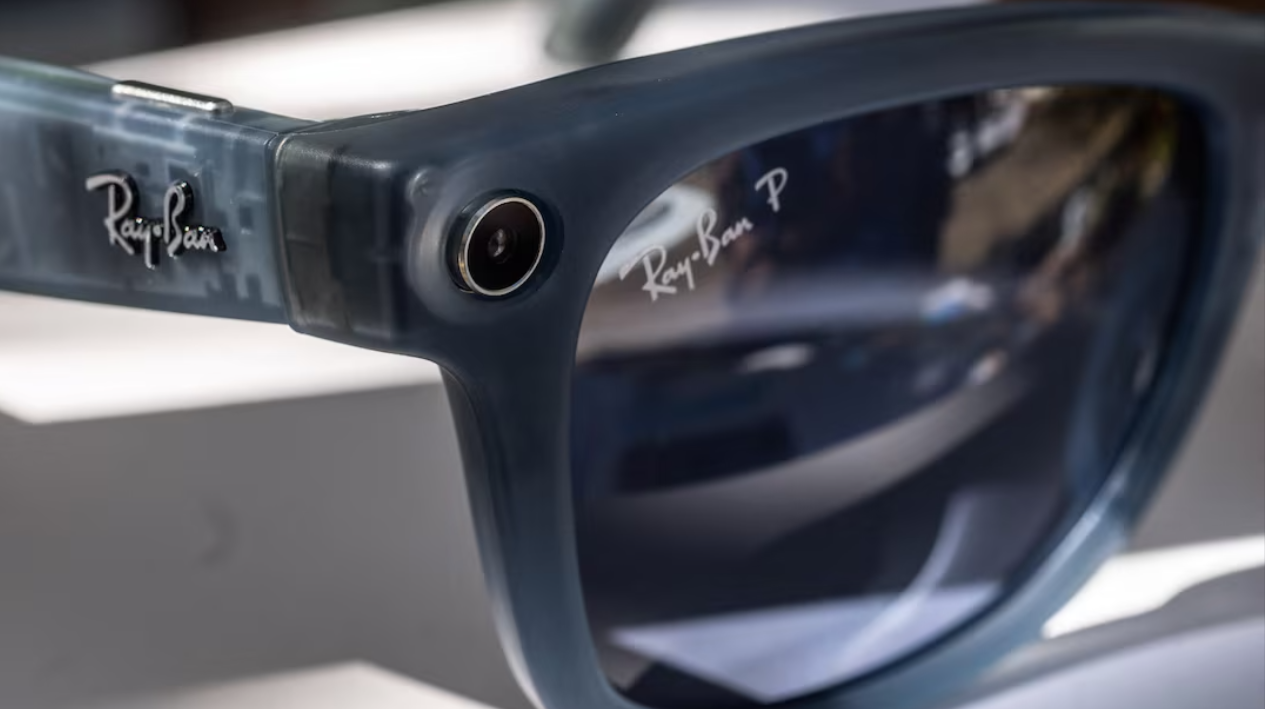
The French public prosecutor’s office has launched a criminal investigation into the possible use of smart glasses for sexual harassment and the covert filming of people without their consent. This follows complaints about a video format popular on social media, in which owners of glasses fitted with built-in cameras covertly film women in the street and then post the footage online.
- A criminal investigation has been launched in Paris.
- This concerns covert filming using smart glasses.
- The posts were shared on social media.
- The French regulator is receiving complaints from companies.
- Various countries are already restricting the use of such devices.
The Paris Public Prosecutor’s Office is investigating the use of smart glasses
The Paris Public Prosecutor’s Office has confirmed that it has opened at least one criminal investigation following complaints of sexual harassment involving the use of smart glasses. Law enforcement agencies are investigating social media trend, when men use glasses with built-in cameras to secretly filming women in public places, and subsequently upload such videos online. The prosecution has not specified the exact make of the devices involved in the case.
Two weeks ago, specialists from the cybercrime unit also tested similar devices to gain a better understanding of the types of offences for which they might be used.
Meta glasses remain the most popular
There are various models available on the market smart glasses, but devices account for the largest share Meta, created in collaboration with EssilorLuxottica. Their share of the global market is approximately 76%.
These glasses feature a compact built-in camera and can take photos and videos without the need to take out a smartphone. It is precisely the discreet nature of the recording process that is increasingly raising concerns amongst regulators and human rights campaigners.
Last year, around 7 million such devices, whilst in 2026, EssilorLuxottica reports further rapid growth in demand.
French companies are asking whether smart glasses can be banned
The French data protection regulator CNIL He reported that he had already received several complaints regarding the use of smart glasses in the workplace.
The number of such enquiries has not yet exceeded ten, but an increasing number of companies are approaching the regulator with questions about, Do they have the right to completely ban the use of devices with cameras at work?.
The CNIL emphasises that smart glasses pose a new problem: someone standing nearby may not even realise they are being recorded. On many models, a small indicator light comes on whilst recording, but human rights campaigners consider this insufficient.
A camera icon does not imply consent to be filmed
French digital security experts point out that the mere fact that a light signal appears on the frame does not mean that the person has consented to the recording or subsequent publication of the video. Of particular concern is the possibility of the video being quickly uploaded to social media, where it could be viewed by thousands or even millions of people.
In France, filming a person in a private place without their consent may result in up to one year’s imprisonment and a fine of up to €45,000. However, it is more difficult to apply such regulations when it comes to public places and the instantaneous dissemination of material via social media.
Smart glasses are starting to be restricted in other countries
The problem extends far beyond France.
In the UK, some cinemas have already has banned or restricted the use of smart glasses due to the risk of films being recorded illegally.
In Germany, a consumer protection organisation has lodged a criminal complaint against Meta and other companies that sell such devices, citing a possible breach of privacy legislation.
Australia is also considering the possibility of ban glasses fitted with cameras in government buildings due to privacy and security risks.
Meta announces built-in privacy protections
У Meta They stated that privacy concerns had been taken into account right from the development stage of the AI glasses. The company also promised to continue strengthening its security measures as the devices are updated with new features.
EssilorLuxottica declined to comment on the situation. At the same time, human rights organisations insist that responsibility should not be shifted onto people who may be filmed without their knowledge. According to them, Manufacturers must minimise the potential for covert surveillance and abuse right from the design stage of their devices.