From August 2026, NATO will be implementing a broader air defence model in the Baltic region, rather than merely routine air patrols. This is complemented by the Canadian multinational brigade in Latvia and the development of Latvia’s «drone wall» along its eastern border.
Briefly about the main points
- NATO’s new air defence regime in the Baltic states has been in force since August 2026.
- There are approximately 2,000 Canadian military personnel in Latvia.
- Canada has extended Operation REASSURANCE until 2031.
- Latvia is deploying radar systems and anti-drone measures along its eastern border.
From patrols to broader air defence
The decision on a new model for the defence of the airspace of Lithuania, Latvia and Estonia was adopted at the NATO summit in July 2026 and came into force in August. Previously, the mission Baltic Air Policing mainly involved the detection, identification and tracking of aircraft near the Alliance’s borders.
According to the Lithuanian Armed Forces, the updated approach provides greater flexibility in air defence responses. It encompasses faster decision-making, coordination with NATO’s Allied Air Command (AIRCOM) and a review of the rules of engagement.
Deputy Commander of AIRCOM, Lieutenant General Guillaume Thomas stated that the changes are intended to make the response to potential threats more rapid and flexible. The Lithuanian side also links the new regime to the need to detect small and low-flying targets more effectively and to respond to missile threats.
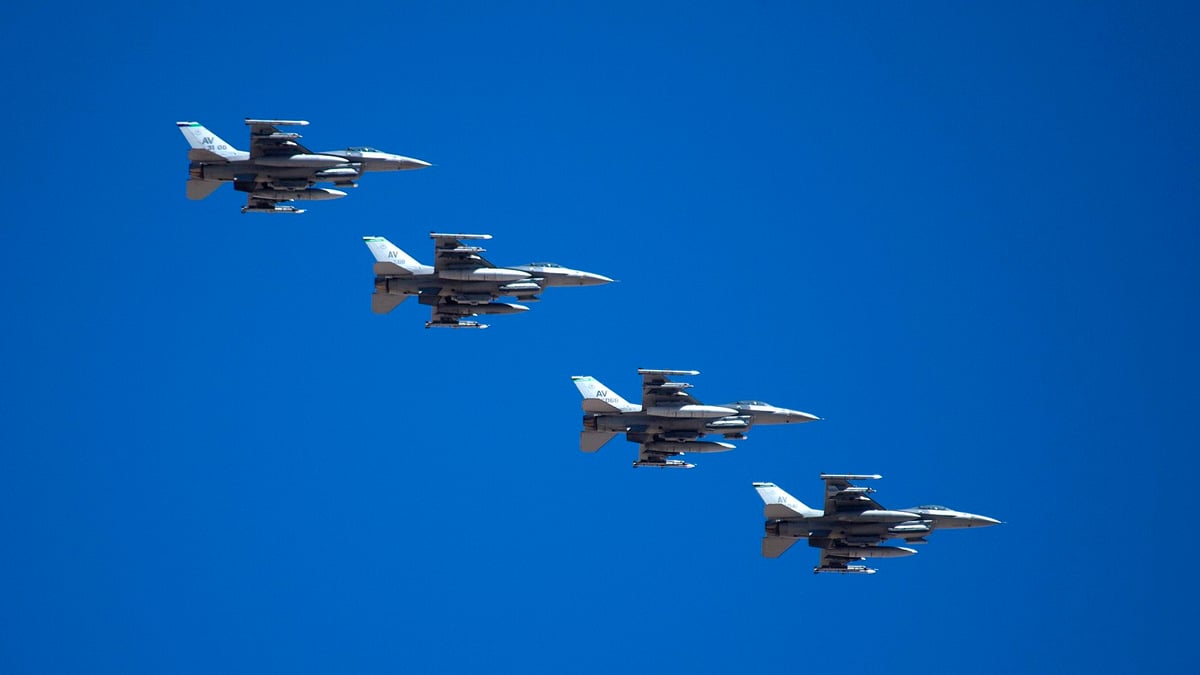
Fighter jets from three countries demonstrated their ability to operate together
Pros. data According to CBC News, Italian Eurofighters, Spanish F-18s and Turkish fighter jets took part in a demonstration flight over the region.
This incident illustrates a more robust approach to defending the Baltic airspace, but does not constitute a separate decision to launch a new mission. The transition to a broader air defence model took place earlier, in August.
Canada has a brigade stationed in Latvia
Canada is the lead nation for a NATO multinational brigade in Latvia — a country on the Alliance’s eastern flank, bordering Russia and Belarus. According to the Canadian Ministry of National Defence, there are approximately 2,000 Canadian military personnel in Latvia, and the brigade is based at Camp Adazi.
It comprises mechanised infantry, artillery, combat and logistical support units, and electronic warfare elements. The units conduct joint exercises and practise their response to a potential attack.
Canada has also extended Operation REASSURANCE until 2031. However, the figure of over 3,000 Canadian military personnel refers to the total number involved in this operation over the course of the year, rather than the size of the contingent stationed in Latvia.
Latvia is developing defences against drones
Latvia’s «drone wall» on the eastern border is becoming a separate element of its defence. The Latvian Ministry of Defence has announced the introduction of acoustic drone detection along the entire border, the integration of radar systems and the development of counter-UAV measures.
The Latvian Ministry of Defence has also confirmed funding for the procurement of the Blaze autonomous interceptor drone from Origin Robotics. According to the official description, it is capable of autonomously approaching, identifying, tracking and destroying a target.
A drone defence system must combine radars, interceptors and centralised control. Some military planners are more concerned about the risk of limited provocations and Russia’s hybrid actions, … rather than the deliberate launch of a full-scale war against NATO in the near future; this is not the Alliance’s official assessment.
The combination of fighter aircraft, ground forces, radar systems and anti-drone measures is intended to strengthen NATO’s eastern flank’s readiness to face various types of threats.