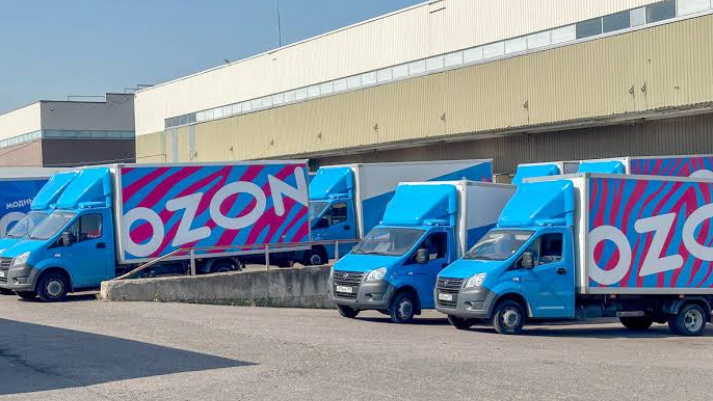
The Russian marketplace Ozon has restricted the placement of new orders to the temporarily occupied territories of Crimea and Sevastopol. Users have reported that collection points have disappeared from the list of addresses, whilst previously placed orders remain in transit. These disruptions coincided with the relocation of high-value goods from Ozon’s warehouses following attacks on Wildberries’ logistics facilities.
Briefly about the main points
- New Ozon orders to Crimea and Sevastopol were temporarily not being processed.
- The service’s bot described an address in Sevastopol as being abroad.
- Previously placed orders are still being delivered, but the delivery times have changed in some cases.
- Ozon has begun transporting high-value equipment to collection points.
- Since July, the marketplace has changed its rules on compensation for sellers.
Collection points were disappearing from the list of addresses
When selecting a collection point, the website and app displayed a message stating that delivery was not possible and asked customers to specify a different address. Similar glitches were reported by users in Simferopol, Dzhankoy and other towns on the peninsula.
In the video that has been released, a resident of Sevastopol contacted the service’s automated support. The bot replied that Ozon does not deliver goods outside Russia, and international delivery is only available to certain countries. Consequently, the system effectively treated the address in occupied Sevastopol as an overseas address.
The company continued to deliver orders placed before the problems arose, although the delivery dates were changed for some customers. By the evening, some Crimean collection points were once again showing up in the app.
High-value electronic goods have begun to be removed from warehouses
Ozon has informed some of its sellers that high-value goods are being moved from warehouses to the nearest collection points. According to Russian media reports, these are mainly household appliances and electronics.
The process began on the night of 1 August, and the marketplace covered the costs. DW reports that the company is redistributing high-value goods following attacks on Wildberries’ warehouses.
Ozon has not officially cited the attack as the reason for the change in its logistics arrangements, and company representatives have declined to comment in detail on the new operating procedures.
The attacks on Wildberries have changed the landscape for marketplaces
Since mid-July, drones have attacked around 20 warehouses Wildberries in regions of Russia and in the temporarily occupied territories. These include sites in the Moscow, Tambov, Samara, Vladimir and Leningrad regions.
Some of the logistics centres were destroyed or seriously damaged by fires. Russian experts estimated the potential losses for retailers at hundreds of billions of roubles. Tatyana Kim, the founder of Wildberries, stated that the company is reorganising its logistics network to continue deliveries.
The Ukrainian side claimed that the marketplace’s warehouses were being used to supply sanctioned components for the production of drones and navigation equipment. There have been no confirmed strikes on Ozon’s facilities, but its share price fell in July following the first large-scale attacks on a competitor.
The new terms and conditions have alleviated some of the risks for sellers on Ozon
From 1 July, Ozon has exempted itself from the obligation to compensate sellers for the loss of or damage to goods if this was caused by hostilities, shelling, drone attacks or a state of emergency. Wildberries subsequently introduced similar terms and conditions.
These rules gained widespread attention following the strikes on 18 July against major logistics centres in the Tambov and Moscow regions. The change in conditions for sellers, coupled with the dispersal of goods, may mean a review of Ozon’s logistics model, but the company has not confirmed a direct link between the threat of attacks and the restrictions on the occupied peninsula.