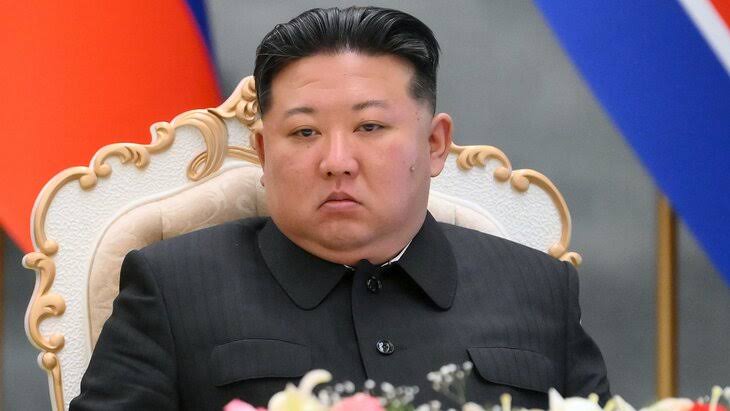
Lee Il-gyu, a former North Korean diplomat who, by his own account, met Kim Jong-un seven times, has described the rules governing contact with the country’s leader and the consequences of incurring his displeasure. In an interview highlighted by the Express, he spoke of an interpreter who was dismissed after interfering in a conversation with the North Korean leader.
Briefly about the main points
- Lee Il-gyu stated that he had met Kim Jong-un seven times.
- The interpreter was removed from his post working alongside the leader after interrupting his conversation.
- According to the diplomat, the man escaped execution thanks to a relative who worked in the Organisation and Guidance Department.
- Those selected to be leaders undergo a month-long training programme.
- No one is allowed to speak first, and the secretaries record Kim Jong-un’s words and actions.
The translator was removed from his post and sent to «criticism sessions»
The incident, according to Lee Il-gyu, happened to a translator who was about 60 years old. The man interrupted the conversation just as he was speaking Kim Jong-un. The leader of the DPRK called him brazen, after which the interpreter was forbidden from approaching the country’s leader in future.
Those present regarded the situation as so serious that they feared the man might not survive, according to the former diplomat. He said that the interpreter was saved from execution by a relative who worked in the Organisation and Guidance Department.
After that, the translator underwent so-called ‘criticism sessions’ for a week. As part of this procedure, the individual acknowledges their mistakes in writing and analyses their own behaviour. Lee Il-gyu believes that a single critical remark from Kim Jong-un is capable of radically altering a person’s fate.
A month of preparation and a ban on speaking first
According to Lee Il-gyu, people who are allowed to meet with Kim Jong-un, undergo a month-long specialised training course. They are taught how to answer questions and avoid making gestures that might be interpreted as disrespectful.
When interacting with the leader, you must not fidget, sway, make unnecessary movements or stare at the leader’s face. If the leader is approaching, you should calmly make way for them without fuss or panic.
You must not speak first: you should only answer questions, briefly and precisely, without pretending to know what you do not actually know. The former diplomat also said that the leader’s secretaries record his words and actions, explaining that this is part of chronicling the history of the revolution.
Meetings during the Cuban President’s visit to Pyongyang
Lee Il-gyu co-ordinated the Cuban President’s visit Miguel Díaz-Canel in Pyongyang in November 2018. The two-day programme included talks with Kim Jong-un, a banquet at the Mokran Complex and a performance at the May Day Stadium.
The diplomat mainly answered the North Korean leader’s follow-up questions: he was interested in the aeroplanes on which the Cuban delegation had arrived, their dietary preferences and Cuba’s population. Lee Il-gyu recalls the first meeting in the VIP lounge at the airport as being very tense due to the fear of making a professional mistake.
He said that he had observed ordinary human reactions in Kim Jong-un — he was able to laugh and show interest in those he was speaking to. At the same time, according to the diplomat’s assessment, the absolute power concentrated in the leader’s hands makes his behaviour dangerous to those around him, and there is no institution in North Korea capable of holding him to account.