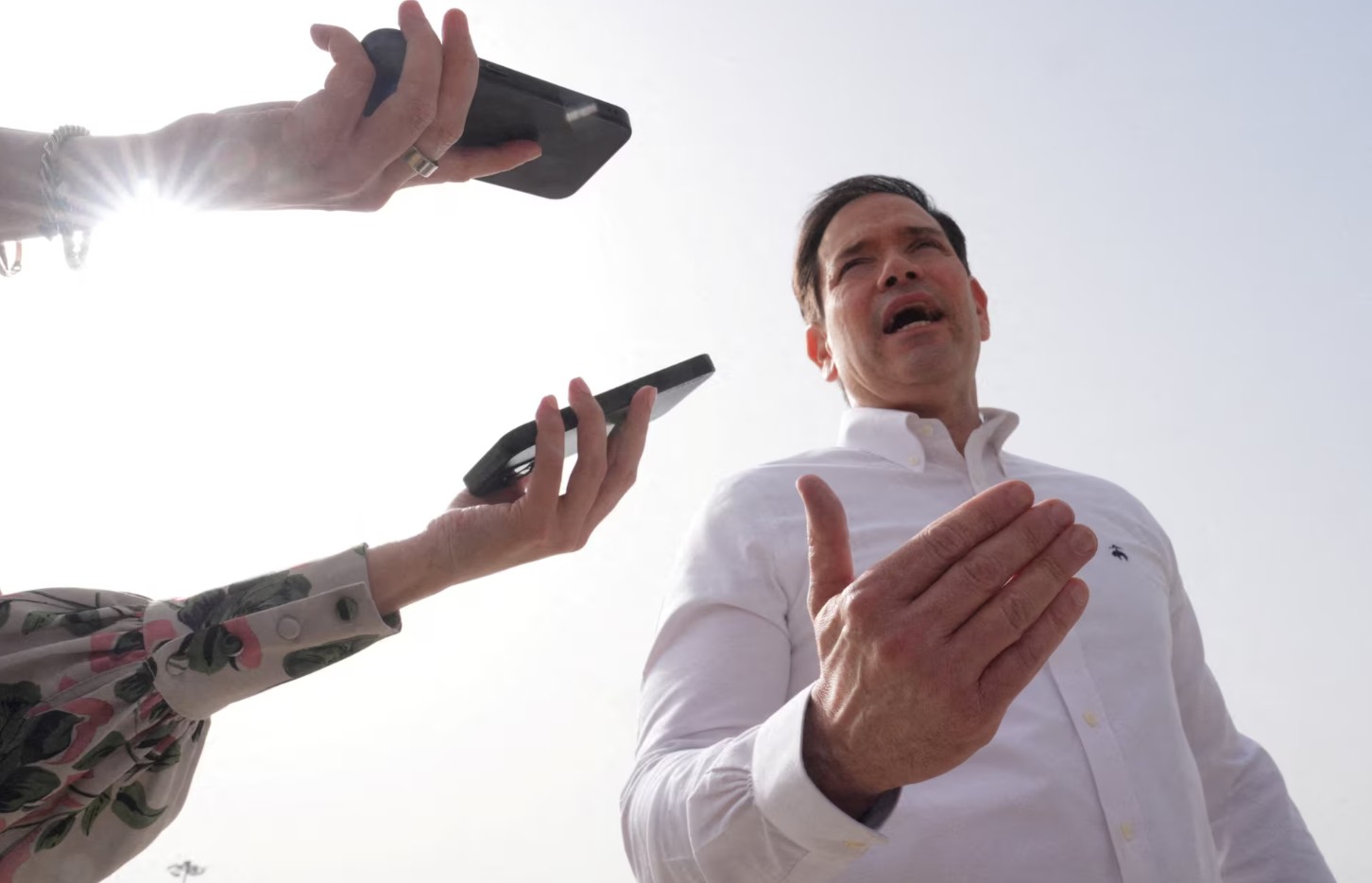
US Secretary of State Marco Rubio said that Washington will either make a good deal with Iran or find another way to resolve the conflict. The US is ready to give diplomacy a chance, but does not rule out alternative options.
Basic context
Marco Rubio said that the US is seeking a «good deal» with Iran, but if the talks fail, the country will take a different path. He stressed that diplomacy would be given every opportunity to succeed before looking for alternatives.
Rubio also spoke about a «solid proposal» to opening of the Strait of Hormuz and the start of meaningful, time-bound negotiations on Iran's nuclear programme. President Donald Trump added that the blockade of Iranian vessels in the Strait will remain in force until the agreement is concluded, certified and signed.
Current status of negotiations
President Trump says the US and Iran have «largely agreed» memorandum on an understanding that will allow the Strait of Hormuz to be reopened. Before the war, this strategic waterway provided a fifth of the world's oil and liquefied gas supplies.
Despite this, the parties still have differences on Iran's nuclear programme, The conflict in Lebanon involving the Iranian-backed Hezbollah movement, as well as Tehran's demands to lift sanctions and unblock frozen funds worth tens of billions of dollars.
Impact on the region and the global economy
The news of the impending deal caused oil prices to fall by 6% to a two-week low. This reflects the growing optimism among investors and markets that tensions in the region may be easing.
At the same time, Iranian media associated with the Revolutionary Guard claim that the United States is obstructing the resolution of key points of the agreement, in particular, the release of frozen funds. This situation points to the difficulty of completing the negotiations and the need for careful coordination of details.
Prospects and possible scenarios
Rubio stressed that the US is not in a hurry to conclude a deal and wants to «do the right thing». This means that negotiations may take longer, and in case of failure, Washington will be ready to use other methods of influence on Iran.
This position reflects a balance between the desire for diplomacy and the readiness for alternative actions, which can have a significant impact on further developments in the region and global security policy.