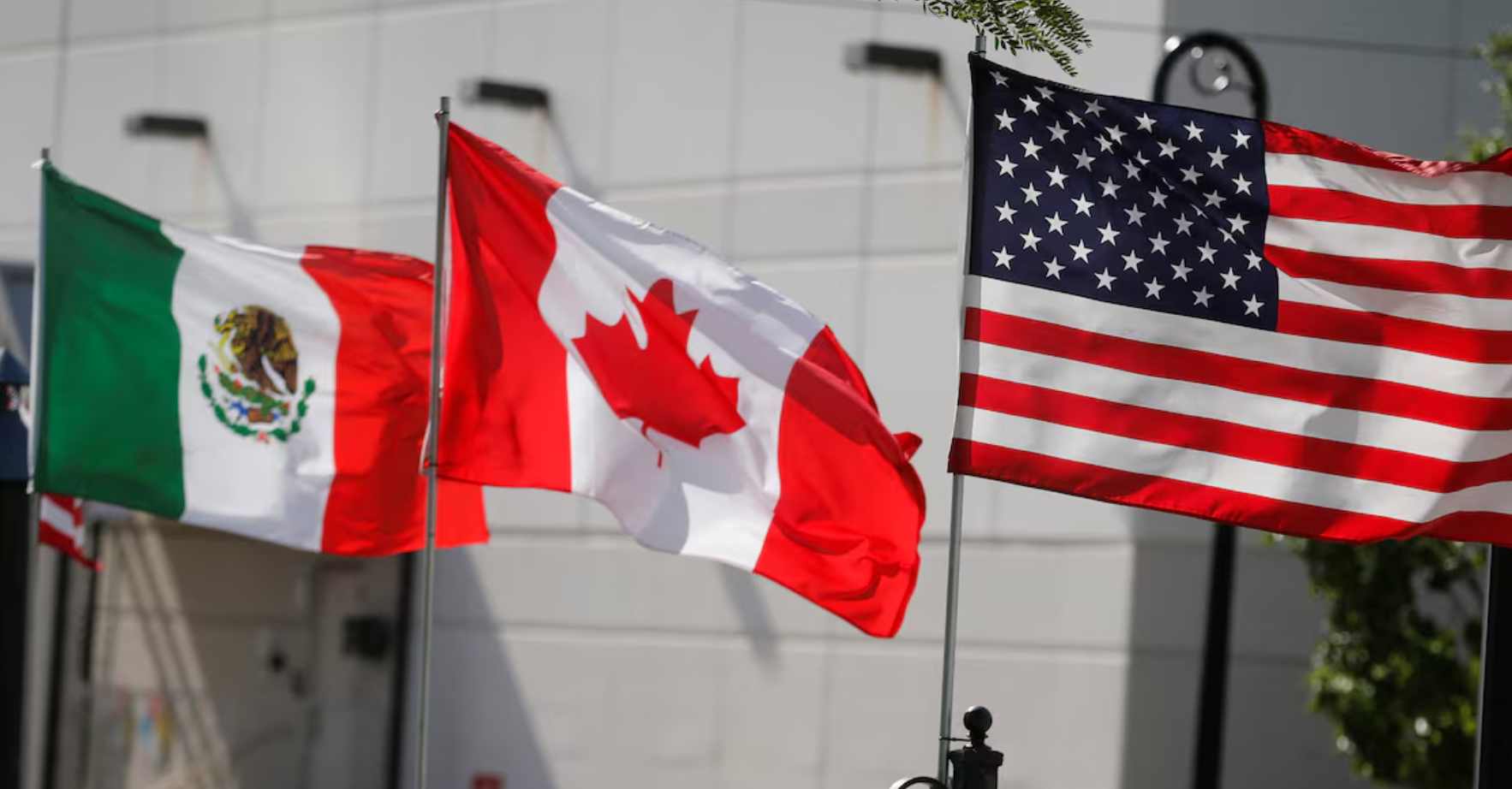
The administration of US President Donald Trump has announced its intention not to extend the United States–Mexico–Canada Agreement (USMCA) in its current form. This decision triggers a review process that could lead to the agreement being terminated in 2036.
- The US has no plans to extend the USMCA in its current form.
- A six-year process to review the agreement is beginning.
- The agreement may lapse on 1 July 2036 unless a compromise is reached.
- Washington is calling for stricter regulations for the automotive industry.
- The US is negotiating only with Mexico; Canada is not yet involved.
What does the US decision mean?
The USMCA, which came into force in 2020, replacing the North American Free Trade Agreement (NAFTA), contains a so-called «sunset clause». This means that every six years, the signatory countries must confirm their intention to extend the agreement for a further 16 years. If at least one of the parties refuses to do so, a ten-year period of annual negotiations and reviews begins. If no new agreement is reached, the treaty will automatically expire on 1 July 2036.
At the same time, the US is not withdrawing from the agreement at this stage — the USMCA remains in force until the negotiation process is concluded.
Why does the Trump administration want to change the agreement?
On his return to the White House Donald Trump began to criticise the USMCA, despite the fact that it was his first administration that had negotiated the agreement. The main reason is the growing US trade deficit with Mexico and the relocation of American companies’ production overseas. Washington is seeking to close loopholes that allow tariffs to be circumvented when Chinese components enter the US market via Mexico or Canada. That is why the US is proposing to significantly tighten the rules on product origin.
New requirements for motor vehicles
One of the most contentious issues in the negotiations is the automotive industry. According to data According to sources, the US side is proposing that every car manufactured in North America should contain at least 50% of US-sourced components. The total proportion of parts manufactured in the US, Canada and Mexico must rise to approximately 82% for vehicles to qualify for USMCA trade preferences. Furthermore, even vehicles assembled in Canada or Mexico may continue to be subject to certain US tariffs.
The US is negotiating only with Mexico
At present, Washington is conducting formal negotiations only with Mexico. The next round of consultations is scheduled for the second half of July. Canada is not yet taking part in formal negotiations due to numerous trade disputes with the US, including restrictions on access to the Canadian dairy market and other bilateral economic disagreements. Despite this, working-level consultations are continuing between US and Canadian officials.