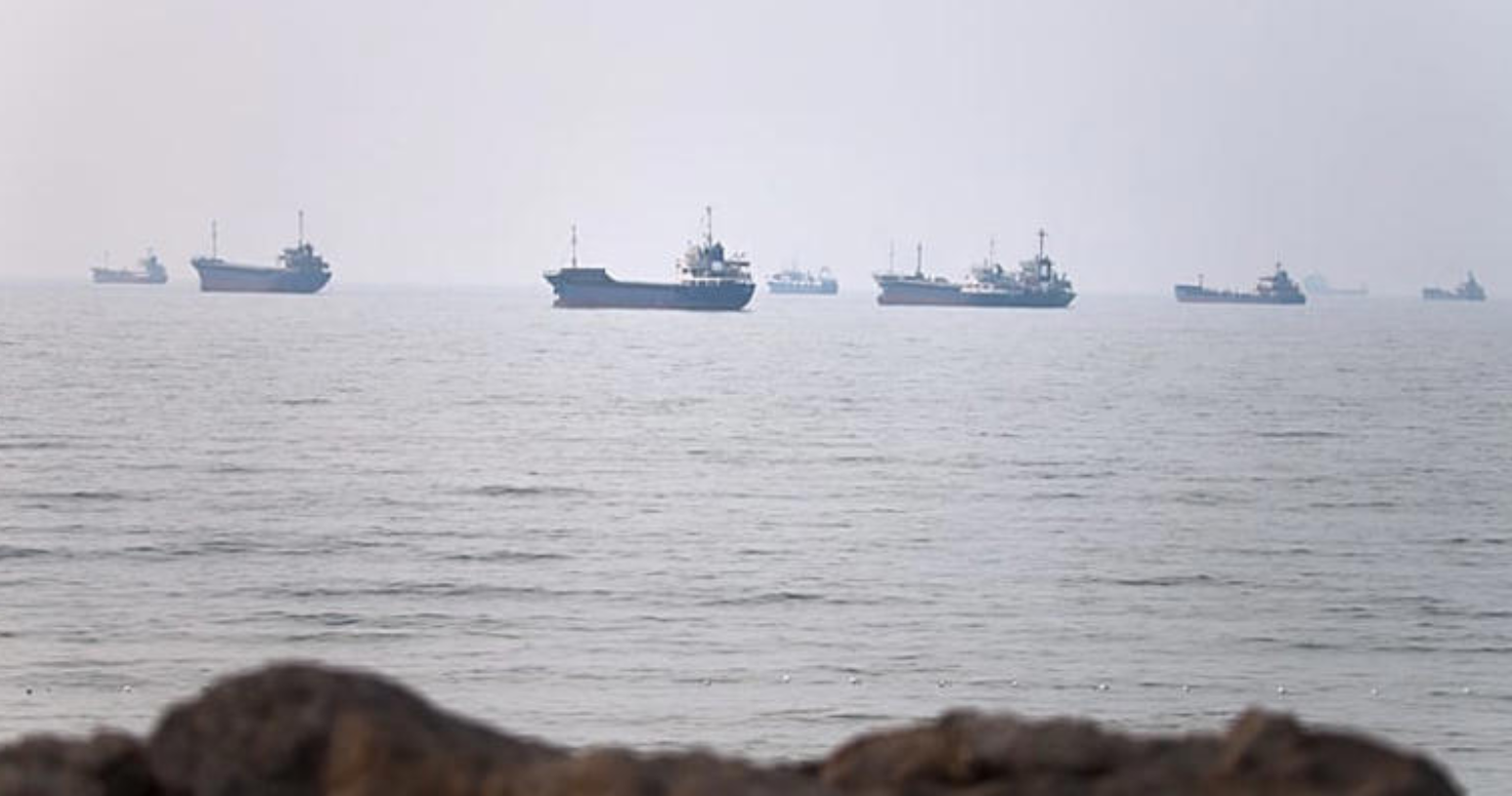
A tanker in the Strait of Hormuz, off the coast of Oman, was struck by an unknown projectile, the UK Maritime Trade Operations (UKMTO) reported on 21 July. According to the UKMTO, the crew had abandoned the vessel and were in a lifeboat. The incident occurred against the backdrop of the tenth consecutive night of US strikes on targets in Iran and reciprocal statements by both sides regarding attacks in the region.
Briefly about the main points
- The UKMTO reported that an unknown projectile had struck a tanker off the coast of Oman.
- The crew left the ship and boarded a lifeboat.
- The KVI announced that two tankers had been halted following explosions and fires.
- The US has announced its tenth consecutive night of strikes against Iranian targets.
- Ship traffic through the strait has almost come to a standstill, whilst oil prices have risen.
The crew were evacuated after the hit
The UKMTO received a report that a tanker had been struck by an unknown projectile approximately eight nautical miles north-east of Lima, Oman. The agency noted that, following the incident, the crew had abandoned the vessel and were in a lifeboat.
The available reports contained no information regarding who carried out the attack, the name of the tanker, any possible casualties or the vessel’s subsequent condition. There is therefore no basis for linking this incident to any specific party to the conflict.
Statements by Iran and the response from regional states
The Islamic Revolutionary Guard Corps (IRGC) stated that it had intercepted two «disobedient» oil tankers which, according to the IRGC, were attempting to take the dangerous southern route through the strait. The IRGC also reported explosions and fires on these vessels. It is not possible to determine whether this refers to the tanker reported by the UKMTO.
The Iranian side also stated that attacks on US military installations in Bahrain and Kuwait, specifically targeting air defence systems, radars and satellite reception systems. Kuwait reported that its air defence systems had repelled the incoming attacks. Bahrain reported an attack by Iranian drones on air traffic control systems, which, according to the country’s Foreign Ministry, posed a threat to civil aviation.
The Jordanian Armed Forces reported that they had shot down three Iranian missiles on the evening of 20 July. According to their reports, there was no damage or loss of life.
The tenth night of American air strikes
US Central Command has stated that American forces have completed their tenth consecutive night of strikes against Iran. According to reports CENTCOM, the targets were military command centres, naval assets, missile and drone launch sites, and air defence systems.
Officials in Washington described the operation as an attempt to weaken Tehran’s ability to attack commercial vessels passing through the Strait of Hormuz. CENTCOM did not provide an assessment of the damage caused or any details on how the strikes had affected Iranian capabilities.
The Pentagon reported that, following the resumption of US strikes on 7 July, nearly 100 American service personnel were wounded; 96% of them have already returned to duty. On 19 July, the Iranian authorities reported at least 50 deaths and 517 injuries as a result of the latest US strikes.
Pressure on the oil market and diplomatic contacts
According to the AP, shipping through the Strait of Hormuz has largely come to a standstill. In peacetime, around one-fifth of global trade in oil and liquefied natural gas passed through this route. The reduction in shipping traffic has already had an impact on the market: Brent rose by 3.2% to $90.95 per barrel, whilst US crude rose by 2.8% to $84.04.
Meanwhile, Pakistan is continuing its diplomatic engagements. Iran’s Minister of the Interior, Eskandar Momeni, arrived in Islamabad on 20 July for talks with Pakistan’s Prime Minister Shehbaz Sharif and other officials. The AP reported that Pakistan is attempting to revive the interim agreement reached last month, although no new ceasefire mechanism has yet been announced.
On 19 July, US Secretary of State Marco Rubio stated that Washington was prepared to enter into negotiations, provided the agreement was «realistic» and one that Iran was prepared to abide by. This signals the possibility of dialogue, but does not indicate the start of formal negotiations.