Turkey plans to increase defence spending by 229% between 2027 and 2029 and reduce its reliance on imported weapons and technology. At the same time, Ankara is developing a naval version of the Çelik Kubbe («Steel Dome») integrated air defence and missile defence system for the Navy: ships are already being fitted with close-in defence systems, and medium- and long-range missiles are to be integrated at a later stage.
Briefly about the main points
- Turkey’s defence budget is set to increase by 2,29% over three years.
- The government wants to strengthen its own arms production and supply chains.
- Çelik Kubbe integrates radars, electronic warfare systems, command centres and missiles of various ranges.
- The GÖKDENİZ ship-borne system is already being installed on modern Turkish frigates.
- MİDLAS is to ensure the deployment of the HİSAR and the next-generation SİPER missiles.
The funding will be channelled towards technological self-sufficiency
The government presented the new Medium-Term Programme in early September. The Vice-President Cevdet Yilmaz identified this as one of the key areas for the development of a defence industry capable of independently developing critical technologies and meeting the country’s needs.
The programme aims to reduce dependence on foreign components and technologies, as well as to strengthen domestic supply chains. The Turkish defence industry already manufactures drones, missiles, frigates, radars and multi-layered air defence systems.
In 2026, ASELSAN secured major contracts to expand the mass production of «Steel Dome» components. One of these contracts was valued at approximately 1.68 billion dollars.
Çelik Kubbe integrates air defence and missile defence systems into a single network
Çelik Kubbe is not an anti-aircraft system of the sort Patriot. This is a network architecture designed to integrate radars, electronic warfare systems, command centres and missiles of various ranges into a single system.
The system is designed to counter unmanned aerial vehicles, aeroplanes and helicopters, cruise missiles, precision-guided munitions and certain ballistic threats. The lower tier is comprised of KORKUT and other close-range systems, the middle tier consists of the HİSAR family of systems, and the long-range tier is provided by SİPER.
The navy is already receiving the close-in layer of its naval defence system
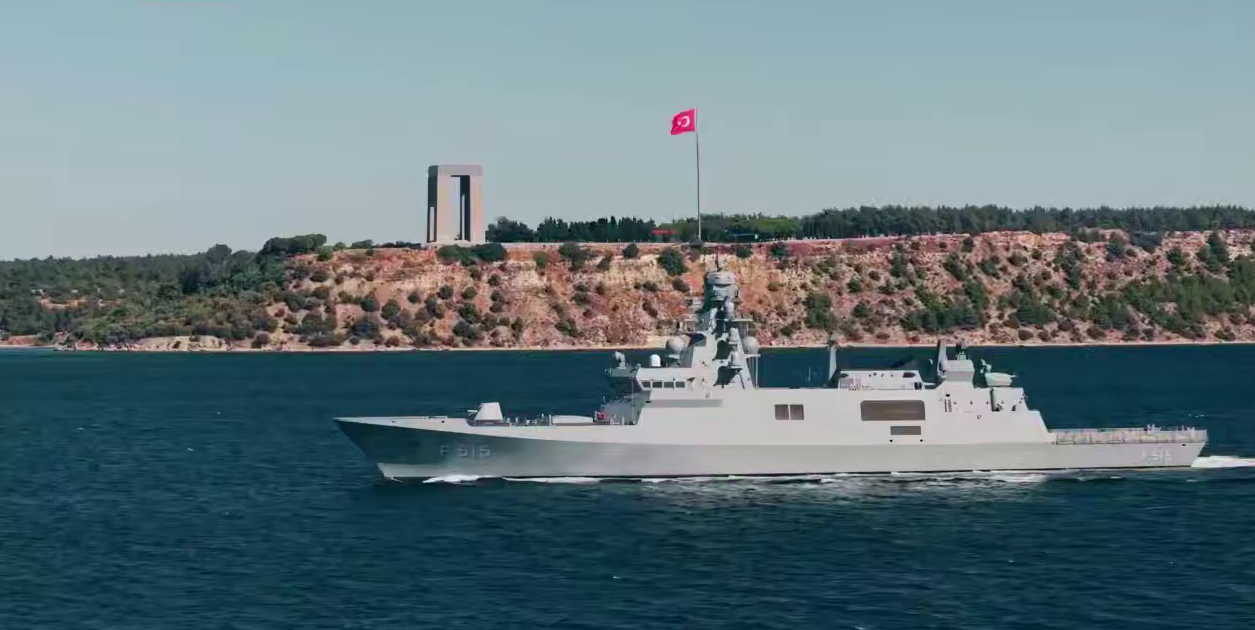
According to TRT Haber, the Turkish Navy has effectively begun deploying the first tier of the maritime «Iron Dome» – a system covering very short and short ranges. One of the key components is the 35-mm GÖKDENİZ, which is already being fitted to modern Turkish frigates.
The system is designed to engage anti-ship missiles, unmanned aerial vehicles and other targets that have breached the outer defences. GÖKSUR and LEVENT are intended to intercept aerial targets before they enter the operational range of the artillery systems.
At the same time, Turkey is developing TOLGA to counter cheap, mass-produced low-altitude threats, primarily UAVs and loitering munitions. As a result, the vessel is set to be equipped with several levels of protection — ranging from close-in interception to long-range anti-aircraft missiles.
MİDLAS is set to pave the way for ships to access SİPER missiles
The Turkish MİDLAS vertical launch system forms the basis of the naval missile architecture. It is already in use on the lead ship of the Istanbul-class frigates, equipped with HİSAR-D RF missiles, and in July 2026, the TCG Istanbul publicly launched a HİSAR-D naval missile.
The second ship in the series, the TCG Izmir, has been fitted with an enlarged compartment for vertical launch systems. Naval News estimates that this configuration will potentially allow for the deployment of larger interceptors from the SİPER family and other long-range missiles.
The naval version of SİPER is being developed not only for the self-defence of individual ships, but also to provide area coverage for a group of ships. The intention is that a frigate or a future destroyer equipped with such interceptors will be able to provide cover for other ships over distances of tens, or potentially more than a hundred, kilometres.
Naval air defence is being developed alongside the modernisation of the Royal Navy
The development of naval air defence is taking place in parallel with the Turkish Navy’s modernisation programme. The country is mass-producing Istanbul-class frigates, HISAR patrol vessels, new high-speed attack craft and submarines, whilst also developing large surface platforms.
Changes are already visible on the TCG Izmir, which may be linked to the future deployment of larger missiles as part of the MİDLAS programme. Ankara’s stated aim is to create an integrated land- and sea-based system in which Turkish-manufactured sensors, ships and missile systems will operate within a single information domain.