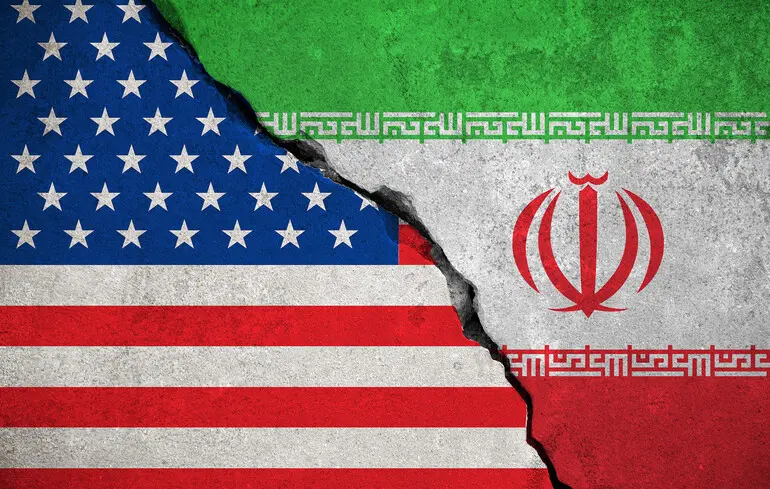
Iran has accused the United States of carrying out a strike on an unfinished nuclear power station in Darhovin, in the south of the country, and has stated its intention to retaliate. The IAEA has reported that it is verifying reports of the night-time attack and considers the risk of radiation to be unlikely. Meanwhile, US Central Command has announced a ninth wave of strikes against Iran.
Briefly about the main points
- Iran has stated that the US struck a nuclear power station under construction in Darhovin.
- Tehran has promised to take measures to protect its interests and security.
- The IAEA is verifying reports of a night-time strike.
- The agency does not anticipate any radiation risk given that construction is at an early stage.
- CENTCOM has announced the ninth night of strikes against Iran.
Tehran’s statement on the attack
Deputy Minister of Foreign Affairs of Iran Kazem Garibabadi In an interview with the state broadcaster IRIB, he described the alleged US attack on the unfinished nuclear power station as a «dangerous attack on Iran’s civilian infrastructure». According to him, Washington bears full responsibility for the consequences of any further escalation of instability and danger.
Garibabadi stated that Iran would «take the necessary measures» to safeguard its national interests and security.
IAEA assessment
The International Atomic Energy Agency has reported that it is verifying information regarding a night-time strike on a nuclear power station under construction. The agency noted that the facility in Darkhovin is at a very early stage of construction.
According to estimates IAEA, the reported strike is unlikely to pose a radiation threat. At the same time, the agency called on all parties to exercise military restraint in the vicinity of nuclear facilities.
The ninth wave of US strikes
US Central Command stated on social media X on the start of a new waves of attacks on Iran for the ninth night in a row. CENTCOM stated that the strikes are intended to weaken Iran’s military capabilities, which, according to the command, are being used to carry out attacks on commercial vessels and civilian seafarers in the Strait of Hormuz.
How the standoff resumed
On 18 June, the US and Iran signed a memorandum of understanding aimed at ending the war in the Middle East. However, following attacks by the Iranian military on ships in the Strait of Hormuz on 6 July, the two sides resumed hostilities.
According to the context provided, US forces are attacking Iranian military targets, whilst Iran is firing on US bases in Bahrain, Jordan and Kuwait. On 8 July, US President Donald Trump announced that the ceasefire with Iran was no longer in force.