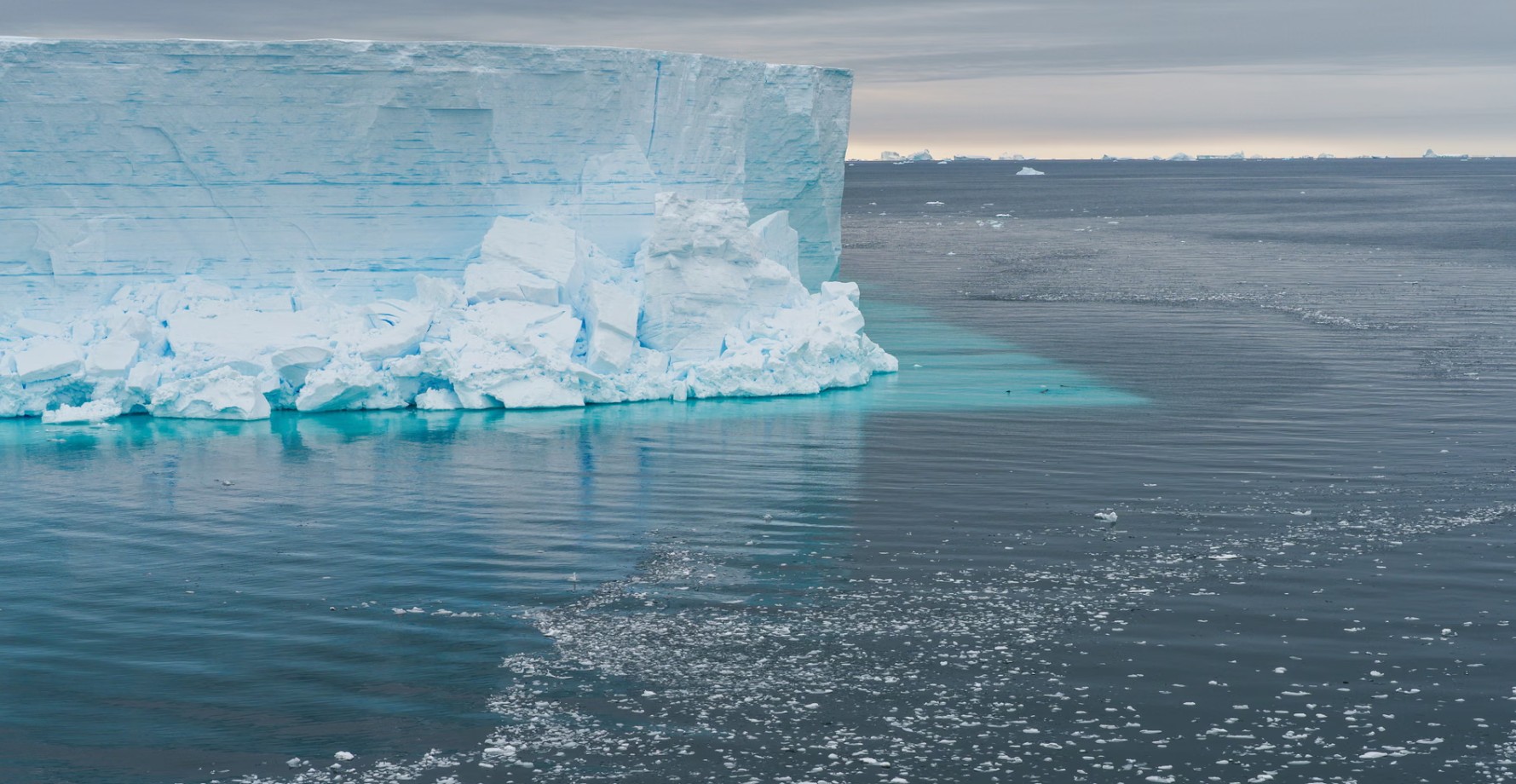
The west coast of the Antarctic Peninsula is losing an area of sea ice the size of France, as a result of record-breaking temperatures that have exceeded the average by more than 20 degrees. The lack of ice is affecting the region’s ecosystems, particularly populations of emperor penguins, and could accelerate global sea-level rise.
- There is an area of sea ice covering approximately 650,000 square kilometres missing from the Bellingshausen Sea.
- Temperatures on the peninsula were more than 20°C above average in June.
- The absence of ice could accelerate the melting of the Pine Island and Twyts glaciers.
- The seasonal maximum sea ice extent in Antarctica in 2026 was below average.
The absence of sea ice in the Bellingshausen Sea
Satellite observations have revealed an almost complete absence of sea ice in the Bellingshausen Sea, to the west of the Antarctic Peninsula. Normally, this area would be covered in ice in June, but currently around 650,000 square kilometres of ice is missing — an area equivalent to the size of France. This is ten times the size of Tasmania. This phenomenon marks the third time in four years that sea ice in this region has been abnormally low. This reports The Guardian.
Record temperatures and their impact
In June, an unusual heatwave was recorded on the Antarctic Peninsula, with daytime temperatures reaching 15.4°C – more than 20 degrees above average. The absence of sea ice may have exacerbated this heatwave, as ice usually cools the warm air coming from northern latitudes. In Argentina, at the Esperanza station, temperatures rose to record levels not seen since 1998.
The environmental impact on wildlife in Antarctica
The loss of sea ice in Antarctica has had a devastating impact on the region’s marine life. Emperor penguins suffered a catastrophic breeding failure in late 2022, leading to their elevation to endangered status. Sea ice provides shelter for krill — the main food source for many species. Its absence forces penguins and seals to alter their routes and reduces their breeding success.
The threat of glacier melt and rising sea levels
The Pine Island and Twaites glaciers are located near the region; they are the largest sources of ice loss in Antarctica and have an impact on global sea levels. The absence of sea ice, which normally protects floating ice shelves, may accelerate their collapse. This, in turn, will intensify glacial melting and contribute to a further rise in sea levels.
Sea ice conditions in 2026
As of 10 June, the total area of sea ice around Antarctica stood at around 11.4 million square kilometres, which is below the average of 12.6 million square kilometres for the period 1991–2020. Experts point to an alarming trend of ice loss in the region, which requires further investigation into the link with global warming.