The military and political situation surrounding Ukraine has once again reached a point of extreme tension. Monitoring channels and official sources, in particular Air Force of Ukraine, warned of an extremely high likelihood that the Russian Federation would deploy the «Oreshnik» medium-range ballistic missile (MRBM) between 11 and 14 June 2026.
According to available information, the Kremlin had informed the United States and its partners in advance of the planned launch from the test site «Kapustin Yar» in the Astrakhan region. Of particular concern is the fact that this strike could differ radically from the previous three test launches.
Why the June attack by «Oreshnik» could be the most dangerous
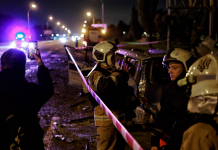
The main danger of a potential attack lies in the type of warhead. During previous strikes (notably on Dnipro in November 2024, on the Lviv region in January 2026 and on Bila Tserkva (24 May 2026) Russia used inert warheads without explosives, which caused damage solely through their immense kinetic energy.
This time, things might be different. Previously, the dictator Vladimir Putin open stated, ...that during the upcoming tests, the «Oreshnik» may be deployed for the first time with a full-scale warhead. This means that the missile’s destructive power will increase significantly.
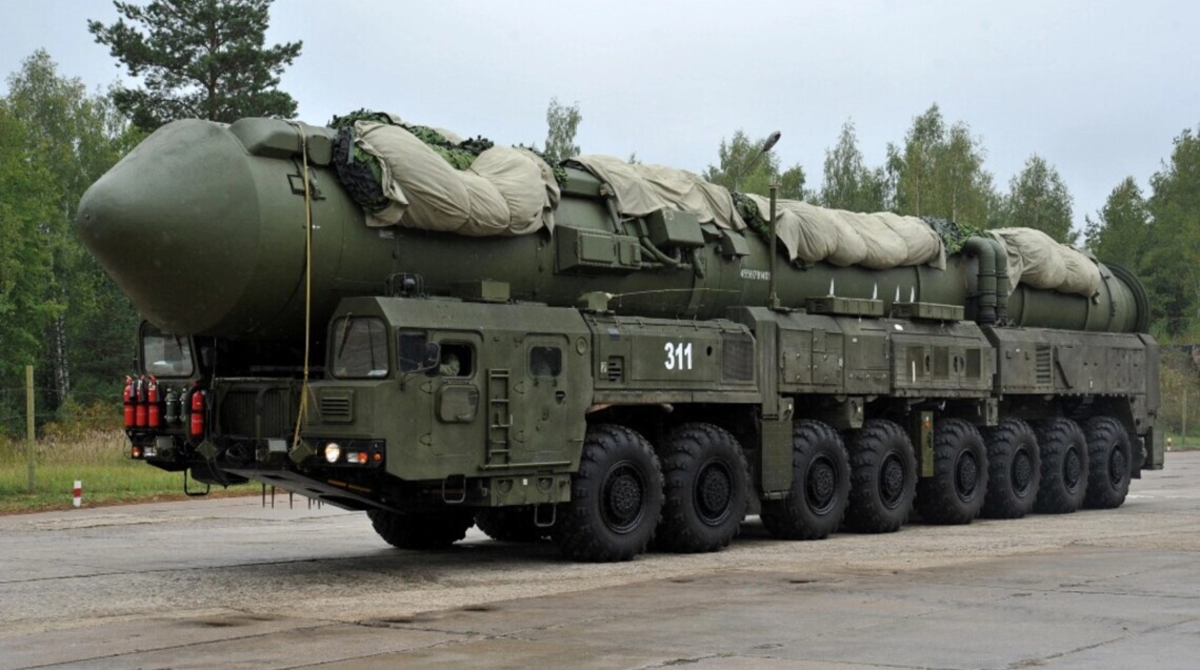
Technical information: The complex «Oreshnik» was developed on the basis of experimental intercontinental technologies (in particular, the RS-26 «Rubizh» missile system). This weapon is a classic example of the BRSD class, which was previously covered by the now-defunct INF Treaty. It was designed as a platform capable of carrying both conventional and nuclear weapons.
Technical specifications and engagement architecture of the «Oreshnik» unmanned aerial vehicle»
According to military experts and analytical reports Stockholm International Peace Research Institute (SIPRI), the «Oreshnik» has a number of specific characteristics that make it an extremely dangerous thermobaric or high-explosive weapon:
-
Hypersonic speed: In its terminal phase, the missile is capable of reaching speeds in excess of 12,000 km/h (around Mach 10). This reduces the flight time from the launch site in the Astrakhan region to cities in Ukraine to a matter of minutes, leaving civilians little time to seek shelter.
-
Separate Combat Unit (RGCH IN): The missile contains six individually guided warheads. Each of these warheads, in turn, carries submunitions (up to 36 in total). In the final stage of flight, they separate and attack several targets along different trajectories, creating a «rain of fire» effect.
-
Load variability: In addition to its potential nuclear warhead, the standard version of the «Oreshnik» is equipped with a powerful high-explosive or high-explosive fragmentation warhead of considerable weight, capable of destroying underground command posts and large industrial facilities.
The challenge of interception: is Ukraine’s air defence ready?
The Air Force’s warning has sparked a lively debate among Western allies regarding the ability to protect Ukrainian airspace from weapons of this class. Ukraine’s current air defence architecture has serious limitations when it comes to countering hypersonic weapons.
| Air defence / missile defence system | The «Oreshnik's» interception capability» | Key aspects of countermeasures |
| MIM-104 Patriot / SAMP/T | These were not designed for this class of targets | They may be able to track the missiles, but a kinetic speed of Mach 10 makes interception virtually impossible with current variants. |
| THAAD (USA) | High efficiency | High-altitude exoatmospheric interception system. Ukraine does not currently have one. |
| Arrow 3 (Israel) | High efficiency | Designed to intercept medium-range ballistic missiles in the stratosphere. |
As the publication’s journalists note Associated Press, During a recent meeting in London between the leaders of the UK, France, Germany and Ukraine, the issue of countering Russian medium-range ballistic missiles was a priority. The parties emphasised the «urgent need» to scale up production of high-tier anti-missile interceptors.
Guidance for the general public for 11–14 June
As it is difficult to detect the launch of the «Oreshnik» from the Kapustin Yar test site in advance using standard radar equipment (detection actually only occurs once the warheads have entered the atmosphere), the National Security and Defence Council and the military are urging citizens to strictly adhere to safety protocols.
In the event of an air raid alert indicating a threat of ballistic missile attack, you must immediately take shelter in permanent shelters or underground stations. The «two-wall» rule may prove ineffective in the event of strikes by missiles of this class due to the enormous kinetic and explosive power of the submunitions.