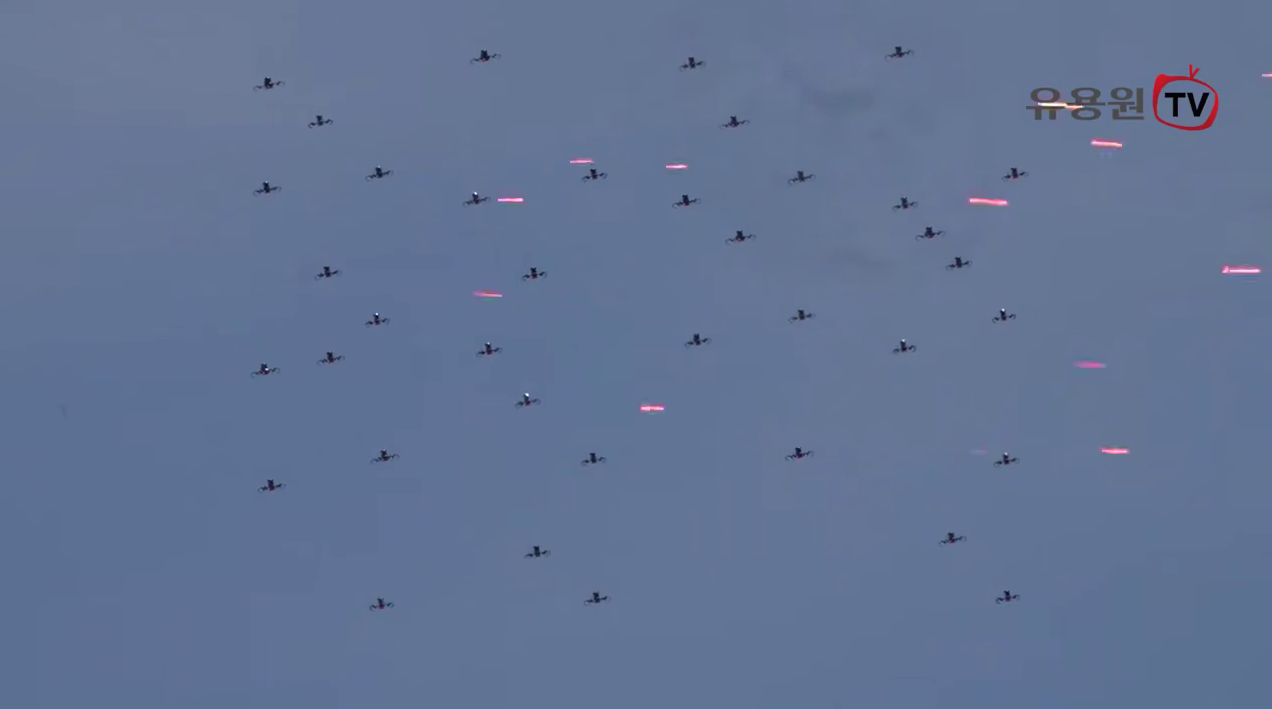
The South Korean Air Force has conducted its first large-scale exercises to practise defending against a massive swarm attack by drones. The exercises involved 50 drones, which simulated a modern military conflict.
Briefly about the main points
- South Korea has conducted its first exercise to destroy a swarm of drones.
- 50 target drones were attacked simultaneously during the exercises.
- Eight Vulcan anti-aircraft systems destroyed 44 drones on the outer approaches.
- The six drones that broke through were taken out using laser weapons.
- The exercises were a response to the growing threat of large-scale UAV attacks.
A massive drone attack as a new challenge
The South Korean Air Force has organised its first comprehensive exercises to practise defending military installations against a simultaneous attack by a swarm of drones. According to the exercise scenario, 50 drones simultaneously approached positions at low altitude, simulating the kind of modern, large-scale attack typical of current military conflicts.
First line of defence
Eight M167 Vulcan anti-aircraft artillery systems took the brunt of the attack on aerial targets. With their powerful barrage, they created a solid «wall» of shells and destroyed 44 of the 50 drones approximately one kilometre from the defensive positions.
Lasers and shotguns for close-quarters combat
Six drones that managed to breach the first line of defence were shot down at close range. To do this, the military used portable laser systems and special shotguns designed to combat small drones.
Why it matters
The widespread use of drones in modern warfare is forcing armies around the world to rethink their approaches to air defence. South Korea is actively preparing for potential threats, particularly from DPRK, by developing a multi-layered defence system that combines traditional air defence systems with modern laser technologies and close-in interception systems.