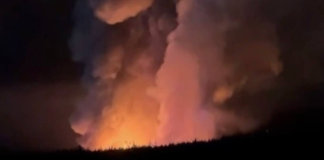
As of early July 2026, the Ukrainian Defence Forces’ campaign of systematic strikes against the aggressor country’s fuel and energy sector had reached its peak in terms of effectiveness. What began as targeted sabotage operations has evolved into a strategic operation of attrition, demonstrating high precision and a devastating economic impact.
The figures speak for themselves: the Russian Federation is rapidly losing control of its own fuel market.
Record-breaking shutdown: Figures and the extent of the damage
The key indicator of the success of the Ukrainian strategy was a record-breaking period of production capacity downtime. As a result of regular and in-depth UAV sorties, at present 42.741 TP3T of the total design capacity has been taken out of service oil refineries in the Russian Federation. In fact, almost half of the enemy’s fuel infrastructure is either completely shut down or operating in emergency mode.
The developments over the past month have been remarkably intense:
-
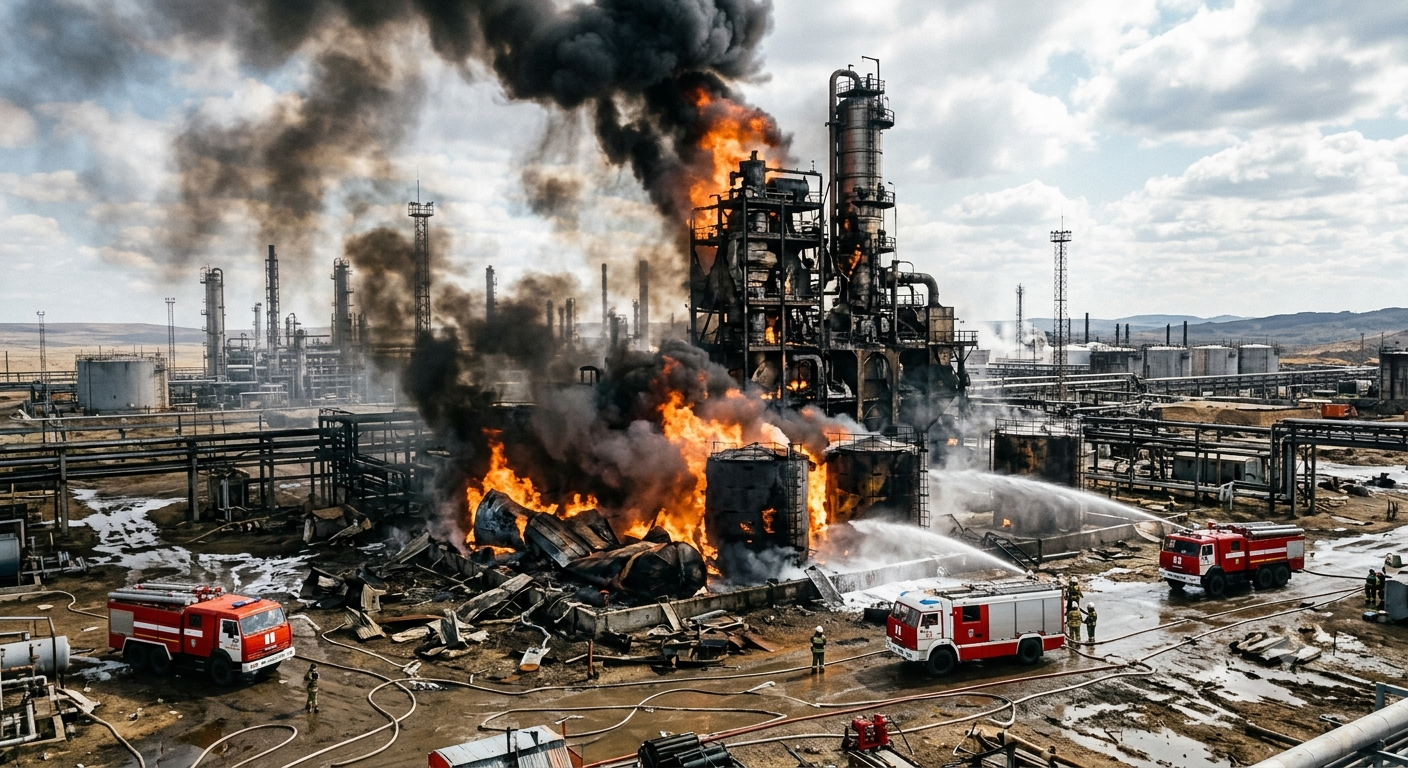
Extent of damage: Over the last 30 days, the following have been successfully attacked 8 large oil refineries. The systematic nature of the strikes prevents the enemy from redeploying air defence systems or to deploy reserves.
-
Destruction of the logistical reserve: Destroyed or critically damaged over 60 RVs (vertical steel tanks). This affects the ability to accumulate and store fuel.
Anatomy of the RVS failures: 58% of the destroyed tanks contained finished high-tech petroleum products (petrol, diesel, aviation fuel), whilst 42% contained crude oil. This amounts to the direct loss of billions of roubles that had already been invested in refining.
Economic low point: a net loss of 13.5 billion dollars
The oil industry has always been the main contributor to the Russian military budget. However, over the past year (since August 2025), the trend has taken a 180-degree turn.
The total losses incurred by the Russian Federation’s oil and gas sector as a result of Ukrainian attacks have reached an astronomical figure — US$13.5 billion. This figure includes not only the raw materials destroyed and the distillation columns ruined, but also the colossal loss of export revenue, which the aggressor is forced to restrict in order to save its own economy.
Consequences for the Kremlin: A crisis that cannot be «quelled»
The sustained pressure exerted by the Defence Forces has triggered a comprehensive technological and logistical tsunami for Russia:
-
The domestic fuel crisis. Acute petrol shortage and diesel fuel is already being felt in agricultural regions and logistics hubs. Prices on the exchanges are hitting all-time highs, whilst the Russian government is frantically extending its bans on fuel exports.
-
Forced reduction in production. There is nowhere to refine the oil and nowhere to store it (due to the destruction of the oil refineries). As a result, Russian companies are being forced to mothball their wells. For many Siberian fields, this is a critical situation, as bringing them back into operation is technically complex and costly.
-
A technological impasse. The deadlines for repairs to damaged facilities are constantly being postponed indefinitely. The main reason is a severe shortage of Western spare parts and specialised equipment due to sanctions. Russia’s «import substitution» policy has proved powerless in the face of the damage to high-value cracking centres.
Analysts’ conclusion: The strategy of «asymmetric warfare» aimed at undermining Russia’s economic base is proving effective. As of summer 2026, Russia’s energy sector is in the deepest crisis in its modern history, and the Kremlin simply has no means of resolving it quickly.