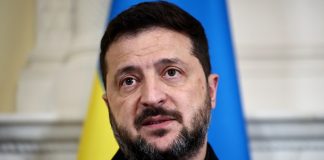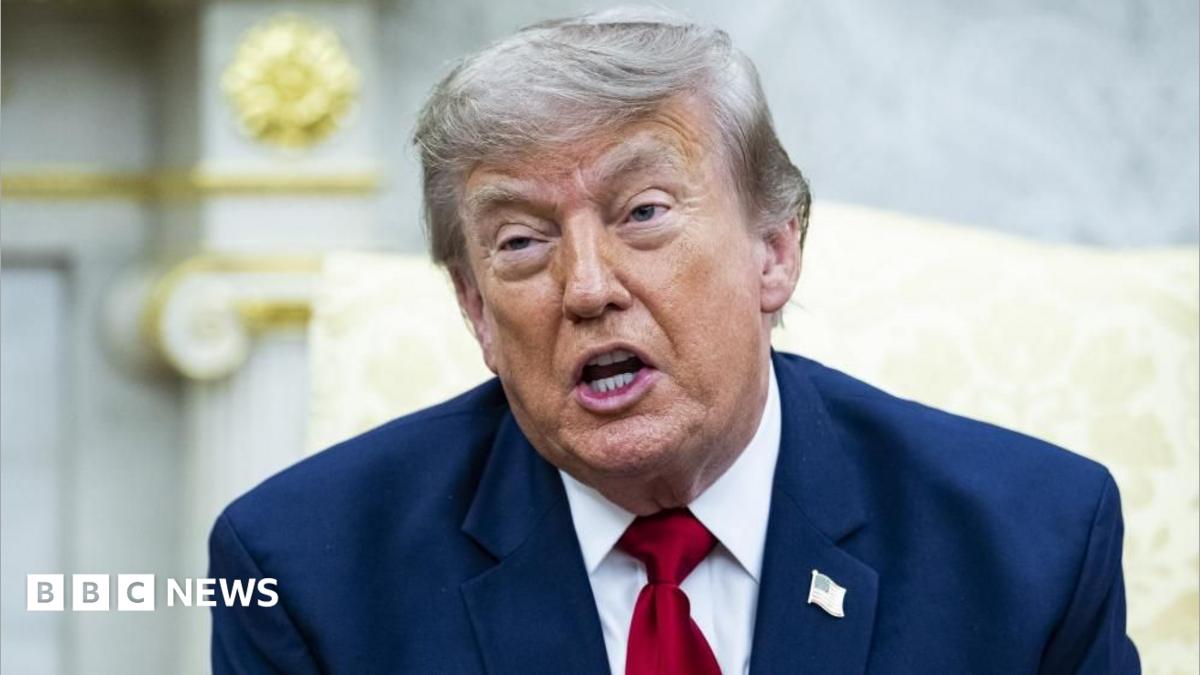
US President Donald Trump has stated that the United States may launch strikes against bridges and power stations in Iran next week if Tehran does not return to the negotiating table. He made these remarks in an interview with Fox News on the fourth day of reciprocal strikes. Meanwhile, the US has reinstated its blockade of Iranian ports, and shipping through the Strait of Hormuz has slowed sharply.
Briefly about the main points
- Trump demanded that Iran return to the negotiating table with the US.
- The US President has threatened to carry out strikes on bridges and power stations.
- The US has reimposed a naval blockade on Iranian ports.
- CENTCOM has announced a new round of strikes against Iran.
- Ship traffic through the Strait of Hormuz has fallen to a two-month low.
An ultimatum in a television interview
In an interview with the programme *Special Report* from Breton Bayer, which was broadcast on Tuesday evening, Donald Trump said that for Iran, «next week will be a really bad one» if the country does not agree to negotiations. According to him, US negotiators conveyed a demand to the Iranian side that very evening to reach an agreement.
The President also stated that the United States would leave its energy targets «until last», but would eventually strike them as well. Trump had made similar threats regarding bridges and power stations back in April.
The UN’s position and Tehran’s response
Following Trump’s statements in April, the UN High Commissioner for Human Rights Volker Türk He emphasised that deliberate attacks on civilians and civilian infrastructure constitute a war crime under international law. The 1949 Geneva Conventions prohibit attacks on objects essential to the civilian population.
Deputy Minister of Foreign Affairs of Iran Kazem Garibabadi, as quoted by AFP and Reuters, stated that increasing military and economic pressure would not bring back Tehran to the negotiating table. He also said that the US decision to impose a blockade had effectively destroyed the previously agreed ceasefire.
The blockade of ports and new attacks
Trump has backed out of his previously announced plan 20 per cent levy of all cargo passing through the Strait of Hormuz. He attributed this to forthcoming trade and investment agreements between the Gulf states and the US, without providing any details. At the same time, the US has reinstated the blockade of Iranian ports.
US Central Command has announced a further round of strikes, stating that the aim was to weaken Iran’s ability to attack commercial shipping. Admiral Brad Cooper stated that Iran had attacked seven commercial vessels, resulting in civilian crew members being killed, missing or injured.
The UAE had previously reported that Iranian cruise missiles had been fired at two national tankers: one Indian crew member was killed and eight others were injured. The Islamic Revolutionary Guard Corps confirmed the strikes and stated that the tankers had ignored warnings, switched off their navigation systems and attempted to sail through a mined route.
The strait is becoming the focal point of the conflict
On Tuesday night, Kuwait reported that it had intercepted Iranian attack drones, whilst Bahrain sounded air-raid sirens. Tehran had stated the day before that it had attacked US military facilities in Bahrain and Jordan.
According to shipping data, traffic through Strait of Hormuz fell to a two-month low, whilst the price of Brent crude, the benchmark, rose sharply. This suggests that the military standoff is already affecting not only negotiations between Washington and Tehran, but also the transport of goods along a key maritime route.