The Azerbaijani state-owned company SOCAR, in collaboration with Naftogaz of Ukraine, is working out the technical and logistical arrangements for the commencement of direct wholesale supplies of natural gas to Ukrainian consumers. The company is expanding its energy presence in Europe: in January 2026, it began physical gas exports to Germany and Austria under a ten-year contract with SEFE.
Briefly about the main points
- SOCAR and Naftogaz are drawing up routes for direct wholesale gas supplies.
- The details of future deliveries to Ukraine have not been made public.
- In January, SOCAR began physical exports to Germany and Austria.
- The number of countries importing Azerbaijani gas has risen to 16.
- SOCAR Energy Ukraine is continuing to modernise its network of petrol stations.
From a trial batch to a wholesale model
This specifically concerns the preparation of a direct wholesale channel, rather than the regular imports that are already underway. SOCAR and Naftogaz are determining the technical and logistical solutions required for such supplies. The parties have not yet disclosed the planned volumes, the timing of the commercial launch, the entry point or the final route.
For Ukraine, this marks a continuation of a partnership that has already entered a practical phase. In July 2025, the country received its first small test consignment of Azerbaijani gas via the Trans-Balkan route through Bulgaria and Romania. At the time, Naftogaz described it as a step towards long-term cooperation and diversification.
Preparations for this new route are taking place as Ukraine seeks to secure several sources of imports. In 2026, Naftogaz also organised the supply of US LNG via Poland, planned a route via the terminal in Klaipėda and opened a route for regasified LNG via Germany and Poland. Under these circumstances, SOCAR’s potential supply could complement, rather than replace, other import channels.
SOCAR’s entry into the German and Austrian markets
In January, SOCAR began physical gas exports to Germany and Austria via the Trans-Adriatic Pipeline under a long-term ten-year contract with the German energy company SEFE. Following its entry into these markets, the number of countries importing Azerbaijani gas has reached 16.
During the summit in Berlin, the German Chancellor and the President of Azerbaijan reaffirmed SOCAR’s status as a strategic partner for the German economy. The group is also expanding its presence in industrial hubs in southern Germany, supplying local businesses with fuel and raw materials.
The Trans-Adriatic Pipeline is the western leg of the Southern Gas Corridor: it runs from Greece through Albania and across the Adriatic Sea to Italy. From there, gas for Central and Western Europe is transported via adjacent gas transmission systems. Since the start of 2026, TAP’s long-term capacity has increased by 1.2 billion cubic metres per year.
A role in the diversification of the European gas market
According to the European Commission, supplies of Azerbaijani gas to the EU via the Southern Gas Corridor increased by more than 40% between 2021 and 2024. As of 10 July, TAP had delivered a total of over 60 billion cubic metres to Europe, of which 50 billion went to Italy.
SOCAR’s expansion into Germany and Austria indicates that the corridor now has access to Western European markets, which were not previously its main focus. At the same time, the Azerbaijani supply is not a stand-alone replacement for the EU’s largest gas sources: according to the European Commission’s estimates, its share of the bloc’s imports in 2025 stood at 4%. Its significance lies primarily in expanding the range of suppliers and routes.
SOCAR’s two areas of operation in Ukraine
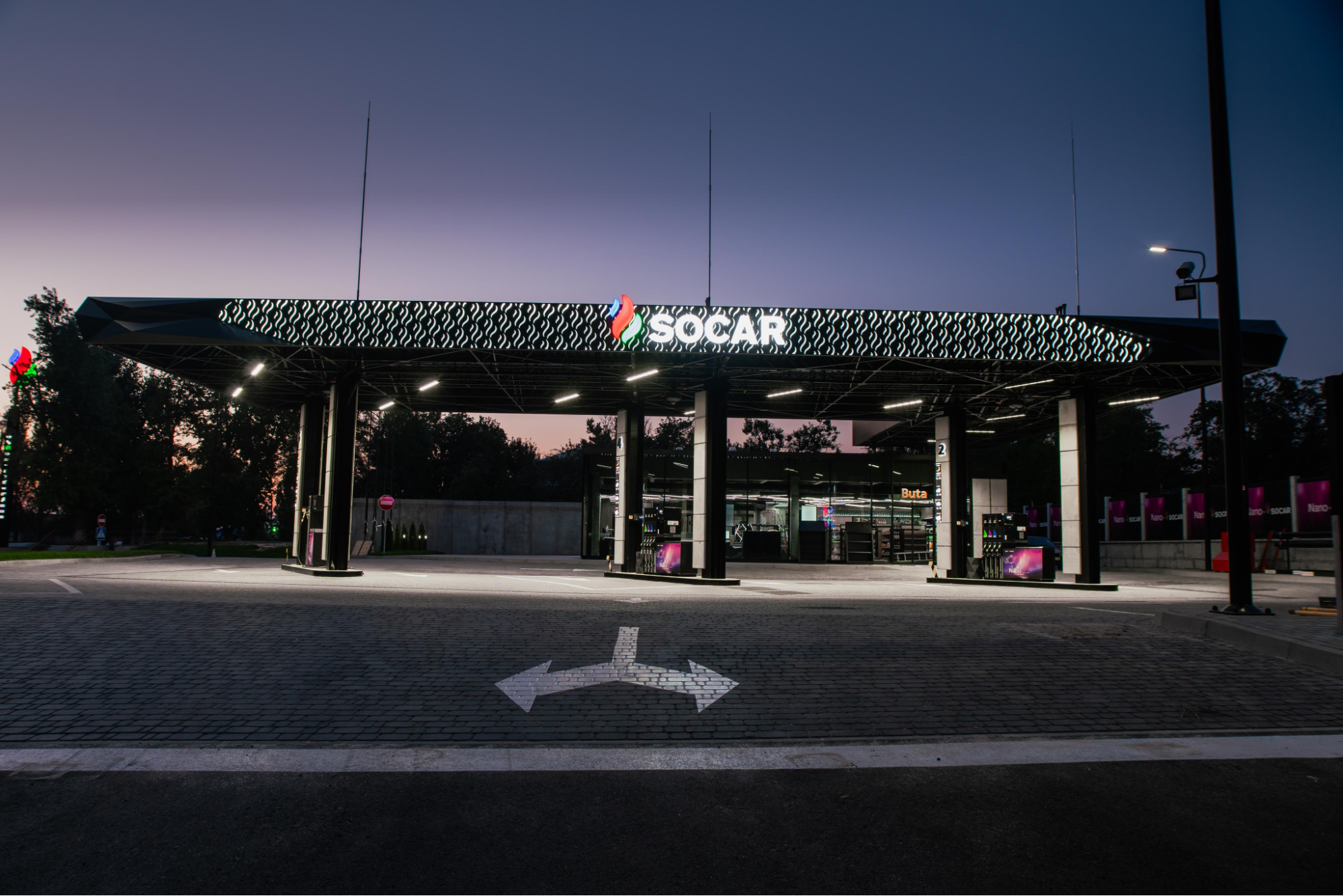
Gas trading and the retail fuel business are different segments, but both strengthen the group’s presence in Ukraine. Alongside preparing for wholesale imports, SOCAR Energy Ukraine is systematically developing and modernising its network of petrol stations.
The company remains the only petrol station chain in Ukraine to have fitted out its own shelters to ensure the safety of customers and staff. It is also expanding its range of services and maintaining its position as one of the largest taxpayers in the fuel sector.
For the Ukrainian market, direct supplies from SOCAR, should they go ahead, would add a pipeline option from the south to the existing LNG routes and purchases on the European market. This could reduce dependence on individual entry points, although it does not eliminate the risks to Ukraine’s domestic energy infrastructure.