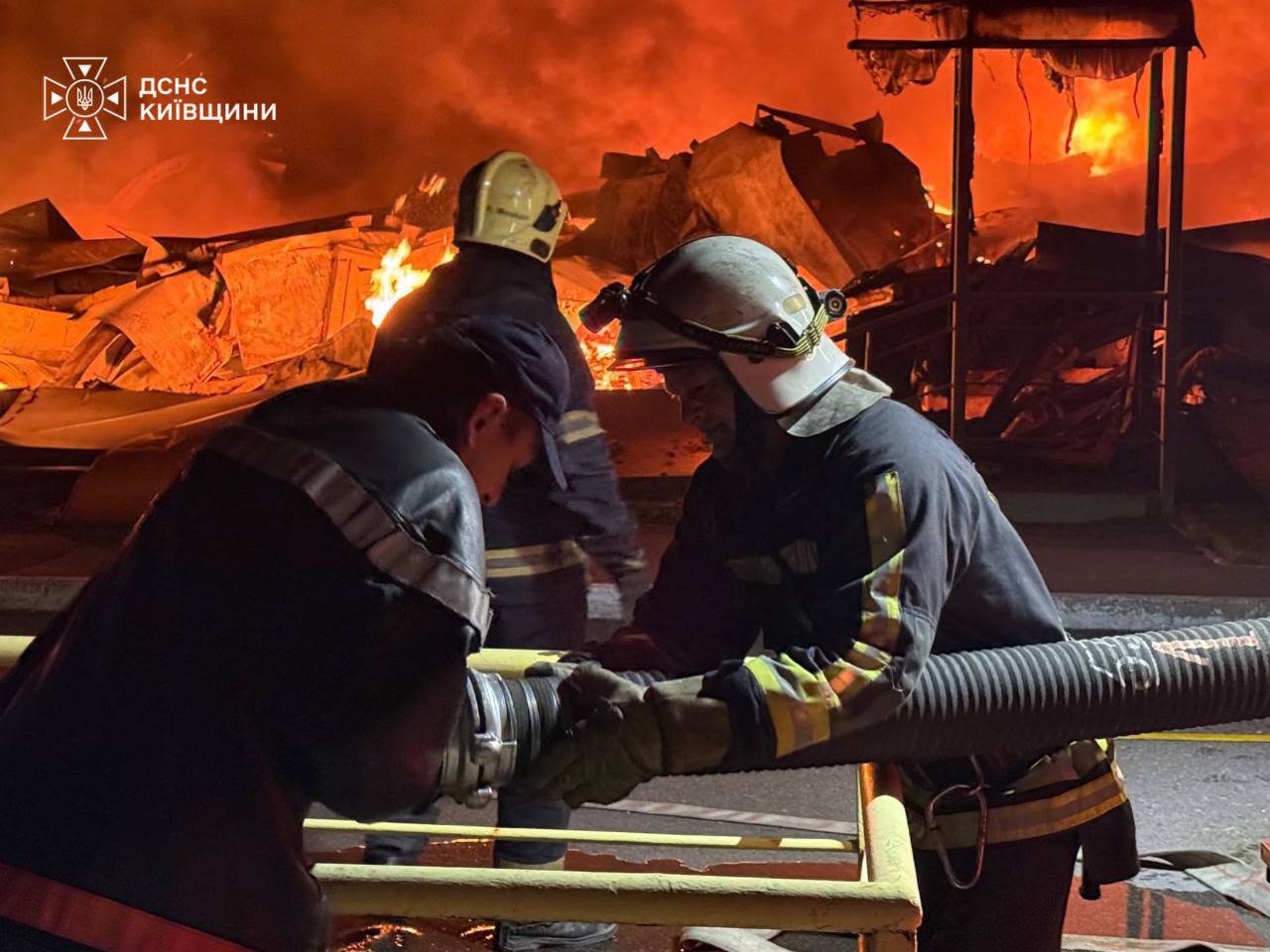
Massive Russian strikes on warehouses, production sites and logistics centres belonging to Ukrainian companies could increase transport costs, lead to temporary shortages of certain goods in specific regions and result in longer delivery times for orders. A widespread disappearance of goods from shops is not expected: retail chains and operators are rerouting shipments via backup facilities and new routes.
Briefly about the main points
- No nationwide shortage of goods is forecast.
- Some shops may be temporarily out of stock of certain items.
- Some orders will take two or three days to be delivered, rather than one day.
- Stockpiles and new routes are driving up companies’ costs.
- The government has instructed officials to draw up measures to ensure the continuity of business operations.
Supplies are being redistributed among the regions
If a company’s main warehouse is destroyed or damaged, it does not halt deliveries but redirects the flow of goods to other sites. To do this, it uses regional warehouses, backup facilities and its own transport.
Prior to the new wave of attacks in 2026, at least 25 incidents of damage to or destruction of warehouse infrastructure had been recorded. Against this backdrop, large companies began to move away from the single central hub model, distributing their stock across several regions.
Such a system requires more resources, but it allows operations to continue even after the loss of a single facility. This is most likely to result in shortages of certain categories of goods in specific shops or regions, rather than empty shelves across the country all at once.
Online orders may be delayed
Damage to warehouses In Kyiv and the Kyiv region, this is forcing businesses to ship goods from other regions. As a result, some online orders that used to arrive the next day may now take two or three days to arrive.
During the reallocation of consignments, there may be temporary changes to parcel routes. Logistics operators are trying to reduce the time consignments spend at terminals: consignments are sorted quickly and transported onwards.
Co-owner of NOVA Volodymyr Poperešniuk It had previously identified the decentralisation of facilities, speeding up cargo handling and reducing stock levels at any single terminal as key ways of maintaining operations following attacks. The company is also expanding its network of locations and establishing alternative routes.
Sustainability costs may be passed on in the price of goods
The transition from a single large warehouse to a network of smaller sites means additional rent, duplication of stock, changes to routes, the need for more transport, and the repair of damaged equipment.
Businesses may gradually pass on some of these costs in the prices of goods and delivery charges. A sudden, simultaneous rise in prices across all categories is not expected; however, goods involving complex logistics or with limited stock are more likely to become more expensive.
The greatest risk lies with products whose production cannot be relocated at short notice. For everyday consumer goods, retail chains can switch suppliers or source supplies from other regions.
The government is drawing up measures to ensure businesses can continue to operate following the attacks
Prime Minister Sergey Koretsky instructed that urgent measures be taken meetings with representatives of trading and logistics companies following a massive attack. The Ministry of Economy and the Environment must draw up the measures needed to ensure the uninterrupted operation of businesses in the wake of Russian strikes.
The future impact on product ranges, delivery times and prices will depend on the scale of the losses, the pace at which stock levels are replenished, and companies’ ability to quickly redirect supplies.