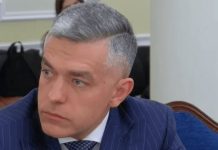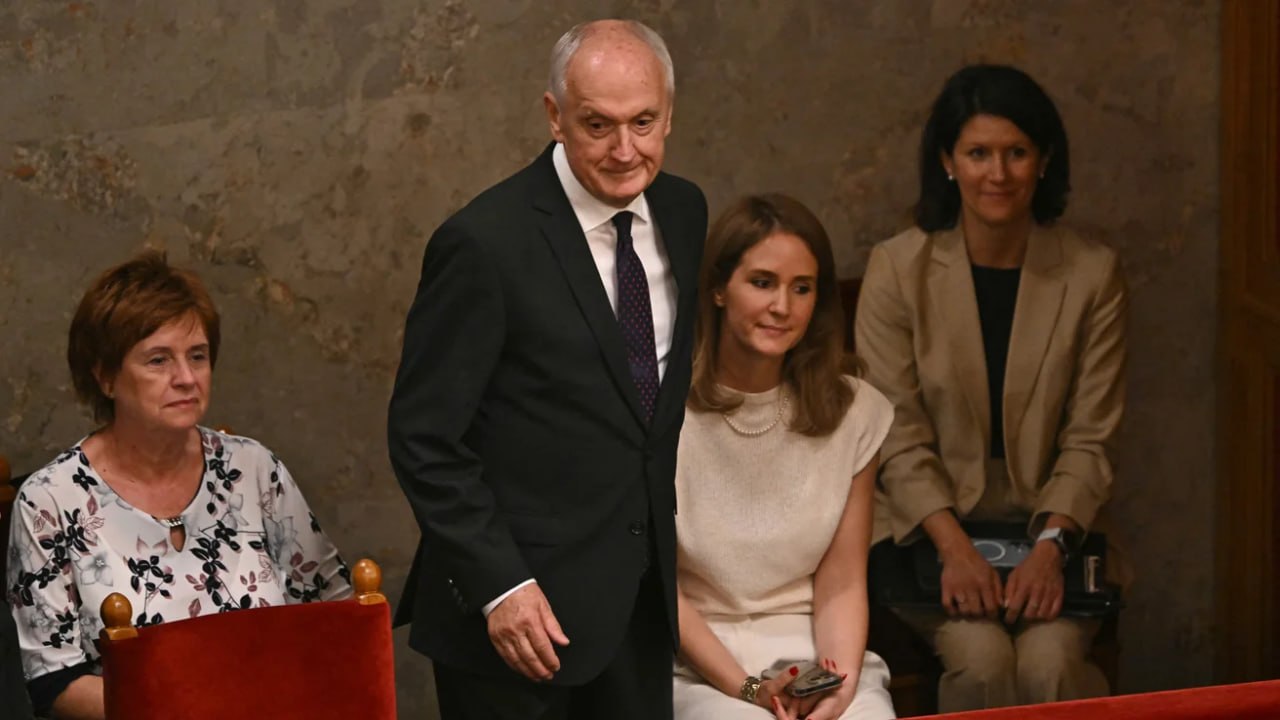
The Hungarian Parliament has elected András Baka, the former President of the Supreme Court, as the new President. At an extraordinary sitting, 140 MPs voted in favour of his candidacy, six voted against, and there were no abstentions. Viktor Orbán’s Fidesz party and its ally, the KDNP, did not take part in the vote. Baku will officially take up his duties on 19 August.
Briefly about the main points
- András Baku was elected president at an extraordinary session of parliament.
- The candidate received 140 votes in favour, with six MPs voting against.
- «Fidesz and the KDNP announced in advance that they would boycott the presidential election.
- Baka described Hungary as a country in the throes of a deep crisis and division.
- The new head of state has declared a pro-European course and political neutrality.
The vote took place without Fidesz and the KDNP
The vote was held by secret ballot. Fidesz and the Christian Democratic People’s Party had announced in advance that they would not take part in the election of the new head of state. During the session, representatives of these parliamentary groups laid wreaths at the memorial to the participants in the 1956 Hungarian Revolution in the town of Tata.
Opposition politicians have criticised András Baku because of his previous court rulings in cases relating to the events of 1956 and 2006.
In his first speech, Baka spoke about the crisis and the rift
Following his election, Baka stated that Hungary was experiencing a deep crisis and social division. He emphasised that the country’s place was in Europe and that the president must maintain political neutrality.
These statements were made against the backdrop of a heated dispute over the replacement of the former head of state and the boycott of the vote by Fidesz and the KDNP.
A career in the courts and the case against Hungary at the ECHR
András Baka was President of the Supreme Court of Hungary, and from 1991 to 2008 he served as a judge at the European Court of Human Rights. He researched human rights and minority rights, and for over two decades was a research fellow at the Institute of State and Law of the Hungarian Academy of Sciences.
In 2011, Baku was removed from his post as President of the Supreme Court before the end of his term following his criticism of the measures planned by Viktor Orbán’s government to reform the judicial system. In the case of «Baka v. Hungary», the European Court of Human Rights found that the termination of his powers through legislative changes tailored specifically to him was linked to this public criticism.
Subsequently, the Committee of Ministers of the Council of Europe raised the issue of Hungary’s failure to comply with the ruling in this case. Prior to his election as president, Baka also served as a member of parliament from 1990 to 1991, although he did not join the Hungarian Democratic Forum party.
The replacement of Tamás Szujók was the result of a constitutional amendment
Baki’s candidacy was put forward by the leader of «Tisa» Peter Magyar. Prior to this, the party leadership held talks with ten candidates, and the parliamentary group selected Baku from among three candidates by secret ballot.
The post of president became vacant after parliament, with a majority from the «Tisa» party, approved a constitutional amendment on 13 July. The amendment provided for the termination of the mandate of the president in office at that time Tamás Shuyoka once it came into force. Shuyok signed the amendments, and the presidential powers were temporarily transferred to the Speaker of Parliament Agnes Forsthofer.