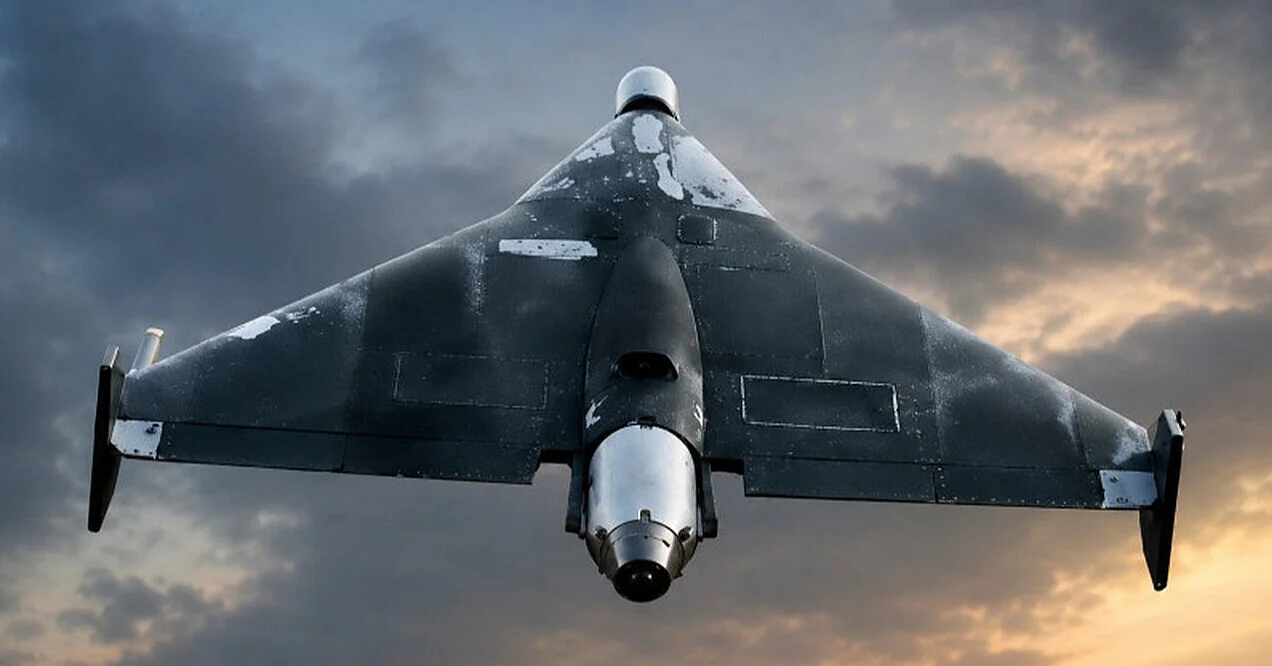
Russia has halved the production cost of its jet-powered attack drones — to approximately $50–70 thousand per unit, reports The Economist, citing a source in the air defence sector. The publication attributes this to Russia’s acquisition, in circumvention of sanctions, of equipment for 3D-printing turbine parts, which could enable it to scale up its attacks on Ukraine.
Briefly about the main points
- The production cost of the Russian Federation’s jet-powered UAV is estimated at $50–70 thousand.
- Russia is using 3D printing to manufacture turbine parts.
- At the end of August, the Russian Federation launched around 800 such drones over a four-day period.
- «The »Geran-4’ can reach speeds of up to 500 km/h.
3D printing has reduced production costs
According to The Economist, Russia has acquired equipment, similar to that used by Western industrial firms, for 3D printing jet engine turbine components.
This production method makes it possible to manufacture complex components more cheaply. *The Economist* notes that the cost of a jet-powered strike drone may fall even further.
Jet-powered drones are already playing a prominent role in attacks
The reduction in costs is taking place against a backdrop of increasing use of jet models of the «Geranium-3»« and »Geran-4«, which are faster than the piston-powered »Shaheds”. During the most recent large-scale strikes, they accounted for a significant proportion of the Russian attack drones.
At the end of August, the President Volodymyr Zelenskyy stated that, in just four days, Russia had deployed around 800 jet-powered drones against Ukraine. A spokesperson for the Air Force Yuriy Ignat It was previously reported that in July, the use of jet-powered UAVs increased fivefold compared with June, although piston-engined models still accounted for the majority of attacks overall.
According to Jane’s, Ukrainian intelligence reports that Russian production is being refocused on the «Geran-4» and «Geran-5». The combination of lower production costs and the switch to new models may increase the proportion of high-speed targets in combined air strikes.
The speed of the «Geraniums» reduces the time needed for interception
The «Geran-3» has a speed of 300–370 km/h and an operational range of up to 1,000 km. The drone can reach its maximum speed in areas where Ukrainian air defence, electronic warfare and interceptor drones are operating.
The newer «Geran-4» has a reinforced airframe and a more powerful turbojet engine. According to the Main Intelligence Directorate, it manoeuvres at speeds of 300–400 km/h, reaching up to 500 km/h in certain modes, and can carry a warhead weighing 50–90 kg.
Higher speeds leave less time to detect targets and make it more difficult for mobile fire teams and some of the low-cost interceptors, which are designed to deal with the slower «Gerani-2» missiles, to operate.
Ukraine is adapting its defences to a new threat
A source speaking to *The Economist* on air defence matters estimated the success rate of intercepting jet-powered UAVs during the recent attacks at approximately 30%. This is not an official summary of statistics from the Ukrainian Air Force, nor does it represent the success rate for all attacks.
Ukraine is developing faster interceptor drones and is adapting its air defence system. The Main Intelligence Directorate noted that Russia developed the «Geran-4» in part as a response to the effectiveness of Ukrainian interceptor drones.
President Zelenskyy also called on partners to approve additional missile packages for the Patriot system and other air defence systems, due to the increasing number of «Shahed» drones.