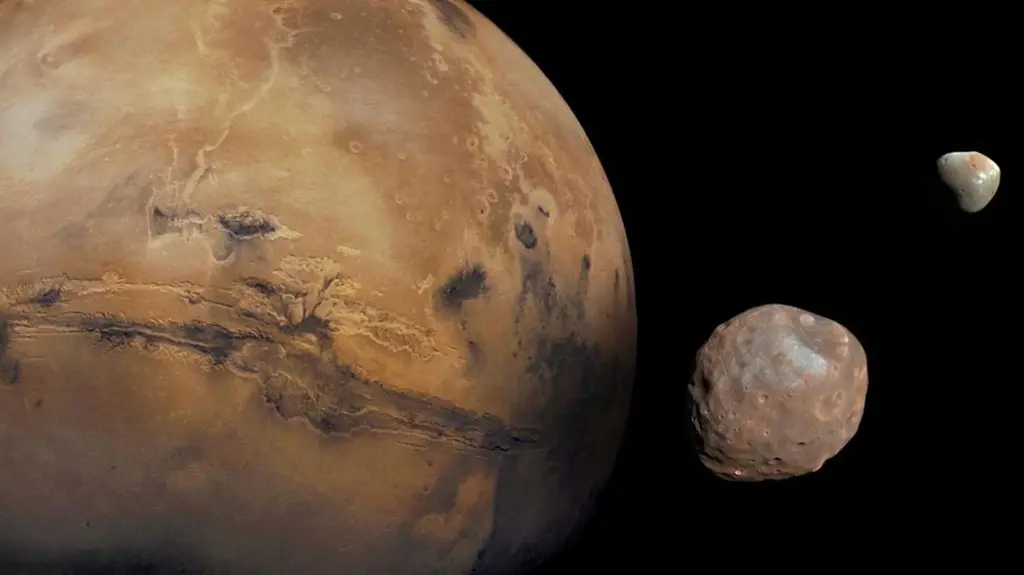
The Japan Aerospace Exploration Agency (JAXA) plans to launch the Martian Moons eXploration (MMX) mission to Phobos on an H3 rocket. The spacecraft is set to collect samples from Mars’s larger moon and return them to Earth in 2031 — this is set to be the first return of material from the Martian system.
Briefly about the main points
- The launch of MMX on an H3 rocket is scheduled for 20 October from Tanegashima.
- The spacecraft is due to arrive at Mars in August 2027.
- MMX plans to make two landings on Phobos and collect over 10 g of material.
- The capsule carrying the samples is due to return to Earth in 2031.
The launch is scheduled for 20 October
According to JAXA, the launch is scheduled to take place on 20 October at 04:41:03 Japan Standard Time. In the US Eastern Time Zone, this corresponds to 19 October at 15:41, reports NASA.
The mission is expected to last approximately five years. MMX will consist of a propulsion module, a research module and a re-entry module; only the latter is due to return to Earth — carrying a sample container.
What mysteries of Mars’ moons will be investigated?
Phobos and the smaller Deimos remain poorly understood. Among the main scientific hypotheses regarding their origin are that they were captured by Mars’s gravity from the asteroid belt, or that they formed from debris following a major collision with early Mars.
Analysing the composition of samples from Phobos should help scientists evaluate these scenarios and gain a better understanding of the evolution of the Martian system. However, future research does not guarantee a definitive answer to all questions regarding the origin of the two moons.
Two plantings and two ways to gather the material
The MMX is expected to arrive in the vicinity of Mars in August 2027. The plan involves two soft landings on Phobos and the return of more than 10 grams of material; according to NASA, sample collection is scheduled for no earlier than December 2028.
For the surface regolith, the P-Sampler – a pneumatic device provided by NASA – will be used: it is designed to lift particles using pulses of compressed gas. The Japanese C-Sampler is designed to take core samples from a depth of several centimetres, which will enable a comparison between material from the surface and that from beneath it.
The Idefix rover and the contribution of international partners
International partners are taking part in the mission. NASA is providing the MEGANE gamma-ray and neutron spectrometer, the P-Sampler system, as well as deep-space communications and navigation support. The European Space Agency is providing deep-space communications equipment and ground support.
The Franco-German rover Idefix, developed by CNES and DLR, is scheduled to land on Phobos in 2029 for approximately 100 days. It is to explore the surface and help identify a suitable site for the subsequent landing of the main MMX spacecraft; the Deimos mission will observe the final phase of operations near Mars.
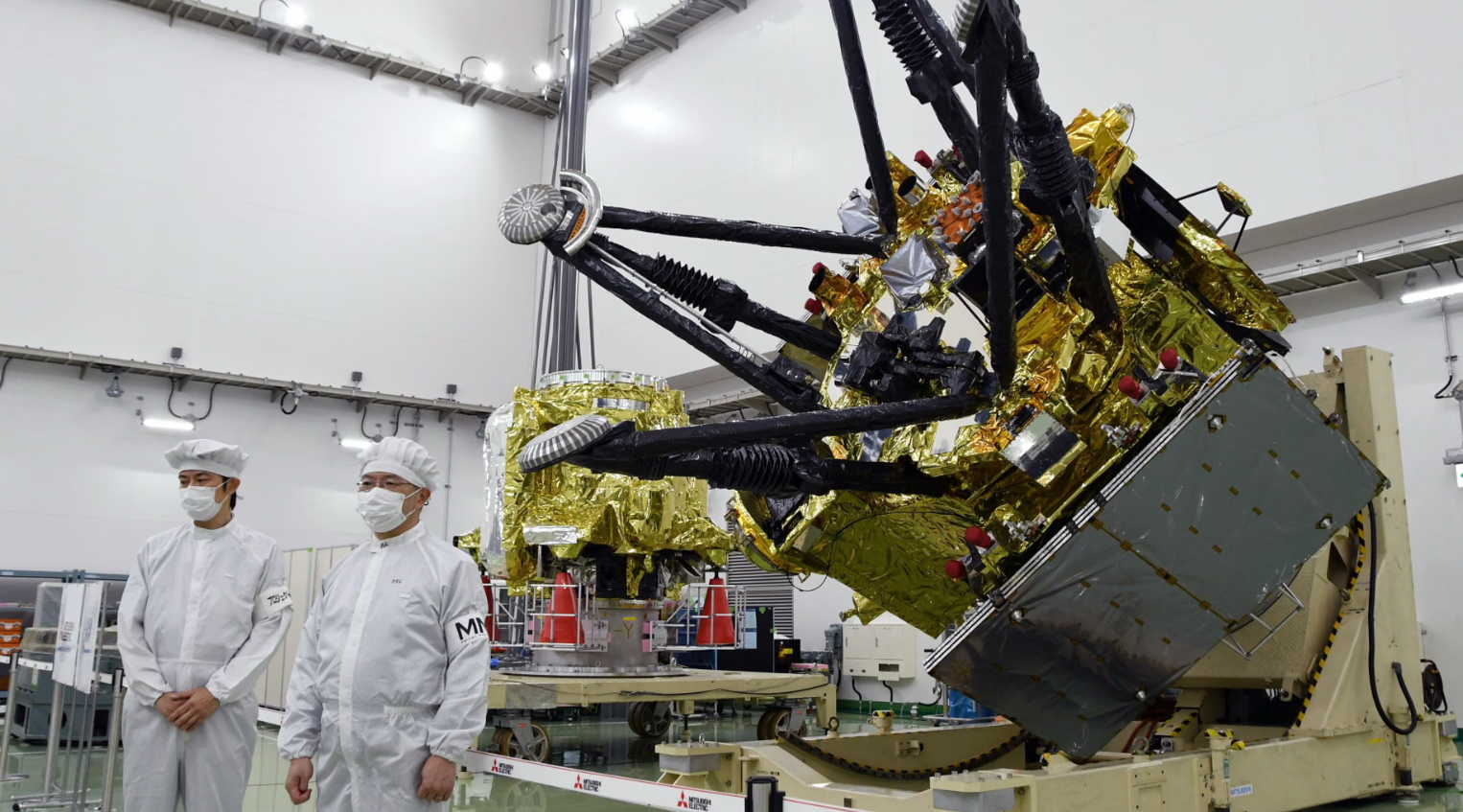
The capsule is scheduled to return in 2031
Once its work near Mars is complete, the return module is due to head for Earth. According to plans drawn up by JAXA and ESA, the capsule carrying the samples will re-enter the atmosphere and land in Australia in 2031.
The material is then to be sent to JAXA’s Institute of Space and Astronautical Science, near Tokyo, for extraction and cataloguing. Only then will the scientists be able to begin a detailed analysis of the returned samples.