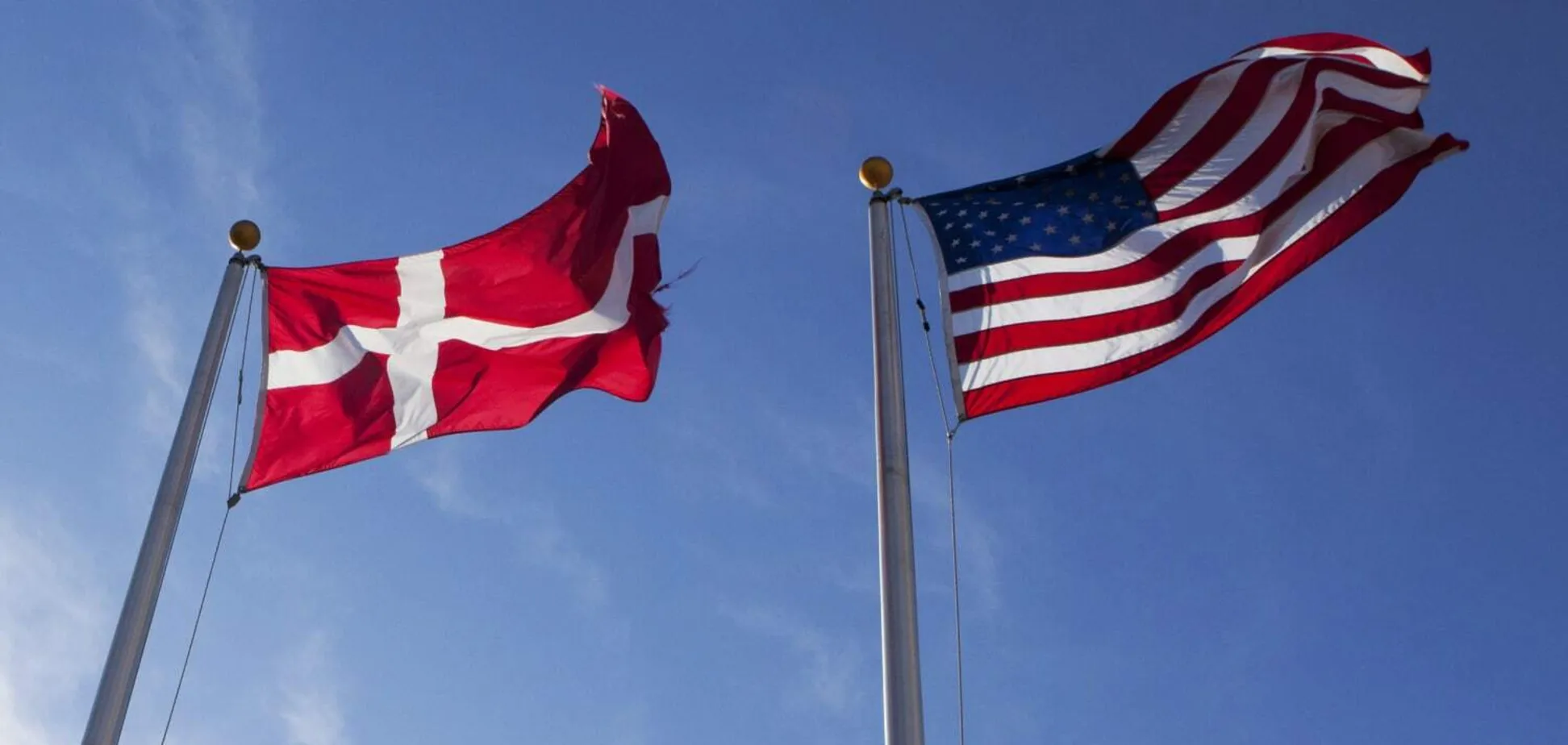
US President Donald Trump has announced an agreement with Denmark and Greenland regarding the island’s security. According to the US side, Washington will be granted permanent rights of access, the stationing of forces and overflights over Greenland, and is preparing to strengthen its military presence. Copenhagen has stated that the agreement is still awaiting signature and parliamentary approval.
Briefly about the main points
- Washington claims permanent security rights over the island.
- Denmark’s sovereignty and the self-determination of the Greenlanders must be preserved.
- There are plans to ban military bases in countries outside NATO.
- The US is preparing to significantly step up its military presence.
- The document is expected to be signed next week at the UN.
What powers will Washington be granted?
Trump He announced the agreement on 18 September on Truth Social, stating that the United States would have «permanent control over security» and would be able to take whatever action was necessary to protect Greenland and the US. The President also said that the agreement would have no expiry date.
Reuters, citing a State Department spokesperson, reported that the agreement grants the US permanent rights of access to the island, the stationing of forces there and the right to fly over its territory. According to the agency, these rights are to remain in force even in the event of Greenland’s future independence.
The agreement does not provide for the island to come under US sovereignty. Greenland remains an autonomous territory within the Kingdom of Denmark. Prime Minister Mette Frederiksen stated that the document would recognise the sovereignty and territorial integrity of the Kingdom, as well as the right of the people of Greenland to self-determination.
Restrictions on non-NATO countries and strategic investors
One of the provisions of the agreement is to be a ban on any non-NATO country establishing military bases in Greenland. The US side links this clause primarily to the possible growth of Chinese and Russian influence in the Arctic.
The agreement also provides for restrictions on so-called sensitive investments. According to Reuters, only the US and its allies will be able to make certain strategic investments on the island.
Secretary of State Marco Rubio stated that the agreement should permanently secure Greenland’s place as part of North America’s strategic defence zone and prevent any military presence by the United States’ adversaries.
The US is preparing to increase its military presence on the island
Trump announced that preparations were underway immediately for a significant increase in the US military presence in Greenland. He did not specify the scale of the forthcoming deployment, nor did he say whether there were plans to build new bases.
The United States already has military infrastructure in the north-west of the island — the Pituffik space base. It is used for early warning of missile launches, missile defence and space surveillance.
The American presence in Greenland is based on the 1951 defence agreement between the US and Denmark. The new agreement is intended to expand and consolidate capabilities, some of which already exist under previous bilateral treaties.
A declaration of no expenditure does not contain any financial details
Trump stated that implementing the agreement would cost the United States nothing. However, he did not explain how the announced expansion of the US military presence would be funded.
The parties have not disclosed the full financial terms. Therefore, the assertion that there will be no costs is currently the US President’s position, rather than a detailed condition of the agreement.
The signing is expected to take place next week
On 18 September, the Danish Government announced that Denmark, Greenland and the US expect the document to be signed next week during the UN General Assembly. The agreement will then have to go through the necessary parliamentary procedures.
Consequently, the parties have reached a political agreement; however, the legal formalities have not yet been finalised and the document has not yet entered into force.