The United States has warned its allies that deliveries of certain missiles and air and missile defence systems could be delayed by up to five years, according to Bloomberg. Washington is prioritising the replenishment of stocks depleted during the war with Iran, whilst limited production capacity is hampering the swift fulfilment of export orders and Ukraine’s negotiations for additional Patriot interceptors.
Briefly about the main points
- Delays in certain US missile deliveries to allies could last up to five years.
- Germany has asked for the delivery of Tomahawk missiles and Typhon ground-based launchers to be expedited.
- Japan was informed in April that the Tomahawk programme would be delayed by approximately two years.
- Ukraine’s negotiations over additional Patriot interceptors have become more complicated.
- Lockheed Martin plans to increase the production capacity of the PAC-3 MSE to 2,000 missiles per year.
Stocks have fallen, and production is not keeping up with demand
First of all, we are talking about missiles and air defence and anti-missile systems. According to Bloomberg, the US defence industry has limited production capacity, so it is unable to quickly replace the ammunition that has been used.
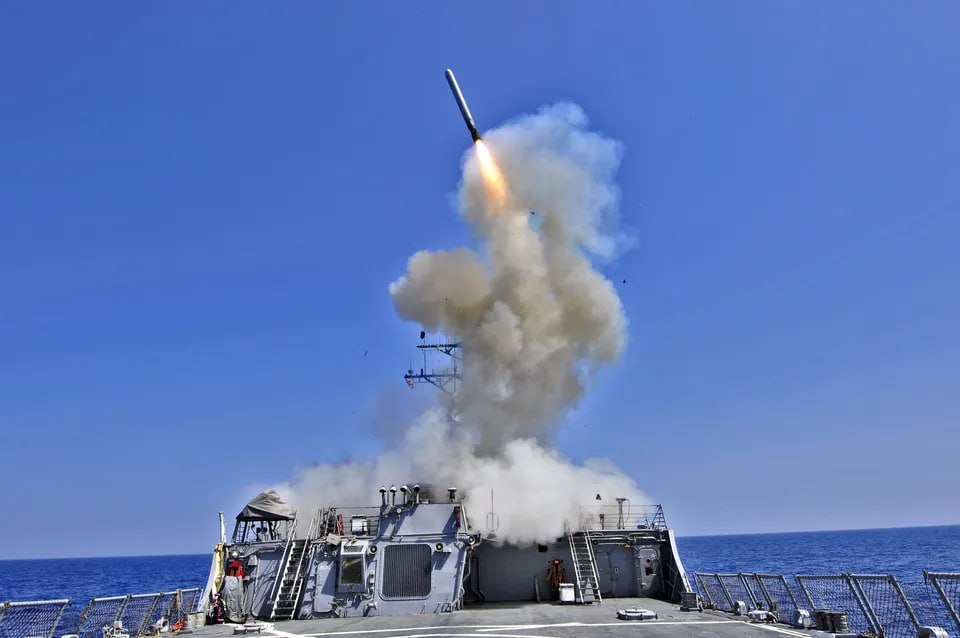
Bloomberg estimates that during war with Iran The US has used more than half of its most advanced Patriot interceptors, around a third of its Tomahawk missiles, and almost half of its high-precision strike missiles and THAAD interceptors. The US Congressional Budget Office separately estimates that, as of June 2025, the military could have used up to two-thirds of its stockpile of missile defence interceptors.
These figures are estimates of ammunition usage, not data on the complete depletion of stockpiles. An independent analysis by CSIS, reported on by the Associated Press in May, estimated that it would take at least three years to replenish stocks of Tomahawk, Patriot and THAAD missiles.
Germany’s request for Tomahawk and Typhon missiles could be on hold for years
Germany has asked the US to speed up the delivery of long-range cruise missiles Tomahawk and Typhon ground-based launchers. According to Bloomberg, Raytheon — the RTX division that manufactures the Tomahawk — is unlikely to be able to fulfil this order within the next five years.
In July, the German government announced an agreement with the US regarding the procurement of Tomahawk and Typhon missiles and their deployment in Germany. The timeline, quantity and other conditions were still under discussion at that time. Consequently, the restrictions apply both to available stocks and to the time required to increase production.
Countries in Eastern Europe and Japan have already experienced delays
Some Eastern European countries have also encountered problems in obtaining US weapon systems. Bloomberg sources attribute the start of the delays to the period shortly after the US and Israel went to war with Iran on 28 February.
A similar situation has arisen in Japan: in April, Washington informed Tokyo that deliveries of Tomahawk missiles might be delayed by approximately two years. This timeframe relates to Japan’s request and does not constitute a general timetable for all allies.
It is more difficult for Ukraine to negotiate the supply of additional Patriot systems
The shortage of US interceptors has a direct impact on Ukraine, which needs additional Patriot missiles to defend itself against Russian missile attacks. The Pentagon’s decision to prioritise replenishing its own stocks is complicating Kyiv’s negotiations regarding such supplies in the run-up to winter.
The strengthening of Ukraine’s air defences is set to be discussed during meetings of world leaders in New York next week. Meanwhile, the US continues to supply Ukraine with weapons that European allies are procuring for Kyiv through NATO and European Union programmes.
Lockheed Martin plans to increase its PAC-3 MSE production capacity
American defence companies are already scaling up production. Lockheed Martin plans to increase the annual production capacity of PAC-3 MSE interceptors for the Patriot system from around 600 to 2,000 units.
Planned capacity does not mean that this number of missiles is already available for delivery. The company has announced a seven-year framework agreement with the US, and capacity build-up takes time and cannot immediately offset the reduction in stocks.