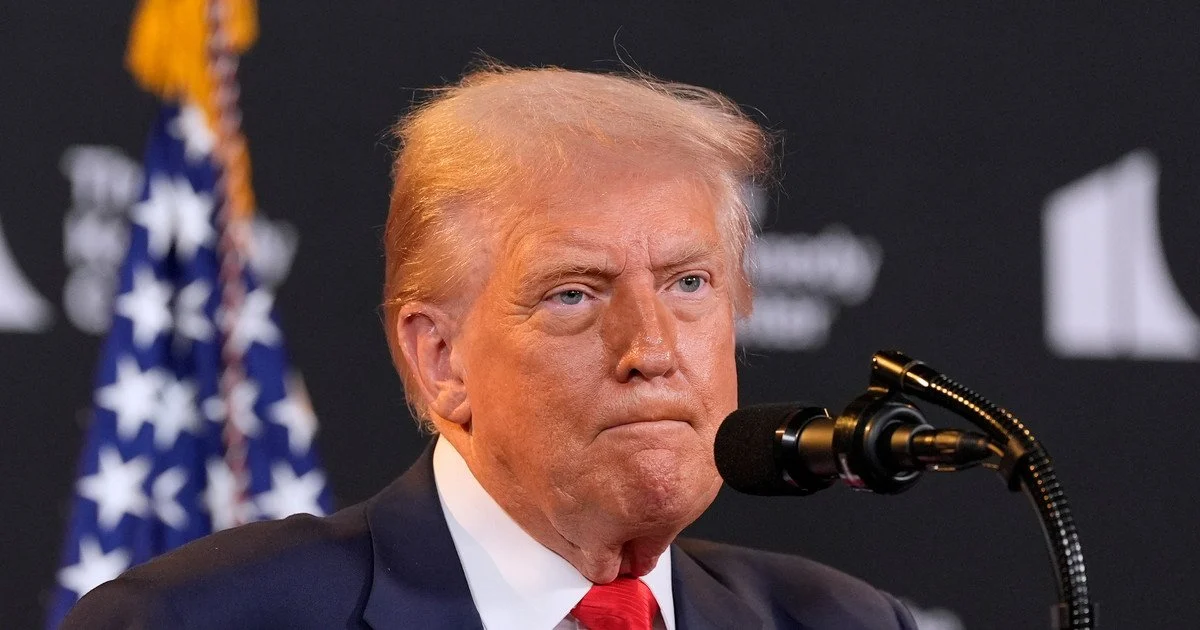
US President Donald Trump has stated that, once the war with Iran is over, the countries of the world must reimburse Washington for the costs associated with its actions. In his post, he also said that oil is passing through the Strait of Hormuz, although Reuters data shows that the volume of traffic there is significantly lower than it was before the war.
Briefly about the main points
- Trump is demanding that countries around the world reimburse the US for its war-related costs.
- The President has not specified the amount, the recipients or the mechanism for compensation.
- Over the weekend, four vessels passed through the strait on their way out and ten on their way in.
- Before the war, around 125 ships passed through the route every day.
- A drone attack brought the Saudi East-West Pipeline to a halt.
A claim without specified conditions
Trump He justified his demand by stating that the United States does more for other countries than for its own interests. He said that, in his view, this situation has been going on for generations.
The President did not specify which states are to compensate for the costs, what sum is involved, or the legal basis on which such payments might be made. Consequently, this statement currently constitutes a political demand rather than an agreed international financial mechanism.
Back in July, Trump had already raised the issue of charges for the safe passage of ships through the strait and a possible levy on cargo. The International Maritime Organisation has stated that international law does not provide grounds for a state to unilaterally impose charges, duties or discriminatory conditions on transit through international straits.
Transit is taking place, but we are still a long way from normal operations
According to Reuters, over the last weekend, from Persian Gulf Four cargo ships passed through the strait, whilst a further ten travelled in the opposite direction. This is below the average for the previous ten days — around 14 ships per day.
Before the war began, around 125 ships passed through the route every day. Strait of Hormuz accounted for approximately one-fifth of global shipments of crude oil and liquefied natural gas.
The IMO has reported that vessels are attempting to navigate this route without reliable safety guarantees. The organisation is promoting a voluntary, temporary mechanism to ensure the safe passage of ships stranded in the Persian Gulf region.
The alternative route was also affected
A drone attack has temporarily halted operations on the Saudi East-West Pipeline — a route that allows oil to be transported to the Red Sea, bypassing the Strait of Hormuz. The Associated Press, citing two regional officials, reported that a significant section of the pipeline may remain out of service for weeks.
The Saudi Arabian and UAE bypass pipelines have limited capacity and cannot fully replace maritime transit. At the same time, supplies via the Red Sea are also dependent on security in the Bab el-Mandeb Strait area.
The combination of risks in two maritime regions and damage to alternative infrastructure means that the oil market remains sensitive to news regarding the safety of shipping routes and the volume of energy supplies.