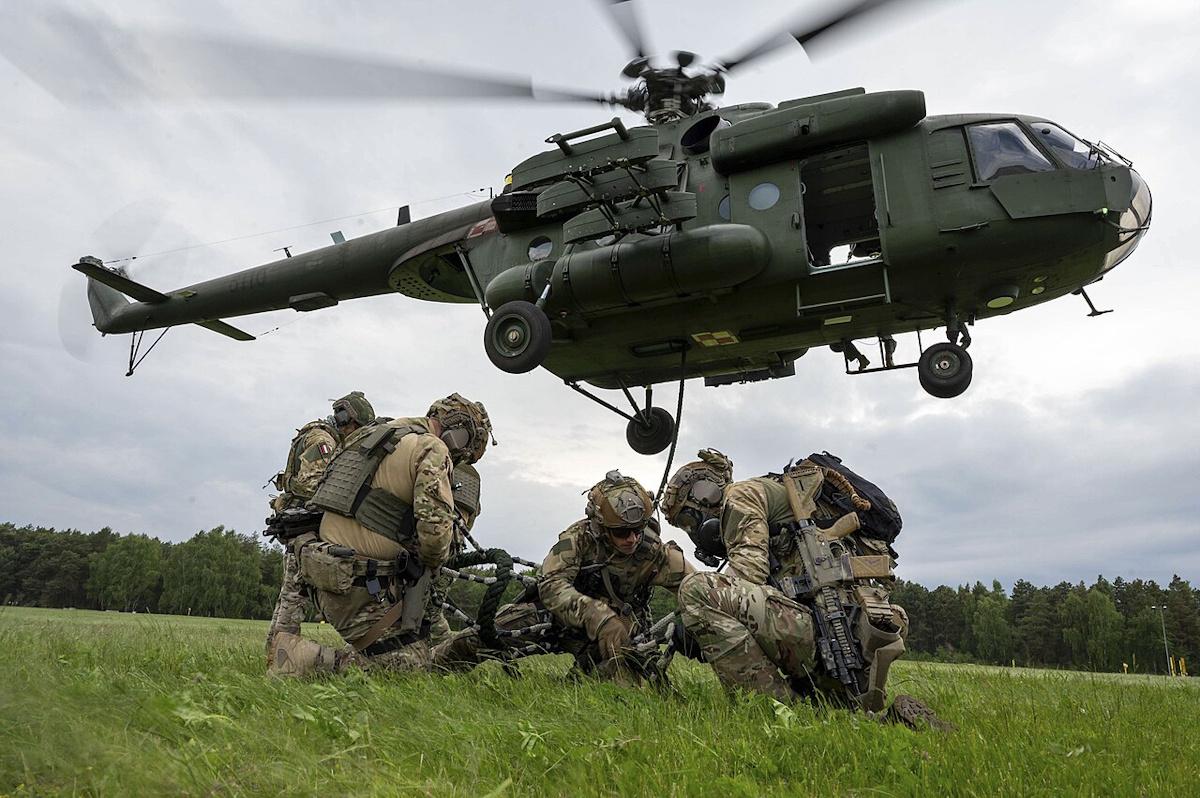
NATO instructors training Ukrainian military personnel in Poland acknowledge that the experience of war enables Ukraine to adapt to new conditions much more quickly than the standard procedures of Western armies allow. According to Business Insider, these lessons are influencing training, arms procurement, the development of military equipment and the Alliance’s interaction with the defence industry.
Briefly about the main points
- Ukraine’s combat experience is shaping the training of NATO troops.
- Norway is leading Operation Legio in Poland.
- Training scenarios are amended following reports from the front line.
- Drone software updates in Ukraine are taking place more quickly than in the West.
- NATO is launching initiatives to accelerate defence research and development.
Education in Poland is being reformed based on frontline experience
Operation Legio is led by Norway, and the training of Ukrainian military personnel is taking place at Camp Jomsborg in eastern Poland. Major John, who coordinates the training process, described this facility as a point of interaction between the war in Ukraine and the peacetime operational procedures of Western armies.
The camp was built in a matter of months. A network of trenches, training villages, wooded and open areas, shooting ranges and infrastructure for operating drones were set up on the site.
Ukrainian servicemen and instructors with fresh combat experience They pass on information about developments on the front line. Following this, Western military personnel adjust their training scenarios and certain elements of the training infrastructure.
Drones have highlighted a disparity in the pace of modernisation
Commander of Task Force Legio, Brigadier General Atlet Molde He told Business Insider that obstacles arise not only during exercises. According to him, peacetime procurement and modernisation rules make it difficult to rapidly upgrade the Norwegian army’s capabilities.
He cited drones as an example. In Western countries, changes to the software for such systems can take months, whereas Ukrainian engineers near the front line are able to update it every few days or weeks. This enables a more rapid response to changes in the enemy’s tactics and the emergence of new technologies.
The Alliance is looking for ways to speed up defence decisions
NATO Secretary General Mark Rütte called on allies to ramp up arms production and accelerate innovation. In July, he spoke of the need for a large-scale transformation of the transatlantic defence industry, and for the reduction of bureaucratic barriers in procurement and cross-border regulation.
У NATO They also emphasise the need to draw lessons from Russia’s war against Ukraine in the field of unmanned aerial vehicles and countermeasures against them. In July, the Alliance launched NATO Front Door for Industry and NATO Engine, designed to make it easier for companies to access NATO opportunities, increase production capacity and accelerate the development of the necessary capabilities.
War creates a need for constant renewal
Ukrainian forces are forced to constantly adapt to new tactics, electronic warfare capabilities, drones and the ways in which they are deployed. The peacetime armies of NATO member states do not operate under conditions of such constant operational necessity, so their planning and modernisation procedures typically have longer timeframes.
The collaboration at Camp Jomsborg not only trains Ukrainian military personnel but also provides NATO armies with practical insights to help them review their own training and organisational approaches.