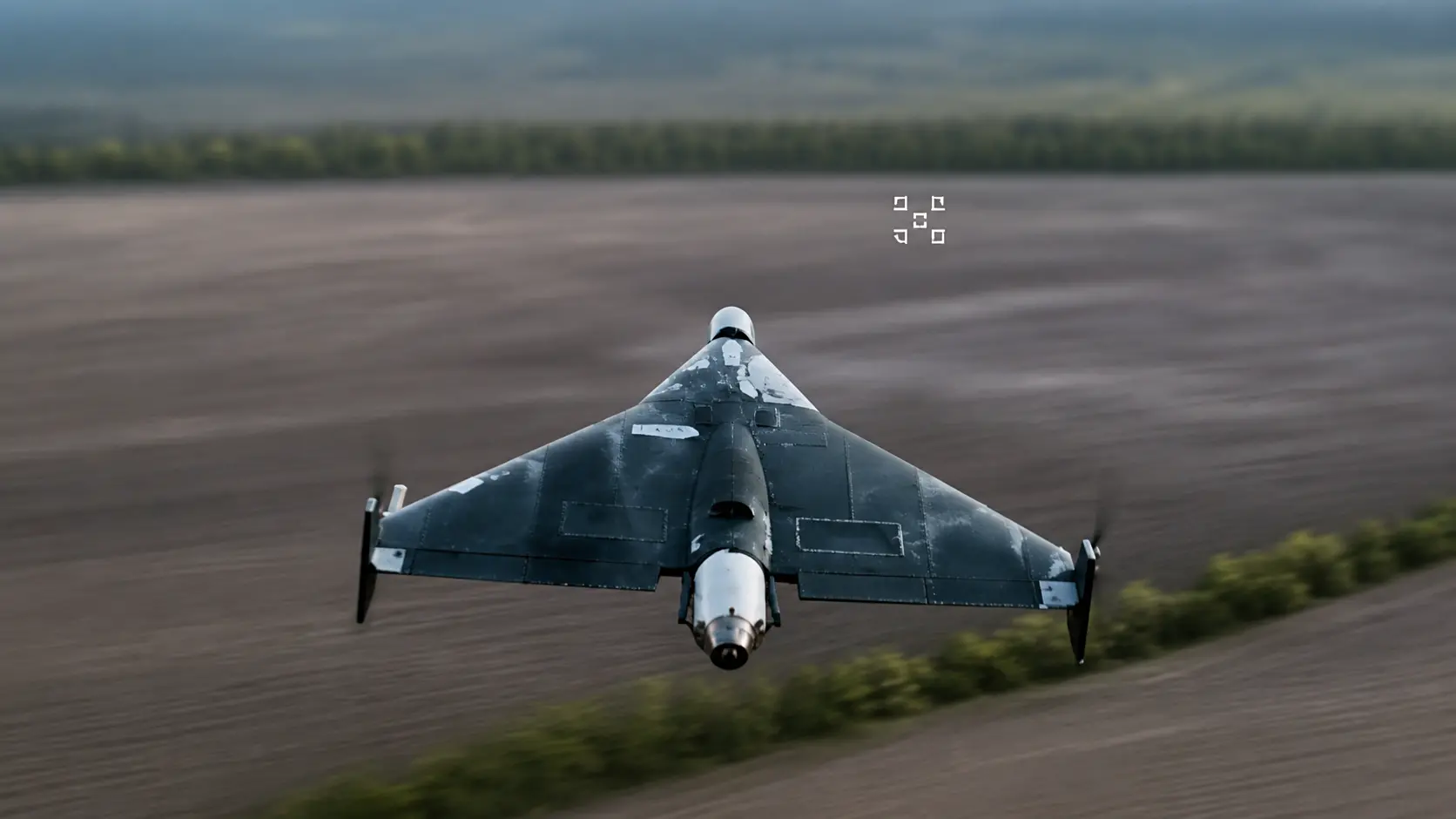
Russia may be developing a new variant of the «Geran» attack drones, equipped with warheads designed to destroy reinforced structures and critical infrastructure. According to Ukrainian monitoring sources, the «Geran-4» is set to be equipped with a cumulative-cutting warhead, whilst cumulative warheads are being considered for the «Geran-2».
• Observers report that new combat units are being prepared for the «Geran-4» and «Geran-2».
• These are charges designed to destroy robust and fortified structures.
• Potential targets may include energy facilities, transport infrastructure and other critical infrastructure.
• The Main Intelligence Directorate has already confirmed that the «Geran-4» can carry several different types of 50-kilogram warheads.
• There is as yet no official confirmation that the cumulative-cutting version has been released.
What monitoring organisations are reporting
According to information available from monitoring channels, Russia is preparing to expand its range of combat units for its new strike UAVs.
For jet «Geran-4» It is reported that a cumulative-cutting warhead is being developed. This type of warhead may be more effective against individual reinforced structures than a conventional high-explosive fragmentation warhead.
Among the possible targets, the monitors cite bridges, specific elements of the energy infrastructure, pipelines and other fortified facilities.
There are separate reports regarding the possibility of equipping «Geranium-2» cumulative charges for destroying reinforced concrete, armoured and other robust structures.
«Geran-4» has already been fitted with several types of warheads
The very fact that Russian «Geraniums»This is confirmed by official Ukrainian data.".
At the headquarters of the Main Intelligence Directorate War & Sanctions It is stated that the «Geran-4» missile has a warhead weighing approximately 50 kg and can already be fitted with at least two types of warhead — the TBBCH-50M thermobaric warhead and the ZBBCH-50 incendiary warhead, in combination with the OFBCH-2 high-explosive fragmentation sub-warhead.
According to the Main Intelligence Directorate, the «Geran-4» is fitted with a turbojet engine and can reach speeds of up to 350 km/h and has a stated range of approximately 770 km. An anti-jamming system, an inertial navigation system and a camera were also found on board.
This means that Russia is already using the platform not as a single, fixed type of munition, but as a basis for various configurations tailored to specific tasks.
Russia is constantly changing the components of the «Geranium» missiles»
In a September analysis, the US-based Centre for Strategic and International Studies (CSIS) also highlighted the pace of modernisation of Russia’s «Geran» range.
According to the researchers, Russian manufacturers have consistently modified the navigation systems, communication systems, engines and warheads of these drones over the course of the war. High-explosive incendiary and high-explosive fragmentation warheads have already been identified on certain earlier versions.
In other words, the very emergence of a new specialised charge technically fits in with the established trend. But this does not constitute confirmation of a specific message on the cumulative-fragmentation warhead for the «Geran-4».
The «Gerani» jet-powered missiles are already posing an additional challenge for air defence systems
These new combat units could potentially exacerbate another problem — the significant increase in the speed of the drones themselves.
The Russian «Gerani» jet-powered drones have become a more serious challenge for Ukraine’s air defence. They fly faster than the conventional piston-engined Shaheds, can operate at high altitudes and leave less time for interception.
CSIS notes that Russia switched to new designs in 2026 «Geran-4» and «Geran-5», designed specifically for turbojet engines and higher speeds.
This enables the «Gerani» to be used not only for massive attacks on stationary targets, but also for more precise strikes against individual targets.
What makes a cumulative warhead dangerous?
The main difference with this type of munition lies in the way the explosive energy is transferred.
Rather than scattering fragments as widely as possible around the point of detonation, a cumulative charge concentrates a significant proportion of its energy on a relatively small area of the structure. This makes it possible to damage strong materials and protected components more effectively.
That is precisely why such combat units may pose an increased threat to certain elements:
- energy facilities;
- bridges and transport infrastructure;
- secure industrial equipment;
- reinforced concrete structures;
- pipelines and engineering infrastructure.
That said, the actual effectiveness will depend on the design of the specific warhead, its mass, the accuracy of the guidance system and the point of impact.
The Main Intelligence Directorate has already identified new components of the «Geran-4»
Ukrainian intelligence continues to examine new models of Russian drones.
In September, the War & Sanctions portal published further details regarding the equipment used in the production of the «Geran» family. In the «Geran-4» itself, the Main Intelligence Directorate identified dozens of components, including electronics of Chinese, American, Taiwanese and Russian origin.
This shows that the platform’s design continues to evolve even after the start of mass production.
Information about new types of munitions therefore requires particular attention; however, definitive conclusions can only be drawn once fragments of such munitions have been found or official data from the Ukrainian military and security services has been released.