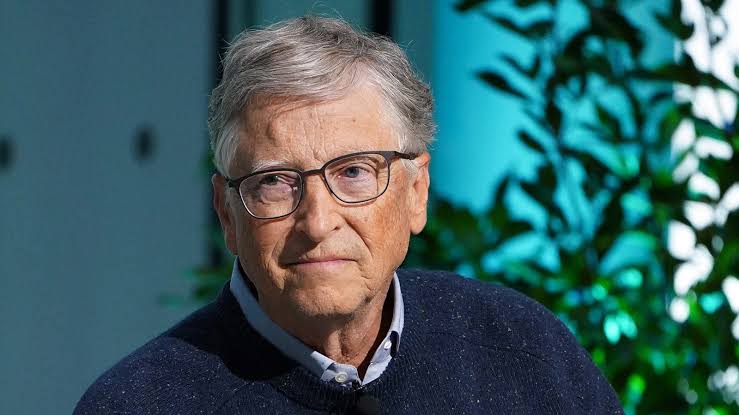
Bill Gates has stated that modern artificial intelligence, in the hands of malicious actors, is already capable of causing events with catastrophic consequences — potentially resulting in as many as a billion casualties. In an interview with NBC News, the Microsoft co-founder urged people not to rely on self-regulation by technology companies and to introduce mandatory safety regulations. He cited cyberattacks, biological threats, fraud and disinformation among the risks.
Briefly about the main points
- Gates described one billion casualties as a possible worst-case scenario, rather than a forecast.
- He considers the combination of AI capabilities and criminal intent to be the main threat.
- He proposes involving legislators and law enforcement agencies in the regulation of the technology.
- The risks include attacks on services, deepfakes and the misuse of biological knowledge.
- Gates is a proponent of the use of AI in medicine, education and science.
The state and law enforcement agencies must play their part in ensuring safety
In conversation with the presenter Kristen Welker Gates He said that the capabilities of modern models are already sufficient to help orchestrate events involving an extremely large number of victims. His warning relates to people who intend to cause harm, rather than the technology acting on its own.
He distinguished this catastrophic scenario from the total annihilation of humanity, which he described as far more complex. Gates did not specify the timeframe or likelihood of such an event, but instead called for safeguards to be put in place before the possibility AI will be used to cause harm.
According to Gates, legislators and law enforcement agencies should be involved in setting safety requirements and monitoring the development of AI. Such requirements should be mandatory, rather than relying solely on voluntary decisions by developers.
He acknowledged that additional regulation would entail costs for the industry. At the same time, in his view, this should not significantly slow down the development and adoption of technologies. In an August column for Gates Notes, Gates also wrote that public policy should be developed through a democratic process involving elected officials, regulators and the public.
Cyberattacks, biological risks and beneficial applications of AI
In a column dated 26 August, Gates noted that AI is capable of lowering the threshold for mounting sophisticated attacks and expanding the capabilities of criminals. He identified hospitals, financial institutions, electricity grids, water supply systems and public services as potentially vulnerable.
He specifically mentioned automated fraud, disinformation and doctored audio and video footage. The capabilities of these models, which are useful for developing medicines and vaccines, can, he said, also be exploited for malicious purposes; international cooperation is needed to counter such biological risks.
The 2026 International Report on AI Security notes that general-purpose models may make it easier to access information relevant to chemical or biological weapons. However, equipment, controlled materials and practical skills are still required to carry out an actual attack.
Gates proposes establishing national mechanisms for coordinating AI policy and an international risk management system. He calls for the involvement of government, academics, business, workers and the public in shaping these approaches. At the same time, he sees the technology as a tool to assist doctors, teachers, farmers and scientists, and links the realisation of these opportunities to a wide range of people having access to the benefits of AI.