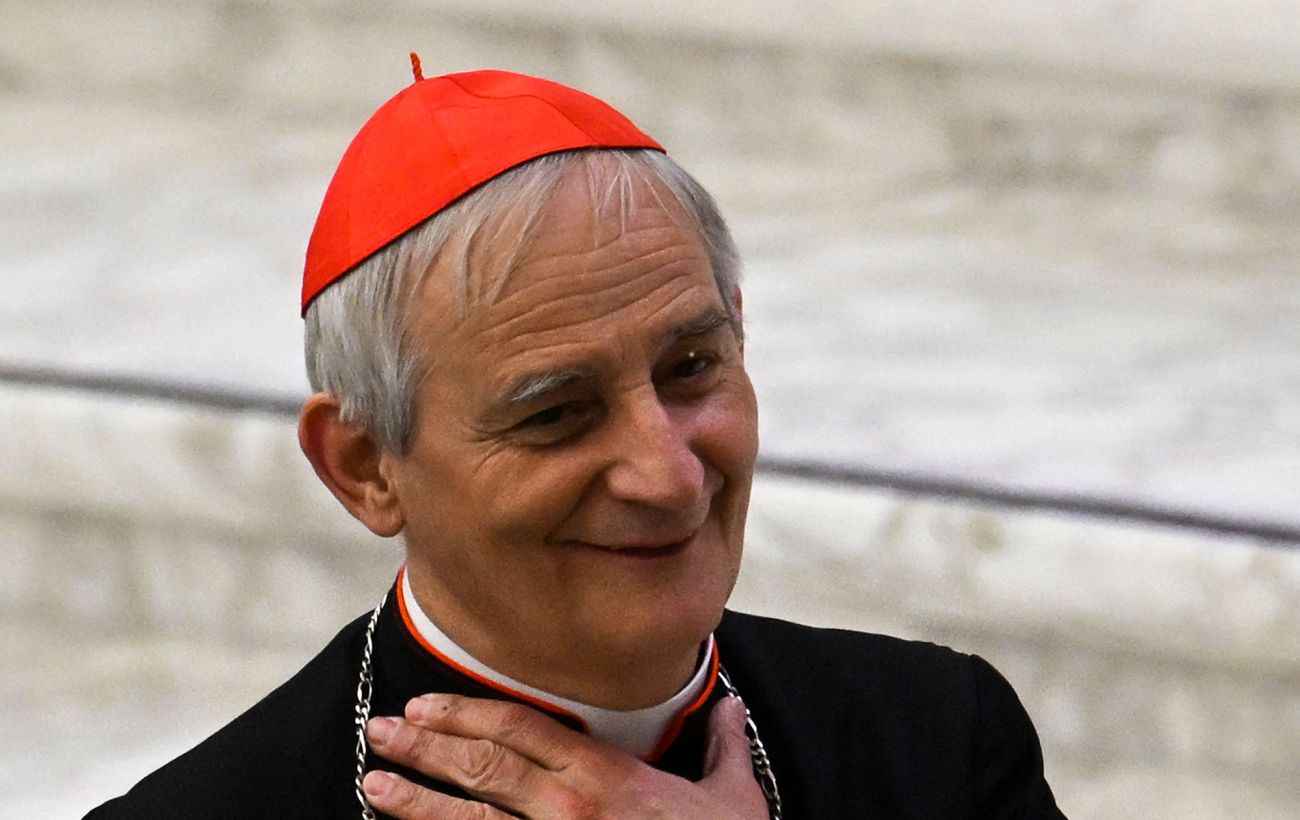
The Pope’s Special Envoy, Cardinal Matteo Zuppi, plans to visit Russia at the end of September, where he is due to hold talks on humanitarian issues relating to the war against Ukraine. He is expected to meet with Vladimir Putin’s foreign policy adviser, Yuri Ushakov. The Vatican emphasises that the main focus of the mission remains on prisoners of war, civilians and the return of Ukrainian children, although humanitarian contacts are also seen as a possible path towards broader dialogue.
Briefly about the main points
- Matteo Zuppi is planning to visit Moscow at the end of September.
- He is due to meet with Putin’s adviser, Yuri Ushakov.
- The main theme is humanitarian issues relating to the war.
- Previously, the Vatican had been involved in issues relating to prisoners of war and the return of Ukrainian children.
Dzuppi confirmed that he was preparing for a trip to Russia
Cardinal Matteo Zuppi confirmed that the Vatican is working on his new mission to Moscow. According to the cardinal, the itinerary for the visit is still being finalised, whilst the main objective remains the continuation of the Holy See’s humanitarian work.
On 21 September, Reuters, citing the Russian news agency RIA, reported that the visit was planned at the end of September. Zuppi heads the Italian Bishops’ Conference and is carrying out the Vatican’s mandate regarding a humanitarian mission linked to Russia’s war against Ukraine.
The exact date of the cardinal’s arrival in Moscow and the full list of his meetings have not yet been publicly announced.
The Kremlin has announced a meeting with Ushakov
Adviser to the President of the Russian Federation on Foreign Policy Yuriy Ushakov Back in early September, he stated that he planned to meet with Zuppi at the end of the month. According to him, the parties should «discuss Ukrainian affairs in concrete terms», primarily humanitarian issues. Ushakov also acknowledged that it is impossible to completely separate these issues from the political context of the war.
Zuppi’s previous visit to Moscow took place in October 2024. At that time, they discussed the reunification of families, prisoner-of-war exchanges and opportunities for further dialogue on bringing the war to an end.
Prisoners, civilians and abducted children remain at the heart of the mission
In July 2026, Zuppi visited Ukraine. During his meetings with the Ukrainian authorities, discussions centred on the return of prisoners of war, the release of civilians and those missing in action, and the return of children who had been taken to Russia.
The Minister for Foreign Affairs of Ukraine Andriy Sibiga At that time, he raised the issue of establishing a humanitarian mechanism for the release of Ukrainian civilians held captive by Russia. The relatives of the captives also appealed to representatives of the Vatican, asking them to facilitate a large-scale exchange and to obtain information about people whose whereabouts remain unknown.
Zuppi himself emphasised that even the return of a single child – whether a civilian or a soldier – to their family is a tangible result of humanitarian work.
The Vatican hopes that the humanitarian channel will facilitate dialogue
The Vatican’s Secretary of State, Cardinal Pietro Parolin stated in September that the Holy See continues to place its trust in «humanitarian diplomacy». According to him, the Vatican hopes that work on humanitarian issues may, in time, create the conditions for a ceasefire and, subsequently, for political dialogue and negotiations. At the same time, Parolin acknowledged that results in this area remain limited for the time being.
The Vatican, however, does not position itself as a party drafting a specific peace plan. Representatives of the Holy See emphasise that the technical terms of any agreements must be determined directly by the warring parties, whilst the Vatican’s role is to maintain channels of communication and support humanitarian initiatives.
This is not the first time Zuppi has travelled between Kyiv and Moscow
Matteo Zuppi has been involved in the Vatican’s mission regarding Ukraine for several years. He has held talks in Kyiv, Moscow and other capitals.
The main practical outcome of these contacts relates specifically to the humanitarian sphere — the exchange of information on prisoners of war, family reunification and the return of children. It is therefore more appropriate at this stage to view the forthcoming visit to Russia as not as formal peace talks between Kyiv and Moscow, but as a continuation of the Vatican’s humanitarian diplomatic channel.