The South Korean military, in conjunction with the UN Command, has launched an investigation into a landmine explosion in the demilitarised zone between South and North Korea. The incident occurred on 21 September in the western sector of the border whilst soldiers were clearing a patrol route. Three South Korean soldiers were injured. The investigation aims to establish the origin of the explosive device, in particular to examine the possibility of a link to North Korea.
Briefly about the main points
- A landmine exploded in the demilitarised zone.
- Three South Korean soldiers were injured.
- Around 40 specialists have been brought in to assist with the investigation.
- The origin of the explosive device has not yet been established.
Around 40 specialists were sent to the site of the explosion
The joint inspection is being carried out by the South Korean Joint Chiefs of Staff and the UN Command, which monitors compliance with the armistice on the Korean Peninsula.
On 27 September, a group of approximately 40 military personnel, representatives of the UN Command and investigators It entered the demilitarised zone and approached the area where an explosion had occurred six days earlier. Due to the danger posed by an unknown minefield, the team has not yet reached the exact point of detonation. Further inspections are planned to continue.
The South Korean military have stated that, once the inspection is complete, they intend to to make the established facts public.
Three soldiers were injured
The explosion took place on 21 September in the western section of the DMZ, south of the military demarcation line.
Three South Korean soldiers were clearing a patrol route when an explosive device detonated. Two of the injured were evacuated by helicopter, whilst the third was also taken to hospital for examination.
President of South Korea Lee Je-myung stated that the explosion had been caused by a landmine, and promised the victims the necessary assistance with treatment and rehabilitation.
Investigations are underway into whether the mine may have originated in North Korea
The origin of the device has not yet been officially established.
Opposition MPs in South Korea have called on the military to conduct the investigation with the utmost transparency, against the backdrop of speculation that the mine may have originated from North Korean territory. The military has promised to investigate this possibility alongside other possible causes.
Meanwhile, Reuters emphasises, …that mine explosions in the demilitarised zone have occurred in the past. Old munitions remain in the heavily mined border area, and individual mines may shift position, particularly due to weather conditions. Therefore, at this stage, the claim that the DPRK is responsible has not been confirmed.
North Korea is once again fortifying its border
The incident has attracted further attention due to the activities of the North Korean military near the demarcation line. According to reports in the South Korean media, in March the DPRK resumed work on fortifying the border, in particular laying mines and erecting barriers.
A former member of the South Korean parliament Yoo Yeon-won stated that, in certain sections of the western part of the DMZ, minefields and other structures erected by the North Korean military may have extended approximately 10–15 metres beyond the military demarcation line. This assertion is also part of South Korean assessments, rather than a conclusion of the current investigation.
The DMZ remains one of the most heavily fortified areas in the world
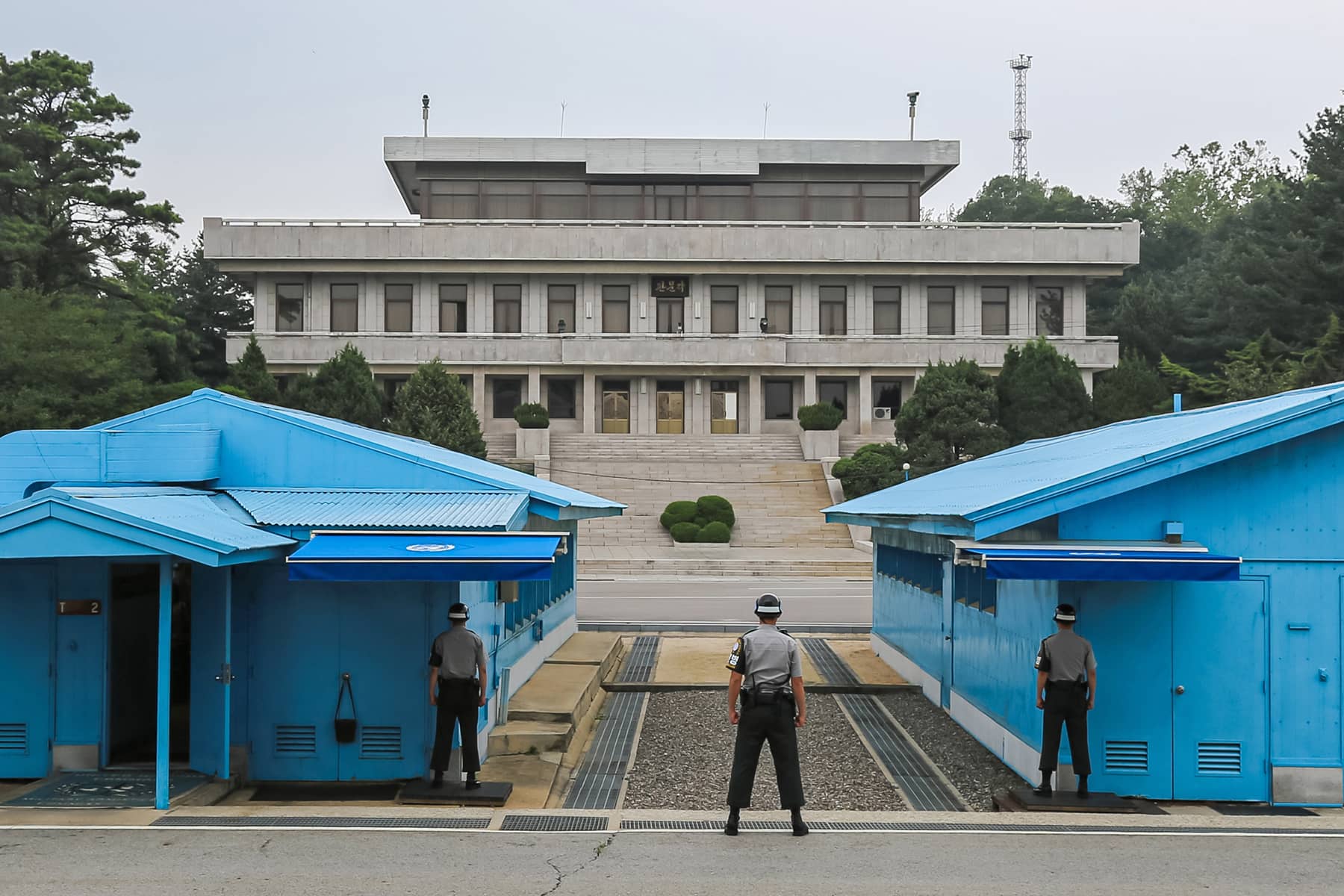
The demilitarised zone separates the South and North Korea following the end of the Korean War of 1950–1953.
Formally, the war did not end with a peace treaty, but with ceasefire agreement, which is why the two states have not yet legally concluded a peace treaty. The DMZ is approximately four kilometres wide and remains one of the most heavily militarised and mined border areas in the world.