Taiwan has objected to what it sees as an attempt by Beijing to rewrite the history of the Second World War, after Xi Jinping and Donald Trump referred to the US-China alliance at a summit in Washington. Taipei insists that during the war, it was the Republic of China that was the United States’ ally, not the People’s Republic of China, which was only established in 1949.
Briefly about the main points
- Taipei disputes Beijing’s claims to a leading role in China’s military history.
- Following the summit, the US and China recalled their joint efforts during the war.
- Taiwan is concerned that the Chinese narrative may influence US support for the island.
- Beijing describes Communist guerrillas as the backbone of military operations in China.
- The Kuomintang has accused the Taiwanese authorities of exploiting history for political ends.
Different accounts of the role of Chinese forces in the war
The Taiwanese authorities claim that Beijing’s version of history distorts the events: during the war, the Republic of China was the government of China and fought alongside the Allies. Following its defeat in the civil war against Mao Zedong’s communists, its government relocated to Taiwan and still retains the official name of the Republic of China.
Beijing, for its part, maintains that the Communist guerrilla forces were the «backbone» of the fighting in China. In the official Chinese history, little attention is paid to the Republican forces. A historical background note from the US State Department indicates that, after 1937, the Nationalists and Communists formed a united front against Japan, although their cooperation was short-lived and marked by rivalry.
Taipei will attempt to explain Washington’s position
On state dinner in Washington Si and Trump noted that their countries had fought together. A White House factsheet issued after the summit stated that the United States and China had been allies during the Second World War and had «fought side by side» for victory.
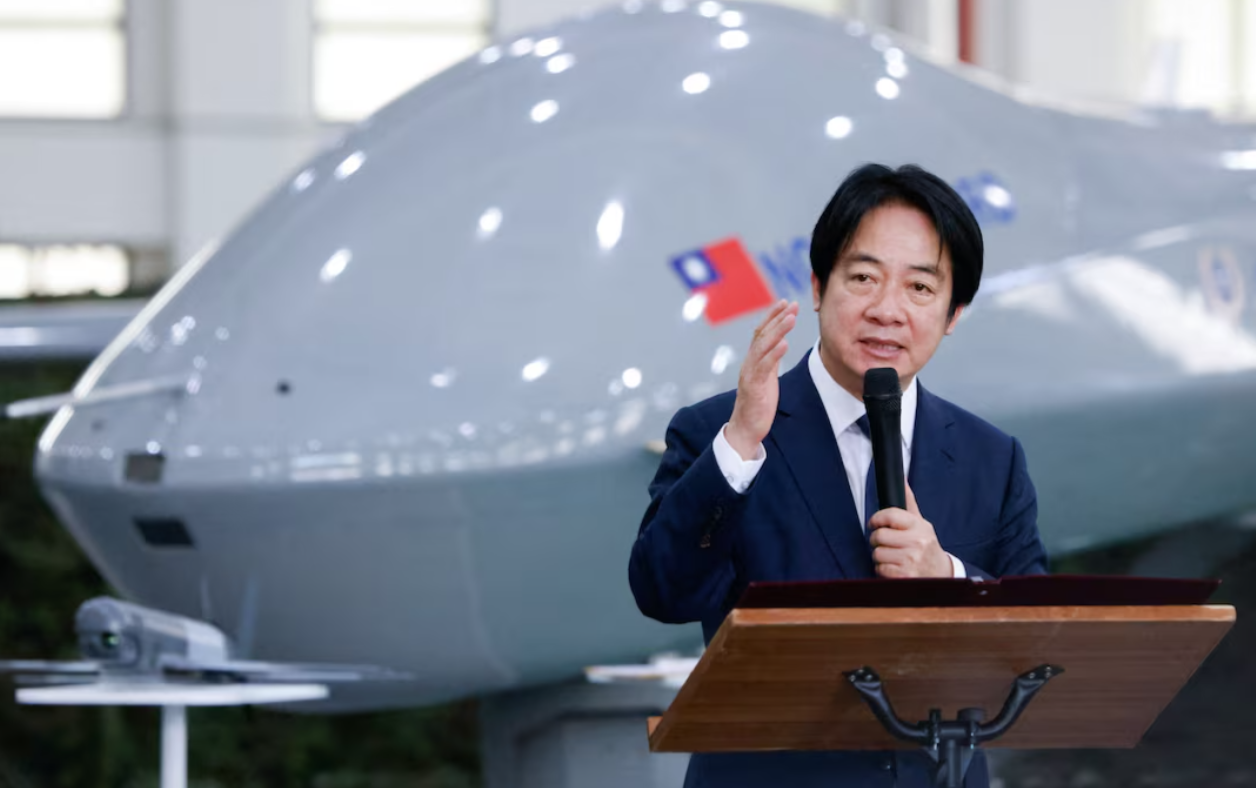
Deputy Chair of the Mainland Affairs Council Shen Yuzhong said that the Chinese leader is attempting to steer the narrative on the war in a direction favoured by the PRC. According to him, Taiwan will continue to explain to the US that the Republic of China was their trusted ally throughout the war.
Taipei is concerned that Beijing may persuade Washington to adopt its own interpretation of history, thereby weakening the island’s support from its key arms supplier. The White House, the US State Department and the Taiwan Affairs Office of the State Council of the People’s Republic of China did not respond to enquiries from Reuters.
Historical memory remains a subject of debate in Taiwan as well
During last year’s 80th anniversary of the end of the war, the de facto US embassy in Taipei stated that China was spreading false narratives about the Second World War in order to put pressure on Taiwan. The American Institute in Taiwan had previously, in line with the position conveyed by Taiwan’s Ministry of Foreign Affairs, also accused the PRC of distorting the content of wartime documents.
The debate also has an internal dimension. Taiwan was a Japanese colony from 1895 to 1945, so the island’s wartime memory is not the same as that of mainland China. Associate Professor at Soochow University Chen Fang-yu stated that Taiwan must counter Chinese narratives aimed at an American audience.
The Kuomintang, which governed the Republic of China during the war, agreed that the government was presenting history accurately, but accused President Lai Ching-te’s administration of acting out of political expediency. The party stated that the authorities draw on the history of the Republic of China prior to 1949 primarily when seeking to counter Beijing and compete for the right to shape the historical narrative.