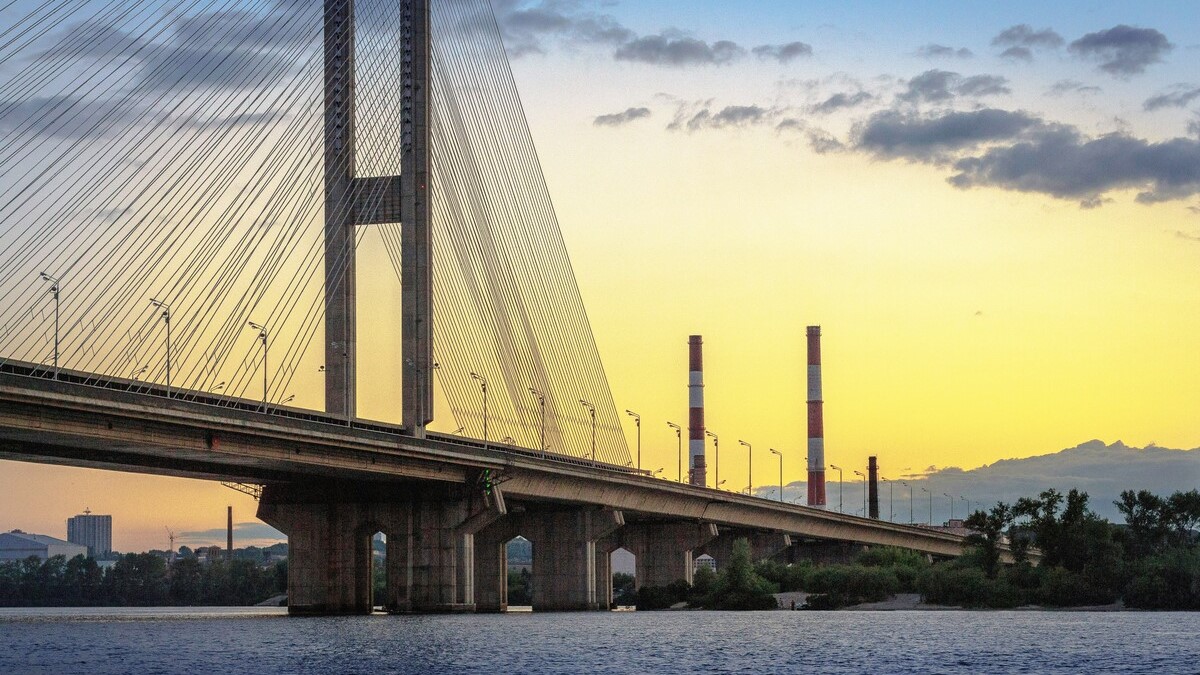
Discussions are taking place in Kyiv regarding alternative transport links between the right and left banks of the Dnipro in the event of serious damage to the bridges. Among the ideas put forward by MPs from the parliamentary committee on transport and infrastructure are freight and passenger ferries, pontoon crossings, alternating traffic, additional buses, cycle hubs and restrictions on private car traffic on even and odd hours.
- MPs are proposing to establish a ferry service between the banks of the Dnieper.
- Certain ferries may be used to transport food, medicines and other essential goods.
- Among the possible passenger routes mentioned is «Slavutych» – Poshtova Square.
- Pontoon crossings are regarded as nothing more than a temporary solution.
- They are also proposing two-way traffic, extra buses, cycle hubs and a timetable for car journeys.
Ferries for passengers and critical cargo
MPs cite one of the main alternatives as ferry crossings. Member of the Verkhovna Rada’s Transport Committee Vladimir Kreidenko stated that certain ferries could be used to transport lorries carrying food, medicines and other essential goods, in order to maintain logistics links between the two parts of the capital.
Passengers are offered a separate service between the piers. Kreidenko mentioned a route from the area around the underground station as one possible option «Slavutych» to Poshtova Square, from where people could change to the underground and other forms of public transport.
According to the MP, the capital already has jetties and some infrastructure that could, in theory, be used for such a service.
However, the MP Yulia Sirko warns that it will be difficult to get the ferry system up and running quickly. At present, civilian navigation on the Dnipro is restricted; arrangements need to be made for passenger boarding on both banks, and vessels suitable for the river’s conditions need to be selected. According to her, so far this idea has been discussed mainly at a theoretical level.
Pontoon crossings cannot replace bridges
Another possible option is — pontoon crossings. Such structures can provide a temporary crossing over the Dnipro, but MPs acknowledge that they will not serve as a full replacement for road bridges.
Sirko pointed out that pontoons could be a stopgap solution, but their capacity would not allow traffic flows to be managed at the same level as conventional bridge crossings. Furthermore, deploying such infrastructure would take time.
Therefore, the main scenario currently envisages maintaining traffic flow via the available bridges and maximising their capacity.
Reversible traffic and more buses
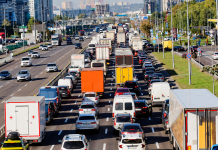
For bridges that will remain open to traffic, it is proposed to introduce reversal movement. The number of lanes in a given direction can be adjusted depending on traffic flow — for example, increasing the number of lanes towards the city centre in the morning and in the opposite direction in the evening. Public transport, emergency vehicles and other essential transport services are to be given priority.
MP Oksana Savchuk It also proposes increasing the number of buses to partially offset the problems with the bridges and the underground.
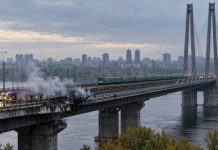
Kyiv had already used a similar mechanism on 2 October: following the night-time attacks Southern Bridge It was completely closed off; traffic on the Metro Bridge was partially restricted, and one direction of traffic on the Paton Bridge was closed. Some of the buses were then diverted via the Darnytsia Bridge.
Bicycle hubs near underground stations
Another proposal is to set up cycling hubs near transport hubs. It has been proposed that these be set up in the areas around the «Slavutych», «Vydubychi», «Arsenalska» and «Livoberezhna» stations.
The idea is that some passengers could leave their bikes on one bank or hire one, travel the problematic stretch without a car, and then change to the underground or another mode of transport. This will not solve the problem of transporting large numbers of passengers; however, according to the authors of the proposal, it may slightly reduce the pressure on road crossings.==
Cars can be categorised according to even and odd hours
The most unusual proposal concerns private transport. Kreidenko suggests considering a system under which the time taken to cross bridges would depend on the last digit of the car’s number plate.
For example, vehicles with an even final digit could use the crossings at certain times, whilst those with an odd final digit could use them at other times. Similar restrictions have been implemented in various countries to reduce traffic congestion, but there is currently no such system in Kyiv.
There is no final plan as yet
On 2 October, the Kyiv Defence Council held a separate meeting to discuss transport links between the two banks following the Russian attacks on the capital’s bridges. The city authorities reported that the military, law enforcement agencies, the State Emergency Service and municipal services had put forward their proposals, which had been forwarded to the central authorities. The Kyiv City State Administration did not announce any specific decision regarding the launch of ferries, pontoons or an odd-even timetable system.
Therefore, all the options listed should currently be regarded as proposals and motions from MPs, rather than Kyiv’s already approved transport plan. The main aim of such ideas is to have a backup mechanism for connecting the two banks in the event of a prolonged blockage or serious damage to one or more bridges.