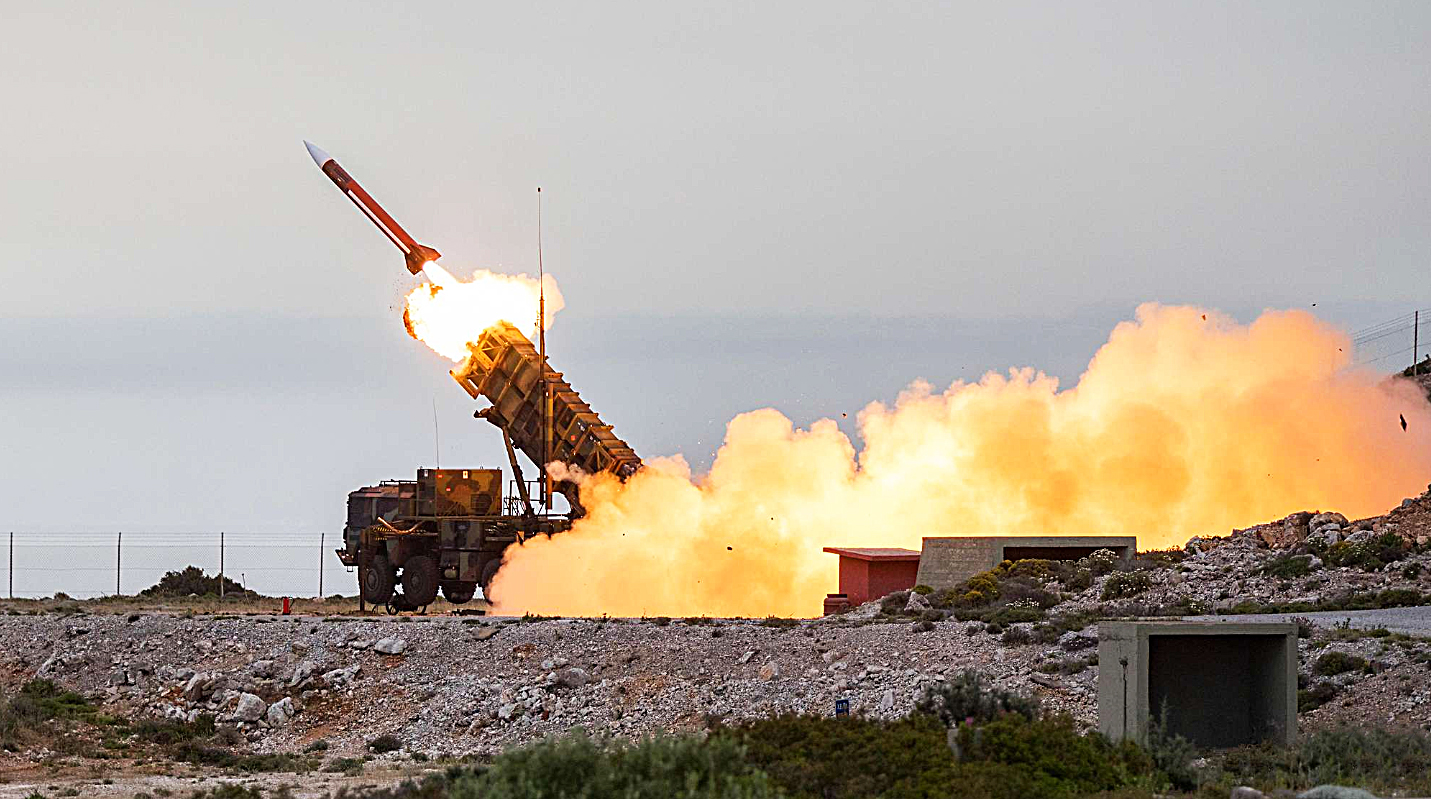
Greece and Spain hold significant stocks of Patriot interceptor missiles, some of which are nearing the end of their service life, but have not yet agreed to transfer further supplies to Ukraine. This was reported on 9 October by the British newspaper *The Telegraph*. Kyiv urgently needs air defence munitions ahead of winter, as Russia steps up its attacks on energy infrastructure. European partners are continuing negotiations with Athens and Madrid, trying to persuade them to transfer at least part of their existing stocks.
Briefly about the main points
- Greece and Spain maintain substantial stocks of Patriot missiles.
- The service life of some of the interceptors is coming to an end.
- No agreement has been reached on a further transfer of these stocks to Ukraine.
- The EU and NATO are continuing their talks on supplies.
Greece and Spain are holding onto missiles that Ukraine needs
According to The Telegraph, two NATO member states have some of the largest stocks of Patriot interceptors amongst Ukraine’s European allies. Some of these munitions have been in service for over two decades and are nearing the end of their manufacturer-specified service life.
Ukraine has repeatedly appealed to its partners to speed up the delivery of missiles. Particular attention is being paid to interceptors PAC-2, which can be used in existing Ukrainian Patriot systems of the relevant configuration.
Back in July, it was reported that Kyiv has approached Greece with a request for the transfer of up to 200 PAC-2 missiles. Some of them have been in service for around 23 years. However, Athens has not agreed to the transfer, citing its own defence requirements.
The Greek authorities have previously explained that the Patriot systems remain a key component of the country’s defence, particularly given the ongoing security disputes with Turkey.
As far as Spain is concerned, the situation is somewhat different. Madrid has already supplied Ukraine with air defence missiles, including Patriot missiles. In September, the Spanish Ministry of Defence reported that, since February, it had supplied over 70 anti-aircraft missiles of various types. The current dispute therefore concerns additional supplies, rather than Spain’s complete refusal to provide military aid.
Why rockets with a limited shelf life can be useful
Rockets Patriot have a service life specified by the manufacturer, during which their performance is guaranteed to meet the established requirements. Once this period has expired, the ammunition requires an appropriate technical inspection, maintenance or other action in accordance with the regulations.
However, the fact that the end of its service life is approaching does not mean that the rocket is no longer fit for use. Its actual technical condition depends on storage conditions, maintenance and the results of inspections.
That is precisely why the allies are considering the possibility of transferring older but technically serviceable interceptors to Ukraine. One of the mechanisms under discussion involves the sale of such missiles to Norway, with a view to their subsequent transfer to the Ukrainian side.
In September, European diplomats also considered the option of an exchange: countries could transfer missiles from their own stocks to Ukraine now, and subsequently receive new munitions once manufacturers had fulfilled their orders.
Ukraine needs hundreds of Patriot missiles for its defence this winter
President Volodymyr Zelenskyy had previously stated that Ukraine needs winter package around 300 Patriot missiles — roughly 100 interceptors per month.
These needs stem primarily from the threat of further large-scale Russian attacks on energy facilities. Power stations, substations, heating networks and other critical infrastructure remain at risk.
At the same time, supplying Ukraine with missiles is complicated by limited production capacity and high demand for American air defence systems in other parts of the world.
The situation is further exacerbated by the deployment of Patriot interceptors during the military conflict in the Middle East. European partners are concerned about a reduction in their own defence stocks, and new missiles cannot always be procured at short notice.
The EU is trying to speed up the transfer of interceptors
The European Union and NATO are continuing consultations on the use of existing Patriot stockpiles. On 1 September, following a meeting of EU defence ministers, the EU’s High Representative for Foreign Affairs, Kaja Kallas, stated that no specific new commitments regarding the transfer of missiles had been reached.
According to a report by the ANSA news agency in mid-September, European officials were discussing further incentives for Greece and Spain. Diplomatic sources indicated that Athens was to some extent willing to consider transferring part of its reserves, whilst Madrid’s position remained more cautious.
The situation is therefore not yet fully resolved: negotiations are ongoing, but there are no new, publicly confirmed agreements regarding these specific reserves.
Time is of the essence for Ukraine. Every additional batch of operational interceptor missiles can strengthen the defence of cities and energy infrastructure during the winter campaign of Russian shelling.