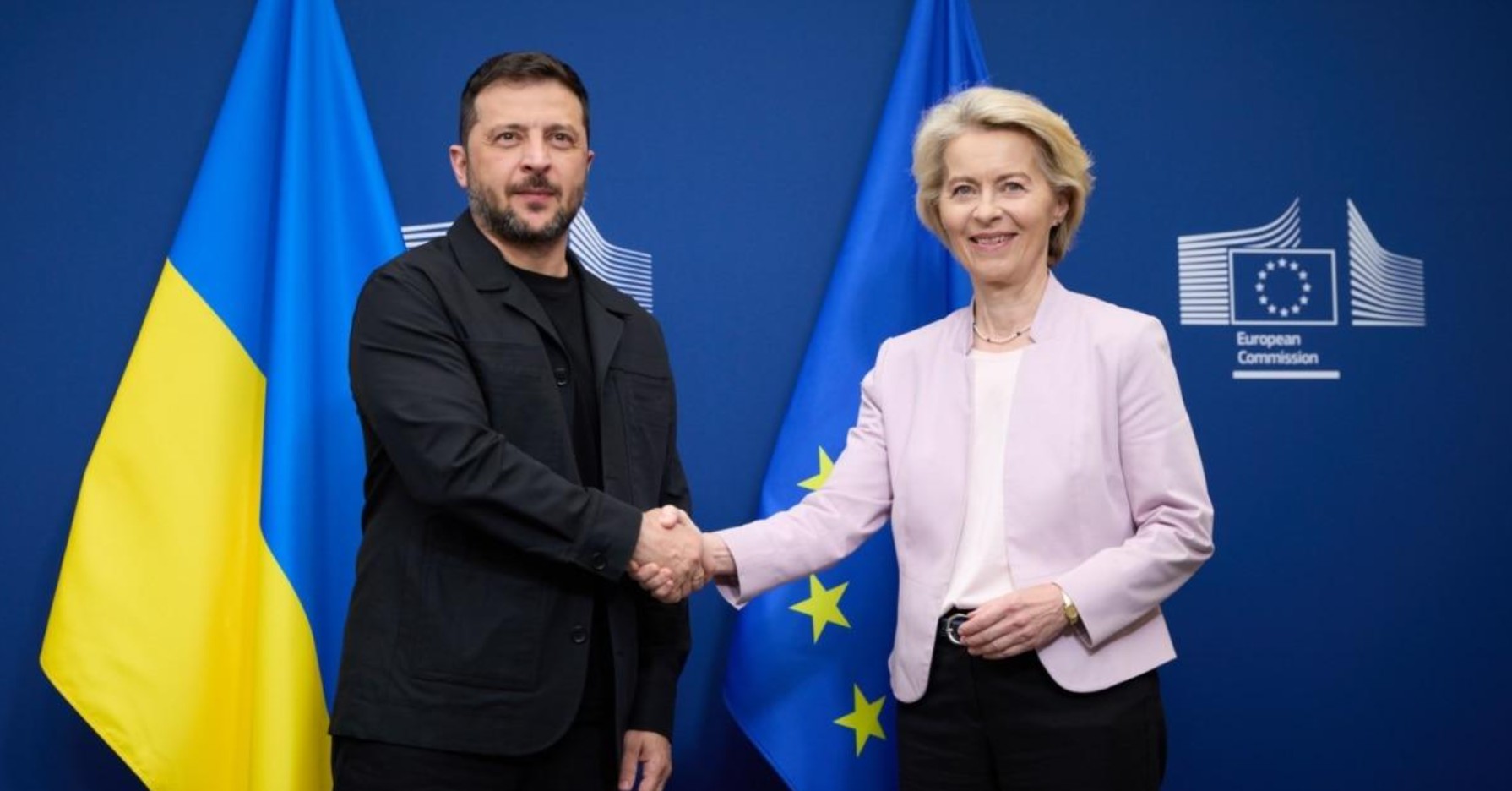
The European Commission has drawn up a more cautious roadmap for Ukraine’s accession to the European Union, which does not specify a particular date for membership. Brussels is proposing that Kyiv focus on accelerating reforms and provisionally concluding negotiations in seven areas by the end of 2027. At the same time, according to the European Commission’s assessment, Moldova could make significantly greater progress by concluding negotiations in more than 20 areas.
- The European Commission has proposed a roadmap for Ukraine’s accession without setting a specific date for membership.
- By the end of 2027, Kyiv may provisionally conclude negotiations in seven areas.
- Key reforms relating to the rule of law must be implemented as early as the first half of 2027.
- According to Brussels’ estimates, Moldova could conclude negotiations in more than 20 areas.
Brussels has set out new benchmarks for Ukraine
The European Commission is proposing a phased timetable for negotiations with Ukraine on accession to the European Union, whilst refraining from setting a specific date for the completion of the entire process. According to a document obtained by Politico, Kyiv may provisionally close seven negotiation chapters in 2027, provided the necessary reforms are implemented.
According to the European Commission’s plan, the first of these could be the area of education and culture — in the first half of 2027. In the second half of the year, negotiations on intellectual property, social policy and employment, industrial policy, science, external relations, as well as foreign and security policy, are expected to be concluded.
This refers specifically to the provisional closure of individual chapters of the negotiations, rather than the completion of the accession process. In total, candidate countries must align their legislation with EU rules across 35 negotiation chapters.
Reforms to the rule of law are becoming a key prerequisite
One of the European Commission’s key requirements remains the acceleration of reforms in the area of the rule of law. Brussels expects the Ukrainian authorities to fulfil their key commitments as early as the first half of 2027.
Without this, it will not be possible to conclude negotiations in certain areas at an early stage. The EU will assess not only the adoption of laws but also the practical implementation of changes, particularly in the areas of the judiciary and the functioning of state institutions.
At the same time European Commission recognises that a full-scale war creates additional difficulties for the country’s reform process. The proposed timetable therefore remains flexible: if Kyiv meets the requirements ahead of schedule, certain sections of the negotiations may also be concluded sooner.
By the end of 2026, Brussels aims to open two negotiation clusters that remain blocked. According to the European Commission’s assessment, Ukraine has already fulfilled the necessary conditions for their opening.
Moldova may overtake Ukraine in the negotiations
The document pays particular attention to the difference between the pace of European integration in Ukraine and Moldova. Both countries were granted candidate status in June 2022 and began accession negotiations simultaneously in June 2024.
However, the European Commission now believes that Moldova could make progress much more quickly. Whilst seven chapters have been provisionally identified for Ukraine for 2027, Brussels estimates that Chișinău has the potential to conclude negotiations on more than 20 chapters.
This difference paves the way for the separation of the two countries’ negotiation processes, which had previously been proceeding largely in parallel. At the same time, progressing more quickly through the various stages of the negotiations does not in itself guarantee Moldova earlier accession to the EU.
Ukraine has already completed its review of the compliance of its national legislation with European standards. In October 2026, the EU opened negotiations with Kyiv on two additional clusters — the internal market, and competitiveness and inclusive growth. Together, they cover 17 negotiating chapters.
Further progress towards membership will depend on meeting the established criteria and on the decisions of the EU Member States. Even the provisional closure of all negotiation chapters will not mean automatic accession: the relevant decision will require the unanimous agreement of EU Member States and the completion of the ratification process.