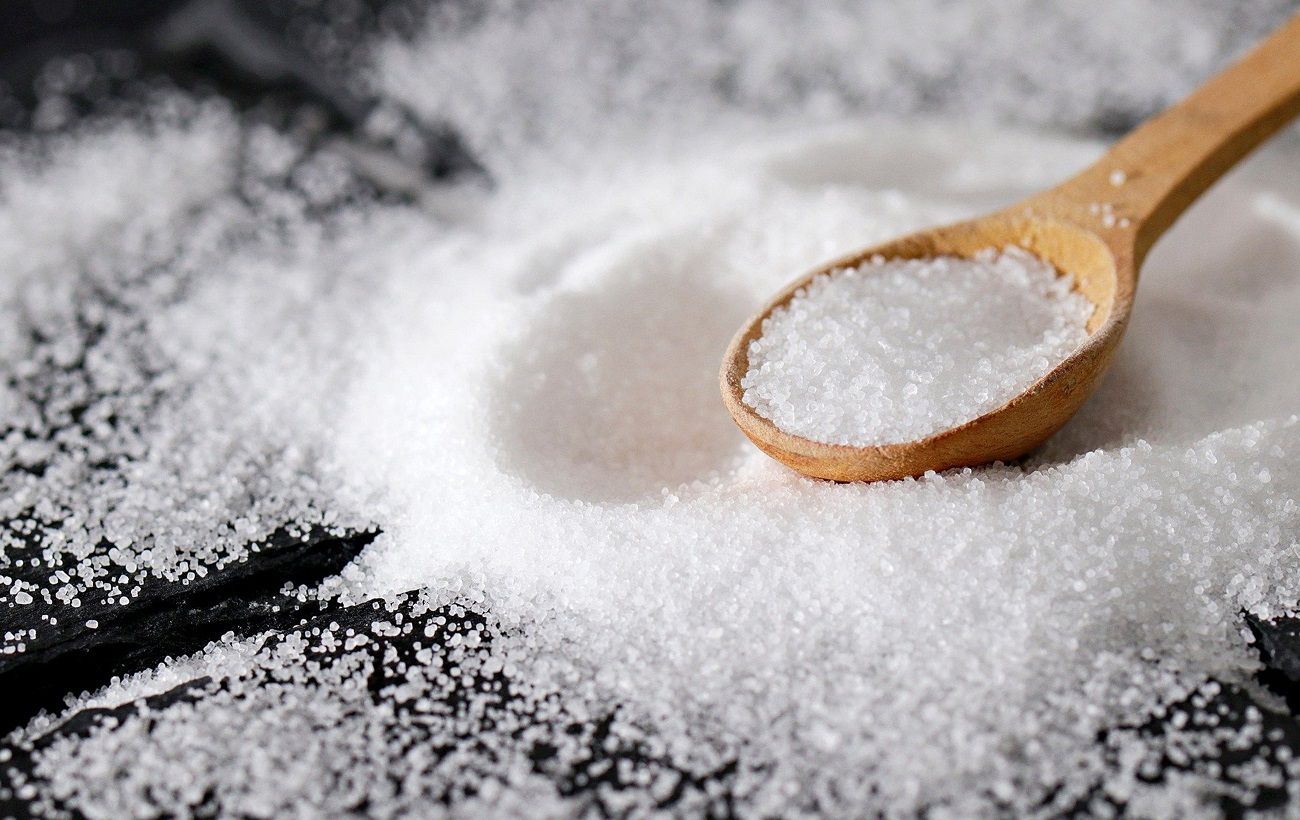
Almost three million deaths each year could be prevented if ordinary table salt were replaced worldwide with salt that is low in sodium and enriched with potassium. This is the conclusion reached by scientists who analysed data from 193 countries. According to their calculations, changing the composition of salt could also prevent over 10 million new cases of cardiovascular and kidney diseases each year.
- Scientists have assessed the impact of replacing ordinary salt with potassium salt in 193 countries.
- A complete replacement could potentially prevent 2.96 million deaths each year.
- Simply replacing table salt at home could prevent 1.85 million deaths.
- The alternative salt contains 75 per cent sodium chloride and 25 per cent potassium chloride.
- Potassium salt may be dangerous for people with kidney problems.
How does ordinary salt affect the heart and blood vessels?
The main component of ordinary table salt is sodium chloride. Excessive consumption of it contributes to high blood pressure, which is one of the main risk factors for heart attacks, strokes and kidney damage.
The researchers proposed partially replacing sodium with potassium. In the model they used, the alternative salt consisted of 75 per cent sodium chloride and 25 per cent potassium chloride.
This product allows you to reduce your sodium intake without having to give up the salty taste entirely. At the same time, potassium helps regulate blood pressure. It is precisely this combination of lower sodium and higher potassium levels that, according to scientists, provides the main benefit.
Almost 3 million lives every year: what the calculations revealed
An international group of researchers has modelled five scenarios for the use of potassium salt — ranging from its widespread use to simply replacing the salt that people add to their food at home.
Under the most far-reaching scenario, the complete replacement of ordinary salt in home-cooked meals, in restaurants and the food industry, could potentially prevent 2.96 million deaths and 10.17 million new cases of cardiovascular disease and chronic kidney disease each year.
If the changes were limited to table salt alone, the expected effect would still be significant — approximately 1.85 million deaths prevented per year. This represents around 63 per cent of the potential benefit of a complete replacement.
The researchers predict that the greatest absolute impact will be felt in countries with large populations and high salt consumption, particularly in China and India.
However, the figures obtained do not predict exactly how many people will definitely be saved. The outcome will depend on the actual uptake of the alternative salt, the population’s dietary habits and people’s state of health.
Potassium salt is not suitable for everyone: who might it harm?
Despite the potential benefits, replacing ordinary salt with potassium salt can be dangerous for people with kidney problems.
The kidneys are responsible for removing excess potassium from the body. When their function is impaired, an additional intake of this element can lead to hyperkalaemia — a dangerous rise in blood potassium levels that can cause serious heart rhythm disturbances.
The researchers took this risk into account in their model. They estimated that, under a scenario of widespread salt replacement amongst people with stage 3–5 chronic kidney disease, there could potentially be up to 100,000 additional deaths each year linked to hyperkalaemia. This is a calculated estimate, not the result of clinical observations.
That is precisely why people with kidney disease, high blood potassium levels, or those taking medicines that affect potassium excretion should not switch to this type of salt on their own.
What does the World Health Organisation recommend?
In January 2025, the WHO published recommendations on the use of salt substitutes with reduced sodium content. The organisation suggests that potassium salt be considered as an alternative to ordinary salt for adults without impaired potassium excretion.
However, this recommendation does not apply to children, pregnant women or people with kidney problems. The WHO also emphasises that the primary objective remains to reduce overall salt intake, regardless of its composition.
In accordance with the organisation’s recommendations, Adults should consume less than 2 g of sodium per day, which is roughly equivalent to 5 g of ordinary table salt.
A new study in *Nature Health* demonstrates the significant potential of changing dietary habits to prevent cardiovascular disease. However, the use of potassium salt requires individual risks to be taken into account, particularly kidney function and medication use.