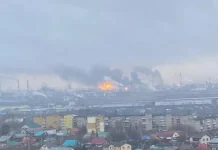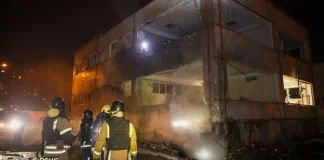
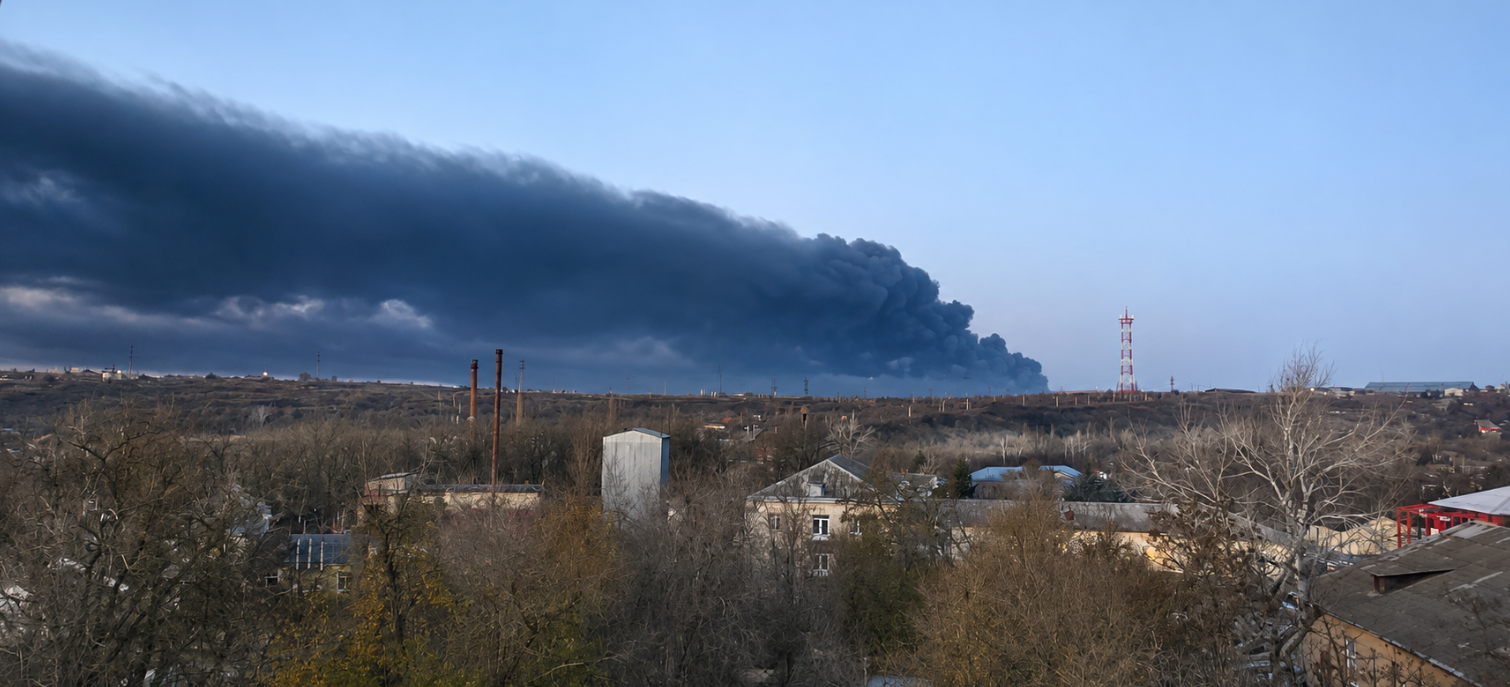
On the night of 23 November 2026, the Russian town of Novoshakhtinsk in the Rostov Oblast came under a massive drone attack. Following a series of explosions in the vicinity of the Novoshakhtinsk Oil Products Plant (NOPP), a massive fire broke out. Footage has emerged online showing a huge plume of black smoke rising above the industrial area. Meanwhile, OSINT analysts are investigating exactly which facility was hit, as there is another fuel storage facility located near the refinery.
- On the night of 23 November, drones attacked the Russian town of Novoshakhtinsk.
- Following numerous explosions near the oil refinery, a major fire broke out.
- The exact point of origin of the fire and the extent of the damage are still being determined.
- The Novoshakhtinsk Oil Refinery has the capacity to process up to 7.5 million tonnes of crude oil each year.
- In September 2026, a preliminary strike had already brought the plant to a standstill.
Explosions could be heard throughout the night in Novoshakhtinsk
The first reports of an attack on Novoshakhtinsk began to emerge at around 1 am local time. Residents of the city reported numerous explosions and the activation of Russian air defences. The sounds of explosions were also heard in Rostov-on-Don, Novocherkassk and near Platov Airport.
The Exilenova+ monitoring channel has released video footage showing a powerful glow over the industrial area. Daytime footage subsequently emerged showing a huge column of thick black smoke.
According to the Russian independent publication ASTRA, which analysed eyewitness footage, the fire broke out in the vicinity of two fuel-processing plants — Novoshakhtinsk Oil Refinery and companies «TATA-GAZ». The latter is involved in the trading, storage and logistics of petroleum products. Therefore, the exact target has yet to be identified.
The Russian authorities have reported more than 80 drones
Governor of the Rostov Region Yuriy Slyusar On the morning of 23 November, he confirmed a massive air strike on the region. According to him, Russian air defences had allegedly destroyed or neutralised more than 80 drones.
He reported on the air defence operations in Kamensk-Shakhtinsky and eight districts of the region. In the Krasnosulinsky district, a fire broke out after debris from a UAV fell; the emergency services arrived at the scene.
At the same time, the Russian authorities have not confirmed that the Novoshakhtinsk oil refinery was directly hit. There is currently no information on the extent of the damage to the refinery, a possible halt to production, or any casualties resulting from the incident.
Why is the Novoshakhtinsk Oil Refinery important to Russia?
The Novoshakhtinsk Oil Products Plant is one of the largest oil refineries in southern Russia. Its design capacity is approximately 7.5 million tonnes of crude oil per year.
The company produces diesel, marine and heating oil, fuel oil and petrol fractions. The plant is connected to the Sukhodolna–Rodionovska oil pipeline and has its own infrastructure for the shipment of petroleum products.
Fuel infrastructure on this scale is important not only for Russia’s civilian economy, but also for military logistics. Damage to production facilities, storage tanks or loading systems could disrupt fuel supplies and require lengthy repairs. At the same time, the actual impact of the current attack on the plant’s operations has not yet been established.
The Novoshakhtinsky plant has been hit on several occasions
This isn’t the first time attack on oil refining infrastructure Novoshakhtinsk since the start of the full-scale war.
In August 2025, a fire broke out at the factory following a drone attack; it took several days to bring it under control.
On the night of 25 September 2026, the Ukrainian Defence Forces attacked the plant once again. The General Staff of the Armed Forces of Ukraine subsequently officially confirmed that it had been hit, whilst the Russian governor reported damage to the oil refinery and a temporary suspension of operations.
Overall, the company was hit on several occasions between 2022 and 2026.
The new fire on 23 November provided further evidence of the vulnerability of Russia’s fuel infrastructure to air strikes. A final assessment of the damage will only be possible once the location of the strike has been confirmed and more detailed information on the condition of the production facilities becomes available.