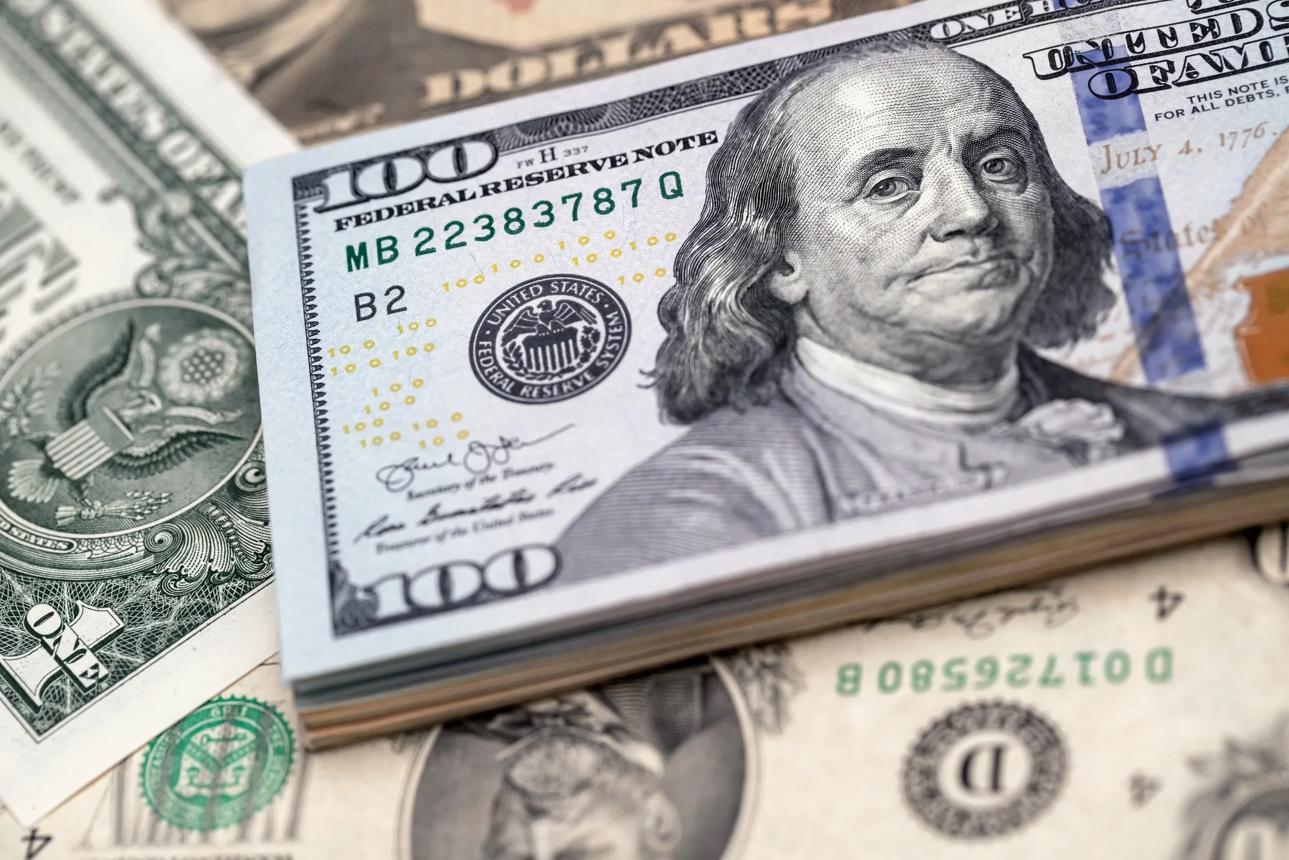
On 19 November 2026, the US dollar is holding steady near its highest level in 19 months amid expectations of a further interest rate rise by the US Federal Reserve. According to Reuters, the dollar index rose to 103.87 points yesterday — its highest level since April 2025. Investors are anticipating a more aggressive fight against inflation, whilst the stock market is experiencing volatility, despite the record-breaking share flotation by artificial intelligence developer Anthropic.
- The US Dollar Index rose to 103.87 points — a 19-month high.
- The markets are expecting the Fed to raise interest rates in December 2026.
- Fed official Christopher Waller has suggested that interest rate rises could be brought forward.
- Tech shares are under pressure, despite Anthropic’s record-breaking IPO worth over $81 billion.
Why has the dollar risen to a 19-month high?
The main reason for the rise in the US currency was investors’ expectations regarding the Federal Reserve’s next moves. The latest figures inflation in the US turned out to be higher than forecast, which increased the likelihood of a further rise in interest rates.
According to Reuters, on 18 November the US Dollar Index rose by approximately 0.3 per cent, reaching 103.87 points. On the morning of 19 November, the index stood at around 103.81 points.
The dollar is strengthening against a backdrop of weakness in other major currencies. The euro was trading at around $1.0977, the British pound at around $1.3152, whilst the Japanese yen remained close to the psychological mark of 160 yen to the dollar.
The Australian dollar also came under pressure following weak labour market data. A fall in employment in Australia for the second month running has heightened expectations of a future easing of the country’s monetary policy.
The Fed may raise interest rates as early as December
An additional signal for financial markets The minutes of the Federal Reserve’s meeting on 27–28 October have been published.
The document highlighted officials’ growing concern about persistent inflation. Although interest rates were left unchanged at the October meeting, participants discussed the need to step up measures to curb prices.
Member of the Federal Reserve Board of Governors Christopher Waller stated that the central bank should consider raising rates by 50 basis points in December or signal a faster pace of rate rises in 2027.
According to the CME FedWatch tool, the markets are already pricing in a 25-basis-point rate rise in December. At the same time, there remains a small chance of a larger move — of 50 basis points.
No decision has yet been taken. Its dependence on inflation figures and the economic situation remains a key factor for the foreign exchange market.
Tech shares under pressure despite Anthropic’s record IPO
Against the backdrop of a strengthening dollar, investors continue to assess the prospects for the technology sector, particularly companies involved in artificial intelligence.
One of the key events was the initial public offering Anthropic — the American tech firm Claude. The company set the offering price at $83 per share and raised approximately $81 billion, setting a historic record for an IPO.
According to Reuters, Anthropic’s valuation at the time of its flotation was around $1.5 trillion. The company’s shares began trading on the Nasdaq on 19 November under the ticker symbol ANT.
At the same time, the substantial expenditure by technology corporations on developing artificial intelligence infrastructure is heightening investors’ concerns about the future profitability of such investments.
OCBC analysts note that expectations of a tighter Fed policy are currently offsetting the negative impact of the weakness in technology shares on the dollar. However, a further downward revision to forecasts for investment in artificial intelligence could weaken support for the US currency.
How does a stronger dollar affect gold and global markets?
Interest rate rises in the US usually make dollar-denominated assets more attractive to international investors. At the same time, pressure mounts on gold, which does not yield interest.
Against the backdrop of the Fed’s more hawkish signals, prices for the precious metal fell to their lowest levels in around 14 months. According to Reuters, on 19 November, gold remained under pressure from a strong dollar and expectations of further interest rate rises.
The US government bond market is also reacting to the change in forecasts. The yield on ten-year US Treasuries, having fallen by around four basis points, stood at around 5.06 per cent.
The dollar’s future performance will depend on new US economic data, inflation forecasts and decisions by the Fed. As of 19 November, the US currency remains close to a multi-month high, although the expected December rate rise has not yet been finalised.