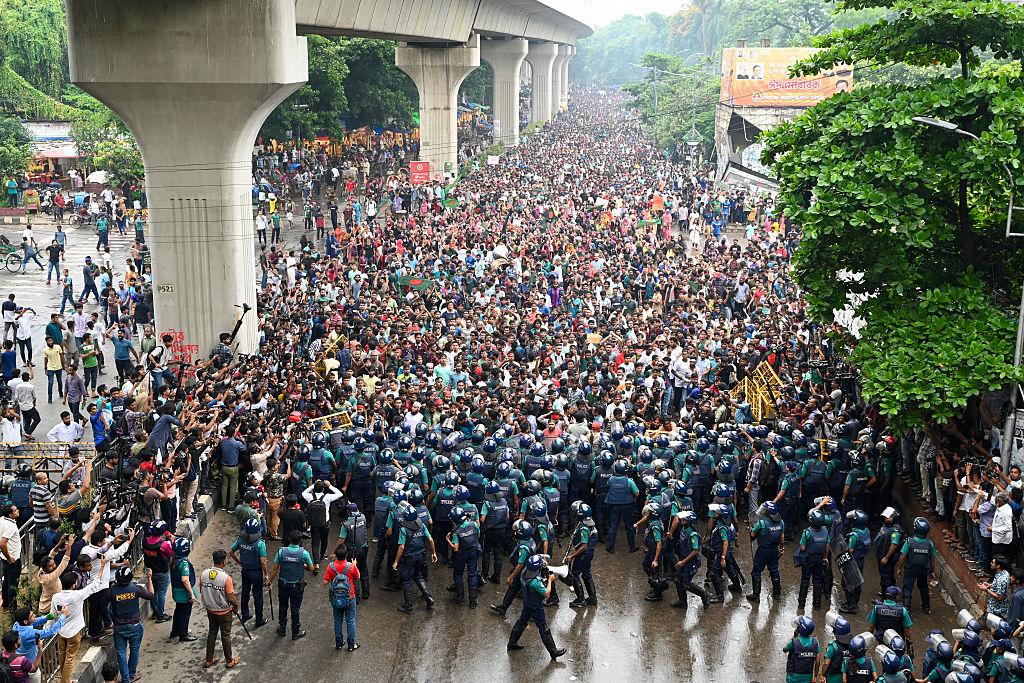
On 19 November 2026, political protests escalated in Bangladesh, accompanied by the torching of vehicles, explosions of homemade devices and clashes with the police. In the port city of Chittagong, unknown individuals set fire to the family home of the former head of the caretaker government and Nobel Peace Prize laureate, Muhammad Yunus. Supporters of former Prime Minister Sheikh Hasina have called for a nationwide protest, whilst, at the same time, garment workers are blocking roads to demand higher wages.
- On the night of 19 November, part of Muhammad Yunus’s family home in Chittagong was set on fire. No one was injured.
- Supporters of Sheikh Hasina are trying to bring transport and business operations to a standstill as part of a nationwide protest.
- According to Reuters, 107 people were detained in Dhaka over the past 24 hours, and 97 border force units were deployed to maintain order.
- Separately, garment workers are demanding that the minimum monthly wage be increased from 12,500 to 30,000 taks.
Muhammad Yunus’s house was set on fire in Bangladesh
The fire broke out late in the evening on 18 November in a family home Muhammad Yunus, situated approximately 300 kilometres south-east of the capital, Dhaka.
According to the police officer Mozamella Hak, the fire was discovered by a patrol. The fire broke out in an unused room on the ground floor. The police suspect that unknown individuals may have thrown a flammable substance into the room.
The fire was quickly brought under control. Yunus’s relatives, who live on the upper floors of the building, were unharmed.
The police are investigating the circumstances of the arson attack. The identities of the attackers have not yet been established, so the direct involvement of supporters Sheikh Hasini There is no confirmed information regarding this incident.
Sheikh Hasina’s supporters are blocking roads and public transport
The current unrest is linked to former Prime Minister Sheikh Hasina’s plans to return to Bangladesh in December 2026.
Hasina left the country in August 2024 following mass student protests that brought her 15-year rule to an end. She has been in India ever since.
Hasina’s banned party, the Awami League, has announced a nationwide campaign calling for businesses and transport services to be brought to a standstill. The protests have intensified following the current government’s refusal to issue the former prime minister with a passport and the documents required for her return.
According to Reuters, on the night of 19 November, at least six buses and lorries were set alight in six districts, and explosions caused by homemade devices were also reported.
The police have reported the deaths of two members of Bangladesh’s ruling Nationalist Party. In the Hopalgandh constituency, the homes of two MPs from that party were also damaged and set on fire.
The authorities have detained more than 100 people and stepped up security
To curb the violence, the authorities have deployed 97 border guard units Bangladesh in seven constituencies. These include Gopalganj and Faridpur, where Sheikh Hasina’s supporters traditionally have a strong following.
According to police reports, in Dhaka alone, 107 people suspected of having links to the Awami League and associated organisations were arrested within 24 hours.
Among those arrested is a former Minister of Education Nurul Islam Nahid. He is suspected of being involved in the killings that took place during the 2024 protests.
Prime Minister of Bangladesh Tariq Rahman He accused Hasina’s supporters of attempting to destabilise the country. He also hinted at India’s involvement in the escalation, but did not provide any public evidence. The Indian Ministry of External Affairs had not commented at the time of the Reuters report.
Garment workers are demanding higher wages
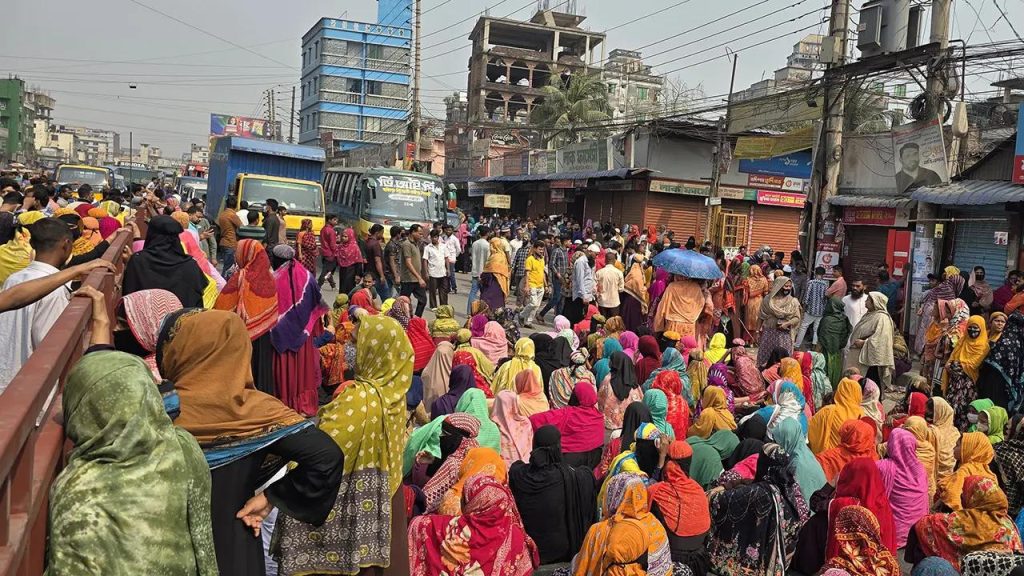
Alongside the political unrest in Bangladesh, sporadic protests by garment workers are continuing. Their demands relate to pay, rather than the return of Sheikh Hasina.
Workers are calling for an increase in the minimum monthly wage from 12,500 tak (approximately $98) to 30,000 tak (around $236).
On 18 November in Savar, near Dhaka, according to local media reports, around 20,000 workers took to the streets in protest and blocked the motorway. The police used tear gas, flashbang grenades and batons.
In the Gazipur industrial area, protesters also blocked the Dhaka–Maymensingh highway and set fire to a police car. Around 25 factories suspended operations following clashes in the Ashulia area.
The garment industry is a key export sector in Bangladesh. It generates around 40 billion dollars in export revenue each year and directly employs approximately four million people.
What is happening in Bangladesh following the latest wave of violence
Following the overthrow of Sheikh Hasina in 2024, the country was led by Muhammad Yunus’s interim government. In February 2026, he handed over power to the elected government of Tariq Rahman.
However, political tensions persisted. Hasina’s return from India became a new point of contention between her supporters and the current government.
As of 19 November, the police are continuing to investigate the arson attack on Yunus’s house and other attacks. The government has stepped up security measures, but some areas are still suffering from transport blockades and clashes.
At the same time, negotiations on pay rises for garment workers have not yet produced a definitive outcome. Political and labour protests remain two separate sources of instability in the country.