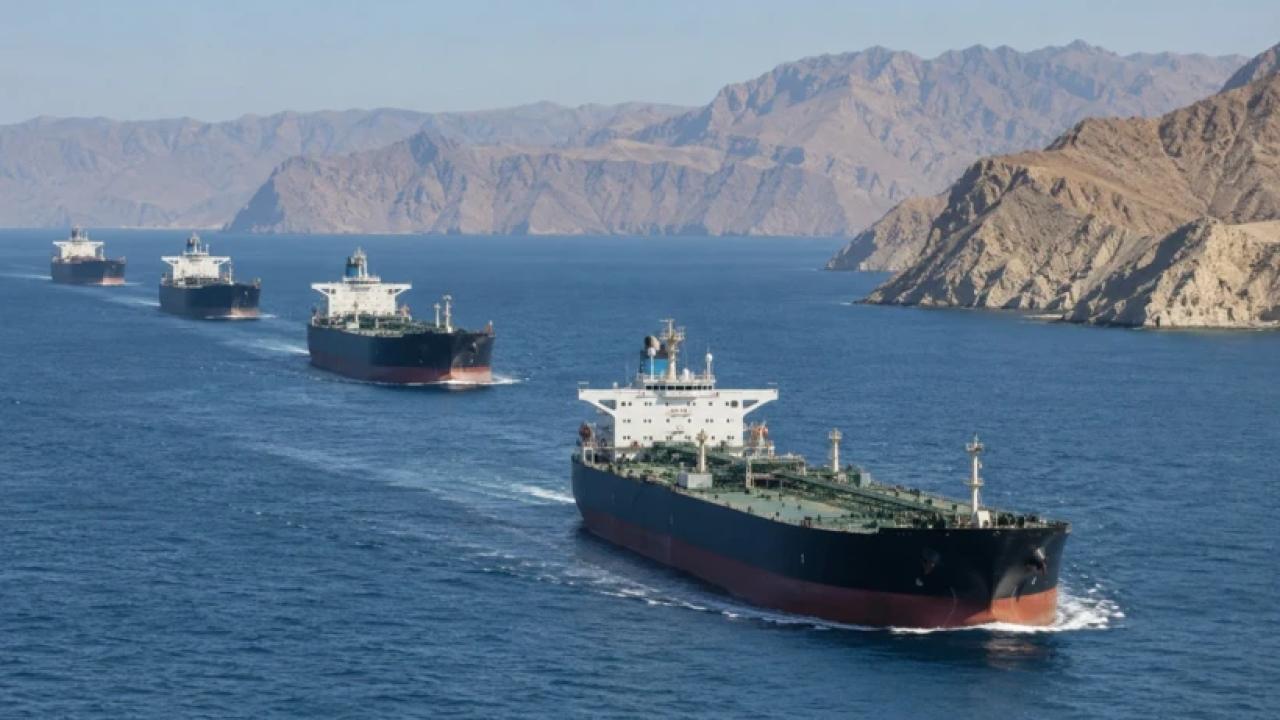
On 19 November 2026, Iran reported explosions and fires on two supertankers carrying a total of over 4 million barrels of crude oil through the Strait of Hormuz. According to a statement by the naval forces of the Islamic Revolutionary Guard Corps (IRGC), the vessels struck sea mines whilst travelling along a route that Tehran considers prohibited. The information was reported by Iranian state media, as well as the Associated Press and Anadolu Agency. It has not yet been possible to independently verify the circumstances of the incident.
What is known about the explosions on the tankers?
According to the Iranian news agency Tasnim, the navy IRGC stated that two supertankers had attempted to pass through the Strait of Hormuz without coordinating their route with the Iranian authorities.
The military claim that both vessels struck sea mines, after which fires broke out on board. According to Tehran, the tankers were near the southern coast of the strait.
The KVI also stated that the vessels were operating under the cover of US fighter jets and reconnaissance drones. These claims have not been independently verified.
The Associated Press reported that the US Central Command (CENTCOM) had not provided an immediate comment on Iran’s statements.
Have the fires been confirmed, and what is known about the crews?
As of 19 November, the names of the supertankers, their countries of registration and their owners have not been officially identified in the available reports.
There is also no verified information regarding the number of crew members, or any possible fatalities or injuries. It is not known whether the vessels are still afloat or whether rescue operations are underway.
Throughout November, the UK Maritime Trade Operations (UKMTO) issued warnings about isolated attacks on vessels near Strait of Hormuz. However, these reports do not confirm the specific incident involving two supertankers, as reported by the KVI on 19 November.
Why the Strait of Hormuz remains a danger to shipping
The Strait of Hormuz connects the Persian Gulf with the Gulf of Oman and the Indian Ocean. Large volumes of oil and liquefied natural gas exported by the Gulf States pass through this route.
Iran has imposed restrictions on vessels passing through the strait without authorisation from the Iranian authorities. Tehran has repeatedly warned of possible forceful action against tankers using routes deemed prohibited.
Throughout November, the Iranian military reported further incidents of explosions and fires on oil tankers. In particular, on 13 and 14 November, Reuters reported statements from the Iranian side regarding tankers being struck by sea mines. The agency was unable to independently verify some of these claims.
How do attacks affect global oil supplies?
According to preliminary data from the analytics firm Kpler, as reported by the Associated Press, the volume of crude oil transported through the Strait of Hormuz in November fell to approximately 8.5 million barrels per day.
This is around half the pre-war level. At the same time, total oil exports from the Middle East via all available routes, including pipelines, amounted to approximately 15 million barrels per day.
Due to the threat of attacks, some shipowners are forced to use more complex routes, implement additional security measures and tranship cargo. This increases transport costs and poses risks to the stability of energy supplies.
What's next
Iran continues to demand authorisation for ships to pass through the Strait of Hormuz and warns of the consequences of breaching the restrictions it has imposed.
As of 19 November, the report of explosions on two supertankers carrying over 4 million barrels of oil remains merely a claim by the Iranian side. To establish the circumstances, independent data from maritime authorities, shipowners or other shipping industry stakeholders is required. The possible scale of the fires and oil losses also remains unknown.