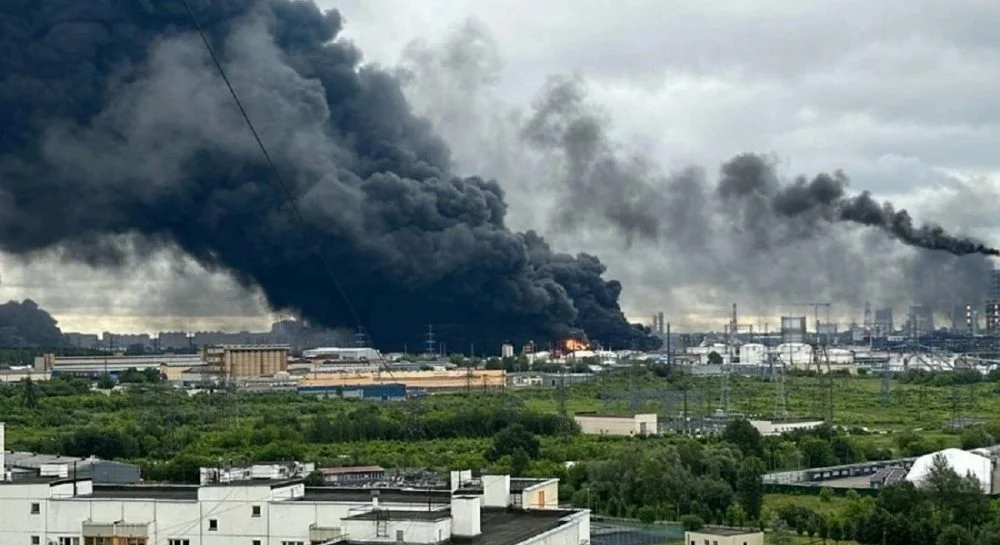
Russian oil refineries processed an average of 3.6 million barrels of crude per day in July — the lowest figure since 2002, according to Bloomberg. This figure is approximately a third below the seasonal average. Meanwhile, following a fire caused by a drone strike, Lukoil’s Volgograd refinery halted operations on 31 July, Reuters reports.
Briefly about the main points
- In July, Russian oil refineries were processing 3.6 million barrels per day.
- This is the lowest level of processing since 2002.
- The figure is about a third lower than the seasonal average.
- The Volgograd oil refinery was shut down following a fire on 31 July.
- The Russian authorities plan to extend the ban on petrol exports until the end of the year.
The July slump and the shutdown of the Volgograd Oil Refinery
The average refining volume in July — 3.6 million barrels per day — stands in stark contrast to the sector’s previous output levels. According to estimates by the US Energy Information Administration, Russian refineries processed an average of 5.4 million barrels per day in 2024, and nearly 6 million in January 2022.
Lukoil« in Volgograd suspended operations on 31 July following a fire caused by a drone strike. The refinery’s nominal capacity is estimated at approximately 290,000 barrels per day. This represents around 5% of the average total Russian refining volume in 2024, although nominal capacity does not equate to actual production.
Pressure on the fuel market and the possibility of reorienting exports
In its July review, the International Energy Agency noted that strikes on Russia’s refineries and export infrastructure had simultaneously affected both the export of petroleum products and domestic fuel supplies. The market may be more sensitive to a reduction in the supply of petrol and diesel rather than necessarily crude oil.
A reduction in domestic refining does not necessarily mean a proportional drop in production: Russia may divert some of its crude oil for export. Back in May, the IEA noted that repeated strikes on refineries were reducing domestic oil consumption and contributing to an increase in Russian crude oil shipments.
The Russian government imposed restrictions in the spring petrol exports for direct producers until 31 July, citing the need to stabilise the domestic market during the peak demand season. At the end of July, Russian Deputy Prime Minister Alexander Novak announced his intention to extend the ban until the end of 2026. The combination of restrictions and a decline in refining suggests increasing pressure on Russia’s domestic fuel balance.
The cumulative impact of the blows on the processing sector
At the end of July, Ukraine also reported that strikes on oil refineries in the Perm Krai and Ryazan. The Carnegie Endowment estimated that 26 attacks on Russian oil refineries were recorded in April–May, particularly targeting more complex process units. According to analysts, repairs to such facilities may take longer due to the need for imported spare parts.
A key factor for the sector’s future performance will be the balance between the frequency of new attacks and the speed of repairs. If downtime continues to mount up, the decline in refining output may persist even if it is possible to redirect some of the crude oil towards export.