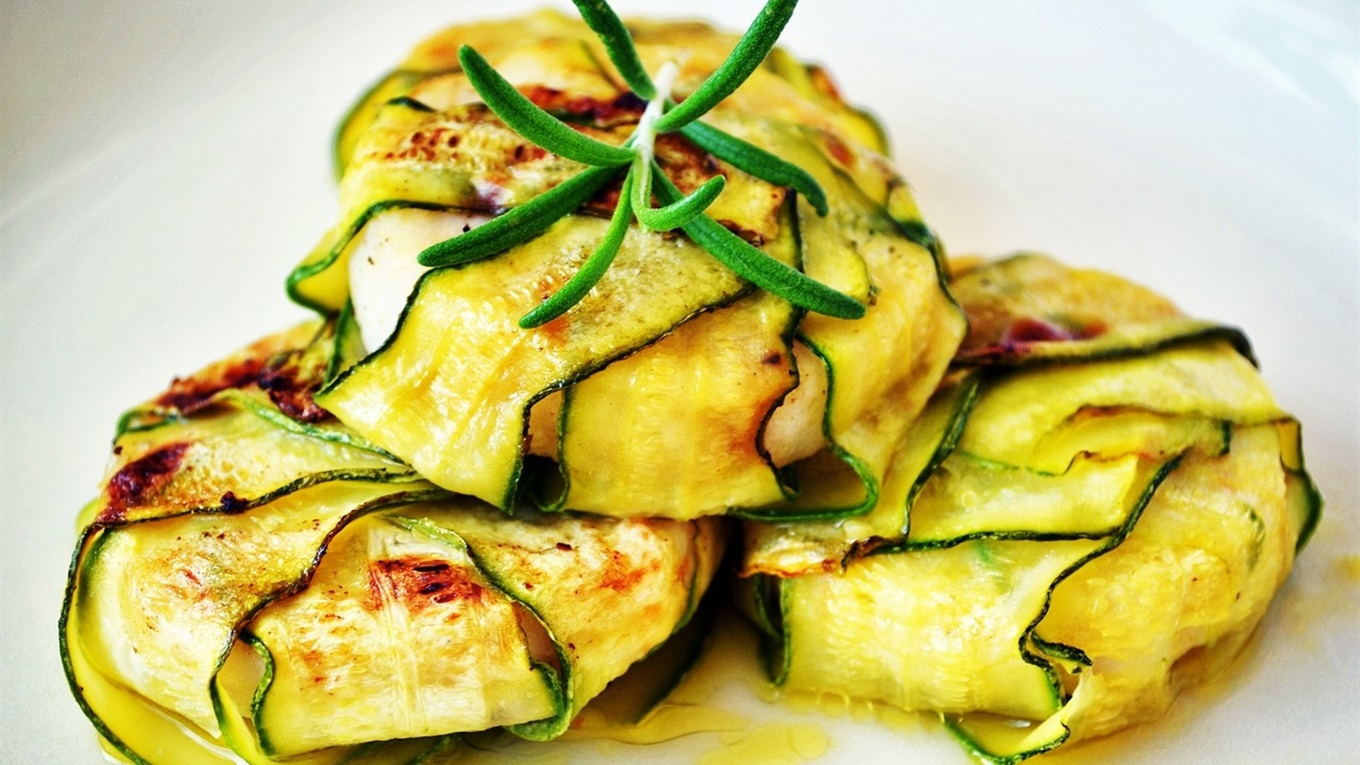
Courgettes are one of the most versatile seasonal vegetables. They cook quickly, go well with cheese, meat, herbs and tomatoes, and are perfect for breakfast, lunch or dinner. However, due to their neutral flavour and high water content, the result depends largely on the method of preparation. This selection brings together ten different recipes: pan-fried, oven-baked and those requiring no lengthy cooking. Most of the dishes can be prepared in 20–40 minutes.
- Courgettes can be cooked quickly in a frying pan, in the oven or without frying.
- The most popular dishes are pancakes, casserole, cream soup and courgette caviar.
- Young courgettes do not usually need to be peeled or have their seeds removed.
- To prevent the fritters from falling apart, the grated courgettes should be squeezed out thoroughly.
- Courgettes are also used to make courgette boats, mini pizzas, vegetable noodles and pickled appetisers.
How to choose and prepare courgettes
For most dishes, young courgettes up to 20–25 centimetres long are best. They have thin skin, tender flesh and small seeds, so it is enough simply to wash them and trim off the ends.
It is best to peel the tough skin off large, ripe courgettes and remove the centre containing the seeds. These courgettes are ideal for stews, soups, caviar or baking.
Once you’ve chopped the courgette, it’s best to pat it dry with kitchen paper. If you’re using the grated flesh for pancakes or a casserole, you should season it lightly with salt, leave it for 10 minutes, and then squeeze out the excess liquid thoroughly. Otherwise, the dish may turn out watery.
1. Crispy courgettes pan-fried with garlic
Cooking time: 25 minutes.
Ingredients:
- 2 young courgettes;
- 3–4 tablespoons of flour;
- 2 cloves of garlic;
- salt and black pepper;
- frying oil;
- dill or parsley;
- sour cream or natural yoghurt to serve with.
Slice the courgettes into rounds about 5–7 millimetres thick. Sprinkle with salt and leave for 10 minutes, then pat dry.
Mix the flour with the pepper, coat each slice in the mixture and fry in a hot frying pan for 2–3 minutes on each side. Sprinkle the cooked courgettes with chopped garlic and herbs. Serve warm with sour cream or yoghurt sauce.
2. Courgette fritters with a crispy crust
Cooking time: 30 minutes.
Ingredients:
- 500 g courgettes;
- 1 egg;
- 3 tablespoons of flour;
- a small onion;
- a clove of garlic;
- salt and pepper;
- oil.
Grate the courgettes using a coarse grater, season with a little salt and leave for 10 minutes. Squeeze out the liquid thoroughly. Add the egg, grated onion, garlic, flour and pepper.
Spoon the mixture into a well-heated frying pan. Fry the pancakes for about 3 minutes on each side. Don’t make them too thick, so that the centre has time to cook through.
If the mixture has become runny again, it’s better to knead it again rather than add a lot of flour.
3. Courgette boats with chicken and cheese
Cooking time: 45 minutes.
Ingredients:
- 2 medium courgettes;
- 300 g chicken fillet;
- 1 tomato;
- a small onion;
- 100 g of hard cheese;
- salt, pepper and paprika;
- a tablespoon of oil.
Cut the courgettes lengthways and carefully scoop out some of the flesh with a spoon. Finely chop the chicken fillet, onion, tomato and courgette flesh. Fry the onion with the chicken, then add the vegetables and spices.
Fill the pastries with the filling, sprinkle with cheese and bake for about 25–30 minutes at 180°C. The chicken inside must be cooked through.
If you prefer, you can replace the fillet with turkey, mushrooms or a mixture of rice and vegetables.
4. Courgette and cheese bake
Cooking time: 50 minutes.
Ingredients:
- 700 g courgettes;
- 3 eggs;
- 150 g hard cheese;
- 3 tablespoons of sour cream;
- 4 tablespoons of flour;
- garlic and herbs;
- salt and pepper.
Grate the courgettes, season with salt and squeeze out the excess liquid thoroughly. Add the eggs, sour cream, half the grated cheese, flour, garlic and herbs.
Transfer the mixture to a greased baking tin. Spread the remaining cheese on top. Bake for 35–40 minutes at 180°C. Leave the casserole to rest for 10 minutes before cutting — it will become firmer and hold its shape better.
5. A delicate cream of courgette soup
Cooking time: 35 minutes.
Ingredients:
- 2 courgettes;
- 2 potatoes;
- 1 onion;
- 1 carrot;
- 700 ml of water or vegetable stock;
- 100 ml of cream;
- salt, pepper and herbs.
Lightly fry the onions and carrots in a saucepan. Add the chopped potatoes and courgettes, then pour in water or stock. Cook for about 20 minutes until the vegetables are tender.
Blend the soup in a food processor, then add the cream, salt and pepper. Heat through, without bringing it to a rolling boil. Serve with fresh herbs, croutons or grated cheese.
The soup tastes just as good without cream — you can replace it with a small amount of milk or leave it out altogether.
6. Courgettes with tomatoes and cheese, baked in the oven
Cooking time: 35 minutes.
Ingredients:
- 2 courgettes;
- 3 tomatoes;
- 150 g mozzarella or another type of cheese;
- 2 cloves of garlic;
- oil;
- salt, pepper and dried herbs.
Slice the courgettes, tomatoes and cheese into rounds. Arrange them in a baking dish, alternating the ingredients. Season with salt, add pepper, garlic and dried herbs. Drizzle lightly with oil.
Bake for 25–30 minutes at 190°C. If the vegetables have released a lot of liquid, you can switch on the top heating element for a few minutes towards the end of cooking.
7. Quick courgette caviar in a frying pan
Cooking time: 40 minutes.
Ingredients:
- 2 courgettes;
- 1 carrot;
- 1 onion;
- 2 tomatoes or 2 tablespoons of tomato purée;
- 2 cloves of garlic;
- oil, salt and pepper.
Fry the onions and carrots until soft. Add the diced courgettes and cook, covered, for about 15 minutes. Then add the tomatoes, garlic and spices.
Simmer uncovered until the excess liquid has evaporated. Once cooked, you can leave the vegetables in chunks or blend them in a food processor. This vegetable spread is ideal for sandwiches, as a side dish or as a sauce for pasta.
This recipe is intended for immediate consumption, not for long-term storage without special preservation methods.
8. Courgette spaghetti with tomato sauce
Cooking time: 20 minutes.
Ingredients:
- 2 young courgettes;
- 200 g of tomatoes;
- 2 cloves of garlic;
- 50 g of hard cheese;
- oil;
- basil, salt and pepper.
Cut the courgettes into thin, long strips using a vegetable peeler or a special grater. Simmer the tomatoes with garlic and spices for 5–7 minutes.
Add the courgette strips and cook for a further 2–3 minutes. It’s important not to overcook the vegetables: they should retain their shape. Before serving, sprinkle the dish with cheese and basil.
9. Mini courgette pizzas
Cooking time: 30 minutes.
Ingredients:
- a large courgette;
- 2 tomatoes;
- 150 g of cheese;
- 100 g of boiled chicken fillet or mushrooms;
- tomato sauce;
- salt and dried herbs.
Slice the courgette into rounds about 1 centimetre thick. Place them on a baking tray lined with baking paper and season lightly with salt.
Place a little tomato sauce, the filling, a slice of tomato and some cheese on each pizza base. Bake for 15–20 minutes at 190°C. These mini pizzas are perfect served as a hot starter.
10. Quick pickled courgettes with dill
Cooking time: 15 minutes plus cooling time.
Ingredients:
- 500 g of young courgettes;
- 2 cloves of garlic;
- a bunch of dill;
- 2 tablespoons of oil;
- 1 tablespoon of apple cider vinegar;
- a teaspoon of sugar;
- a teaspoon of salt.
Slice the courgettes into strips or rounds as thin as possible. Add the chopped garlic and dill.
Separately, mix together the oil, vinegar, salt and sugar. Pour the marinade over the courgettes, give them a stir and place in the fridge for at least 1–2 hours. Store the dish in the fridge only and it is best to eat it within two to three days.
How to make courgette dishes tastier
Courgettes easily absorb the flavours of other ingredients, so it’s a good idea to add garlic, dill, parsley, basil, paprika, black pepper or dried Italian herbs.
Don’t fill the frying pan completely when frying. If the pieces are packed too tightly together, they’ll start to simmer in their own juices and won’t develop a golden brown crust.
It is best to salt the courgettes just before cooking, or to use salt to draw out the moisture beforehand. Leaving them in salt for too long makes thin slices too soft.
Answers to frequently asked questions about courgettes
Do courgettes need to be peeled?
Young courgettes with thin, undamaged skin do not need to be peeled. It is best to peel large, ripe courgettes and remove the hard seeds.
Why do pancakes fall apart?
The most common cause is excess liquid. Grated courgettes need to be squeezed out thoroughly, and the frying pan should be heated well before frying.
Can courgettes be frozen?
Yes. Courgettes, cut into cubes or rounds, can be frozen in small portions. Once defrosted, they become softer, so they are best suited for soups, stews, caviar and bakes.
How long do fresh courgettes keep?
It is best to use young courgettes within a few days. Store them in a dry place in the vegetable drawer of the fridge and wash them just before cooking.
What goes best with courgettes?
The best combinations are tomatoes, garlic, onions, carrots, cheese, eggs, chicken, mushrooms and fresh herbs. Thanks to their neutral flavour, courgettes are suitable for both simple appetisers and full-fledged hot dishes.
Courgettes allow you to prepare a variety of seasonal dishes every day without the need for complicated ingredients. The key to success is to choose young courgettes, control the amount of moisture and not overcook them.