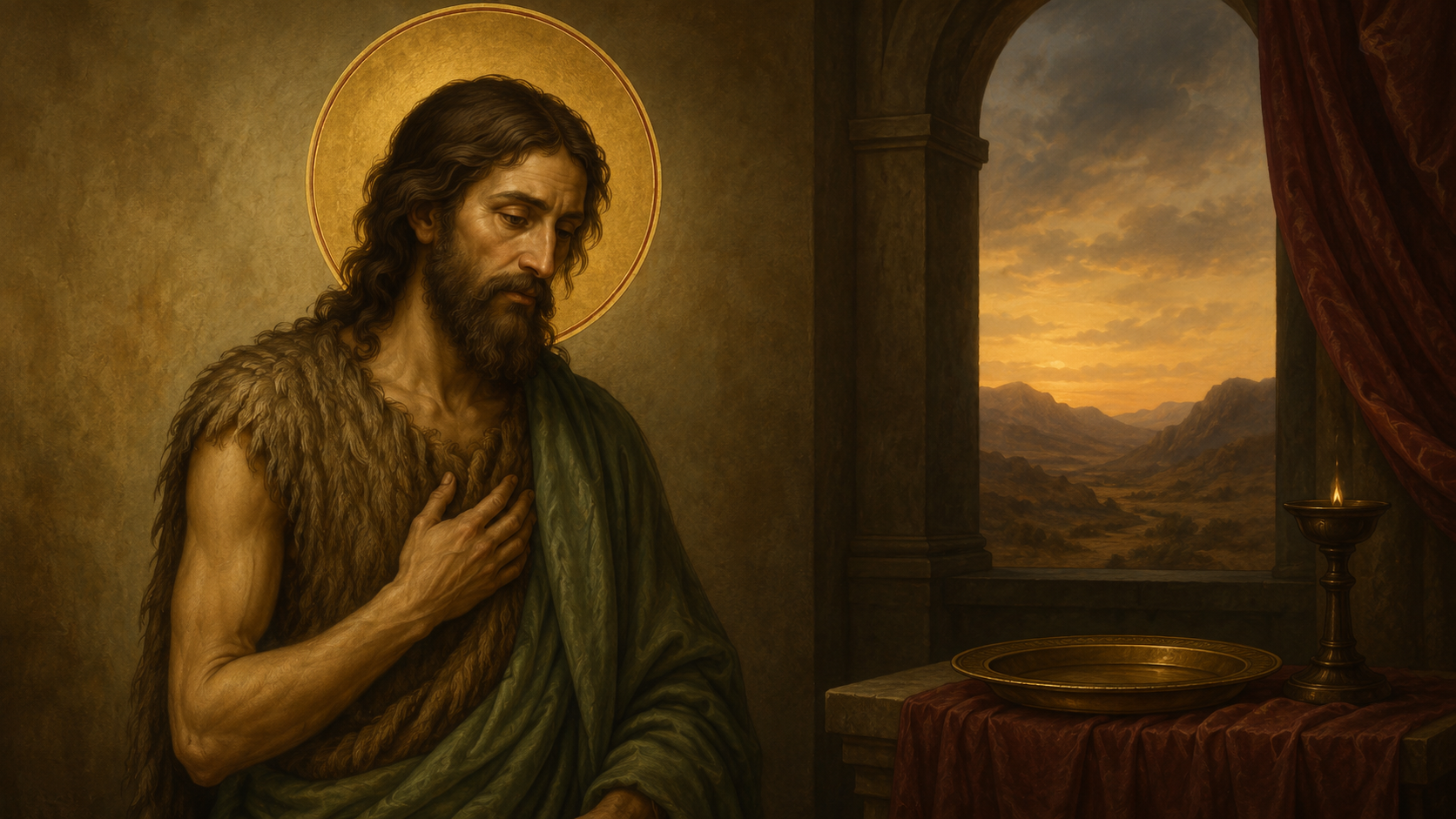
The Beheading of John the Prophet, Forerunner and Baptist of the Lord is one of the most revered church feasts, commemorating the martyrdom of John the Baptist. According to the new church calendar of the OCU and the UGCC, it is observed annually on 29 August. For the faithful, this is a day of prayer, repentance and a one-day fast. At the same time, there are many folk taboos associated with the date — ranging from a ban on using a knife to avoiding round-shaped foods — though by no means all of them have ecclesiastical origins. The OCU officially classifies 29 August as a one-day fast.
Briefly about the main points
- The Beheading of John the Baptist is celebrated on 29 August.
- A one-day fast is observed on this day.
- Taboos regarding knives and round foods are folk beliefs.
The Beheading of St John the Baptist
Following the adoption of the new calendar by the Orthodox Church of Ukraine and the Ukrainian Greek Catholic Church, the dates of the fixed feasts have shifted by 13 days.
Therefore The Beheading of St John the Baptist is now commemorated on 29 August. Previously, according to the Julian calendar, the holiday fell on 11 September. The UGCC explained this change separately during the calendar reform.
The date is a non-leap year date, meaning it remains the same every year.
For communities that continue to follow the old Julian calendar, the church commemoration may continue to fall on 11 September.
What does ‘The Beheading’ mean?
The Word «amputation» means beheading.
On this day, the Church commemorates the martyrdom of the death of John the Baptist — the prophet who prepared the people for the coming of Jesus Christ, preached repentance and baptised Christ in the River Jordan.
John is also known as The Forerunner, as his ministry preceded that of Jesus Christ.
In the Christian tradition, this is not a celebration of death as such. The main significance of the day lies in commemorating a man who remained true to his convictions and to God’s truth even in the face of death. In its sermons leading up to this day, the Ukrainian Greek Catholic Church emphasises precisely this fidelity to truth and conscience as the central theme of John’s martyrdom.
Why was John the Baptist killed?
The Story of the Death of John the Baptist as described in the Gospels of Matthew and Mark.
John openly criticised the ruler of Galilee Herod Antipas because of his relationship with Herodias, who had previously been his brother’s wife.
As a result of these revelations, the prophet was arrested and imprisoned.
During the banquet held in honour of Herod’s birthday, Herodias’s daughter danced before the guests. Her name is not mentioned in the Gospels, but later tradition identifies her as Salome.
Herod promised to grant her wish. On her mother’s advice, she asked the head of John the Baptist.
Herod ordered the prophet to be put to death, after which his head was brought on a platter. This Gospel account formed the basis for the church’s day of remembrance.
Why should we fast on the Feast of the Beheading?
29 August was designated one-day fast.
The OCU explicitly includes the Beheading of John the Baptist in the list of one-day fasts, alongside the Exaltation of the Holy Cross.
The fast is intended to serve as a reminder of the circumstances surrounding the prophet’s death: his execution was the result of a feast, drunkenness, passion and a rash promise.
That is why the day is traditionally celebrated in a low-key manner — without lavish feasts or excessive entertainment.
According to church tradition, fasting involves abstaining from:
- meat;
- dairy products;
- eggs;
- fish.
At the same time, the rules regarding fasting may vary depending on ecclesiastical tradition, one’s state of health and the priest’s blessing. The official rules of the Ukrainian Greek Catholic Church also designate the Beheading of John the Baptist as a separate day of obligatory fasting.
What can you eat on 29 August?
For those who observe traditional fasting, the following may form the basis of their diet:
- fruit and vegetables;
- porridge;
- potatoes;
- mushrooms;
- pulses;
- bread;
- nuts;
- plant-based food.
Alcohol and excessive feasting run counter to the very essence of the day, as the Gospel account of the Beheading is directly linked to Herod’s banquet.
At the same time, the Church emphasises that the meaning of Lent lies not merely in food. It is also a time of self-restraint, prayer, repentance and self-discipline.
Things you must not do on the Feast of the Beheading of John the Baptist
The most important church observance on this day is — to observe the fast and avoid excessive entertainment.
Also, in the Orthodox tradition, on this day do not perform the sacrament of marriage, as the Feast of the Beheading of John the Baptist is one of the one-day fasts. The OCU explains that wedding celebrations are not in keeping with the penitential and austere nature of such days.
Believers are advised to:
- not to hold noisy parties;
- avoid excessive alcohol consumption;
- not to argue or provoke conflicts;
- devote more time to prayer;
- to attend church services where possible;
- to help those who need support.
That said, self-denial does not mean that a person must completely give up any necessary work.
Is it allowed to work on 29 August?
One of the most frequently asked questions in the run-up to the festive season is — Is it permissible to work on the Feast of the Beheading of St John the Baptist?.
Above all, the Church calls on Christians to set aside time for worship and prayer. However, necessary day-to-day work is not in itself a sin.
Therefore, if a person needs to go to work, look after children, help someone who is ill, prepare food or carry out other necessary tasks, there is no church prohibition against doing so.
It is another matter entirely to voluntarily turn the day into a noisy celebration or to completely ignore its spiritual significance.
Is it really not allowed to use a knife?
One of the best-known folk traditions is associated with the Beheading: it is said that On 29 August, you must not pick up a knife or cut food, because the prophet had been beheaded.
Sometimes you also hear that you mustn’t:
- to cut bread;
- chop the cabbage;
- to eat watermelon;
- to eat tomatoes;
- serve food on a plate;
- Eat round-shaped foods.
These customs became established in folk culture because of their symbolic resemblance to the events surrounding the execution of John the Baptist.
However These are not church rules. The official church regulations prescribe fasting and liturgical commemoration of the saint on this day, rather than a ban on knives, round vegetables or red foods. The OCU, in its liturgical calendar, designates 29 August specifically as a day of fasting.
Therefore, a person may use a knife or cut food — this does not constitute a breach of church rules.
Is it okay to eat tomatoes, watermelon and other red foods?
Another common superstition states that on the Feast of the Beheading, one must not eat red foods, as they are said to symbolise the blood of John the Baptist.
This list often includes tomatoes, watermelons, red apples, beetroot and red peppers.
This is also folk belief, rather than a requirement of the Church.
Fasting remains the main dietary restriction. The colour or shape of the food has no religious significance.
Is it okay to celebrate a birthday?
If your birthday falls on 29 August, there is, of course, no need to change the date itself.
However, believers are advised to bear in mind the nature of the church festival. It is best to postpone lavish feasts, alcohol, dancing and noisy parties until another date.
A family get-together or a quiet gathering that does not break the fast is not at odds with the spirit of the day.
Is it possible to get married and have a church wedding?
State registration of a marriage may be carried out, as church rules do not govern the work of these bodies Civil Registry Office.
And here’s Church weddings are not performed on the Feast of the Beheading of St John the Baptist due to a one-day fast. This is explicitly stated in the OCU’s current guidelines regarding the days on which the Sacrament of Marriage is not celebrated.
If a couple are planning a church wedding, it is best to agree on a date in advance with the priest of the relevant parish.
What you need to do today
On the Feast of the Beheading, the faithful traditionally attend church services.
The Church urges us to reflect not so much on the brutality of the execution itself as on the example set by John the Baptist — his ability to speak the truth even when it put his life at risk.
You could spend the day:
prayer, repentance, good deeds, reconciliation with loved ones, and helping those in need.
In the church, you can light a candle, submit prayer requests for the health of your loved ones and take part in the Liturgy.
What do people pray to St John the Baptist for?
People turn to John the Baptist in prayer for spiritual strength, repentance, the ability to resist temptation and to remain true to one’s conscience.
In the Christian tradition, he is also regarded as one of the greatest prophets directly associated with Christ’s earthly ministry.
The central theme of the prayer to John the Baptist remains repentance, for it was precisely with this call that the prophet addressed the people during his earthly ministry.
Why is this festival important to Christians?
The Beheading is an unusual church feast day. It commemorates a tragic event, yet at the same time speaks of the triumph of a man who did not renounce the truth even in the face of death.
John could have avoided conflict with Herod if he had stopped openly condemning his actions. However, the prophet chose to remain true to his calling.
That is precisely why, in church sermons on this day, the story of John is often interpreted as a reminder of responsibility for one’s own words, the power of conscience and the danger of compromising with evil.
Frequently Asked Questions about the Beheading of John the Baptist
When is the Feast of the Beheading according to the new calendar?
Every year 29 August.
When is the Feast of the Beheading according to the old calendar?
According to the Julian calendar — 11 September.
Is it necessary to fast?
Yes. There is a cut-off point. a one-day fast.
Is it okay to eat fish?
According to the traditional, strict rules, people abstain from eating fish on this day.
Is it possible to work?
Necessary work does not constitute a breach of church rules. Where possible, you should set aside time for prayer and worship.
Is it allowed to use a knife?
Yes. The ban on knives is a folk tradition, not a church rule.
Is it OK to eat tomatoes or watermelon?
Yes, provided they comply with the rules of fasting. The ban on red or round foods is a matter of folk superstition.
Is it possible to have a church wedding?
No. In the Orthodox tradition, weddings are not performed on days of fasting.
Is it okay to celebrate a birthday?
It is permissible, but believers are advised to refrain from lavish feasts and to bear in mind the austere nature of the day.