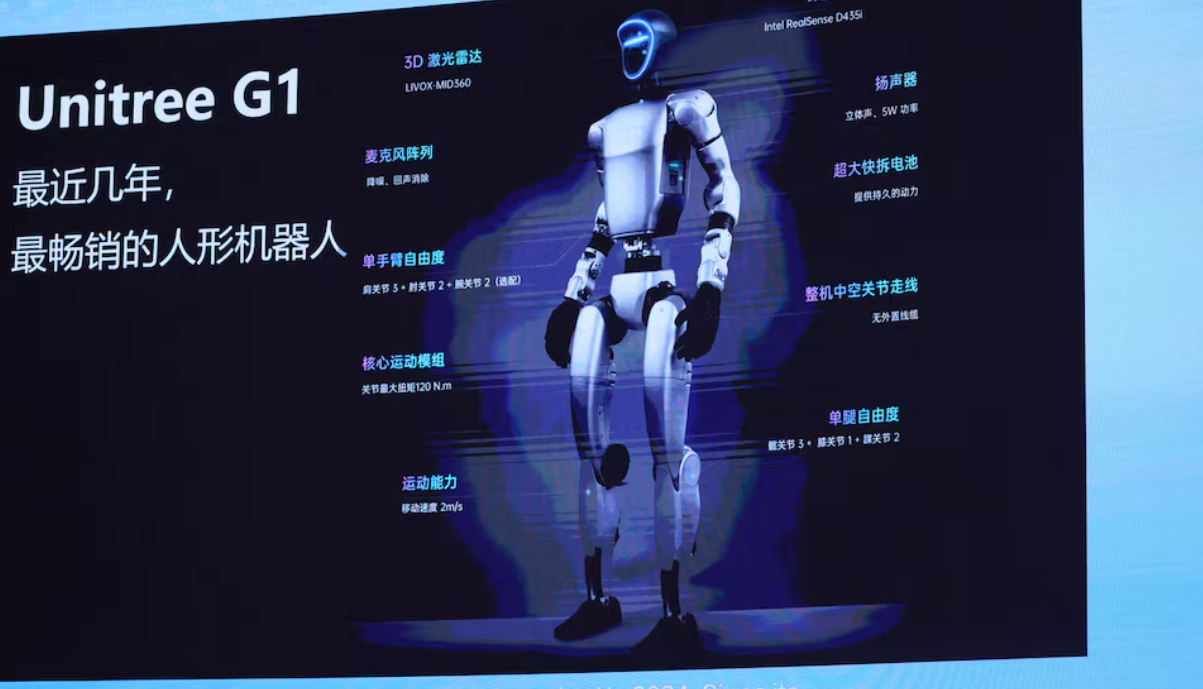
Shares in Unitree, a Chinese manufacturer of humanoid and quadrupedal robots, have fallen by around 45% from their peak following their debut on the Shanghai Stock Exchange, where they initially rose more than fivefold. The sharp reversal in share prices has raised concerns about a bubble in the artificial intelligence and robotics sectors, losses for retail investors and the peculiarities of the Chinese initial public offering (IPO) system.
Briefly about the main points
- Unitree’s share price has fallen by approximately 45% from its post-debut high.
- The company’s peak valuation reached $66 billion, before falling by $30 billion.
- Adjusted net profit in the first quarter fell by 53%.
- Bankers attribute the overheating to limited short selling and expectations of government support.
- The Unitree case could have an impact on future IPOs by Chinese robot manufacturers.
The company’s market value has fluctuated sharply over the course of several trading sessions
At its peak, the market value Unitree reached $66 billion. It then fell by approximately $30 billion. On Tuesday, the shares stabilised after three consecutive sessions of decline.
Chairman of the Beijing-based management company Lingtong Shengtai Dong Baozhen believes that investors have been swept up in the narrative of a technological revolution. He described the initial momentum as a sign of an overheated market rather than an indication of the prosperity of China’s technology sector.
The stock market frenzy outstripped the actual business figures
On the first day of trading, Unitree shares closed 4,60% above the offering price. By way of comparison, the average first-day gain for new listings in China over the past three years was 2,26%.
At the same time, the company’s adjusted net profit in the first quarter of 2026 fell by 53% to 40 million yuan, or 5.95 million dollars, according to Unitree’s prospectus. Its work has attracted attention through demonstrations of running, dancing and martial arts, but broader commercial applications have not yet met with significant success.
Abraham Zhang, chairman of the venture capital firm China Europe Capital, attributed the initial surge not to optimistic business prospects, but to the desire of some shareholders to drive up the price with a view to selling their shares at a later date.
Market participants point to flaws in the IPO mechanism
Chinese stock exchanges not only vet companies applying for listing, but also provide guidance on IPO pricing. According to market participants, this limits banks’ ability to respond to excess demand during placements.
Bankers also cite restrictions on short selling and the widespread belief that regulators will protect retail investors from financial losses as factors contributing to the market overheating. Unitree’s rapid listing on the technology-focused STAR Market was seen by some investors as a sign of state support.
A retail investor who suffered losses on Unitree shares wrote in a blog post that he supports Chinese innovation, but that the rapid accumulation of wealth should not come at the expense of retail investors. Zhang stated that loopholes in the system allow major shareholders to make a profit whilst shifting the risks onto buyers in the secondary market.
Unitree’s debut could set the benchmark for future technology listings
Unitree’s stock market debut was seen as a test for a number of Chinese competitors in the robotics sector who are preparing to list. In the first seven months of the year, 21 companies went public in Shanghai, whilst 104 did so in Hong Kong. Last month, a DRAM manufacturer CXMT rose by 466% on the first day of trading in Shanghai.
Some investors are urging that the robotics sector should not be judged solely on the basis of early-stage profits. A fund manager at China Southern Asset Management Gao Xinkun He pointed out that robot manufacturers are spending heavily on research, whilst large-scale commercial orders have not yet materialised, comparing this stage to the early development of the Chinese electric vehicle market.