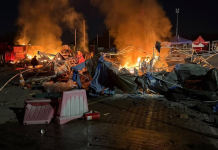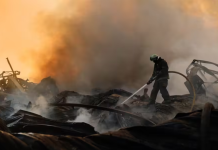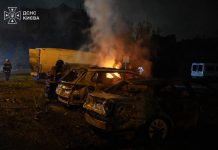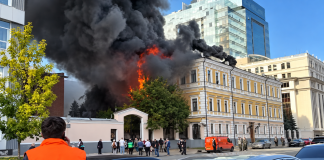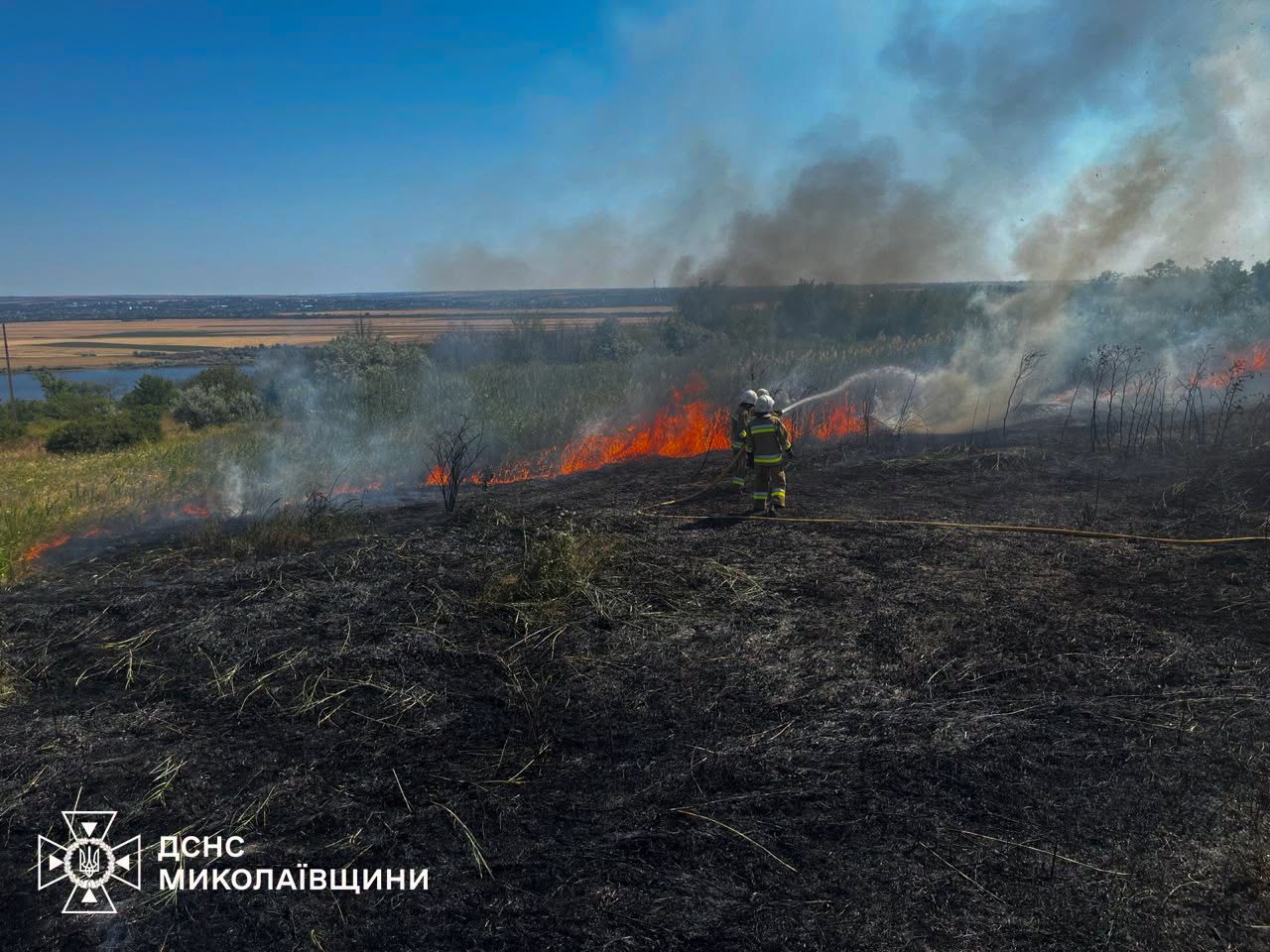
Over the past 24 hours, 220 fires have broken out in ecosystems across Ukraine, affecting almost 118 hectares. More than a thousand firefighters and hundreds of pieces of specialist equipment have been deployed to tackle the blazes.
- Over the past 24 hours, 220 fires have broken out in ecosystems across Ukraine.
- The fire engulfed an area of almost 118 hectares.
- Dry vegetation, fields and wheat crops were on fire.
- Over 1,000 rescue workers and 240 pieces of equipment were deployed to tackle the fire.
- The State Emergency Service is urging the public to follow fire safety rules.
Large-scale fires in Ukraine
Over the past 24 hours, 220 fires have been recorded in ecosystems across Ukraine, affecting almost 118 hectares. The main causes of the fires were human negligence and Russian shelling. In hot and windy weather, even a small fire can spread rapidly, posing a threat to residential buildings, agricultural land and natural ecosystems.
Dry grass, scrub and wheat fields were particularly prone to fire. According to according to the latest figures The State Emergency Service deployed over a thousand rescue workers and around 240 pieces of specialist equipment to tackle the fires. The rescue workers’ main task was to prevent the flames from spreading to built-up areas, fields and private homes.
A call for caution
Rescue workers are reminding members of the public of the need to strictly observe fire safety rules. It is essential not to burn dry vegetation, not to throw cigarette ends or matches onto roadsides or in fields, not to use open flames near crops, and to ensure that agricultural machinery is in good working order. The law provides for administrative liability for the burning of dry vegetation. Fines for members of the public range from 3,060 to 6,120 hryvnias, whilst those for public officials can be as high as 30,600 hryvnias. Within nature reserve areas, the fine can be as high as 12,240 hryvnias.
Why it matters
Through unusually hot weather and with strong winds, the risk of fire in Ukraine remains extremely high. Any careless handling of fire could lead to large-scale fires, crop losses, damage to property and significant environmental damage.