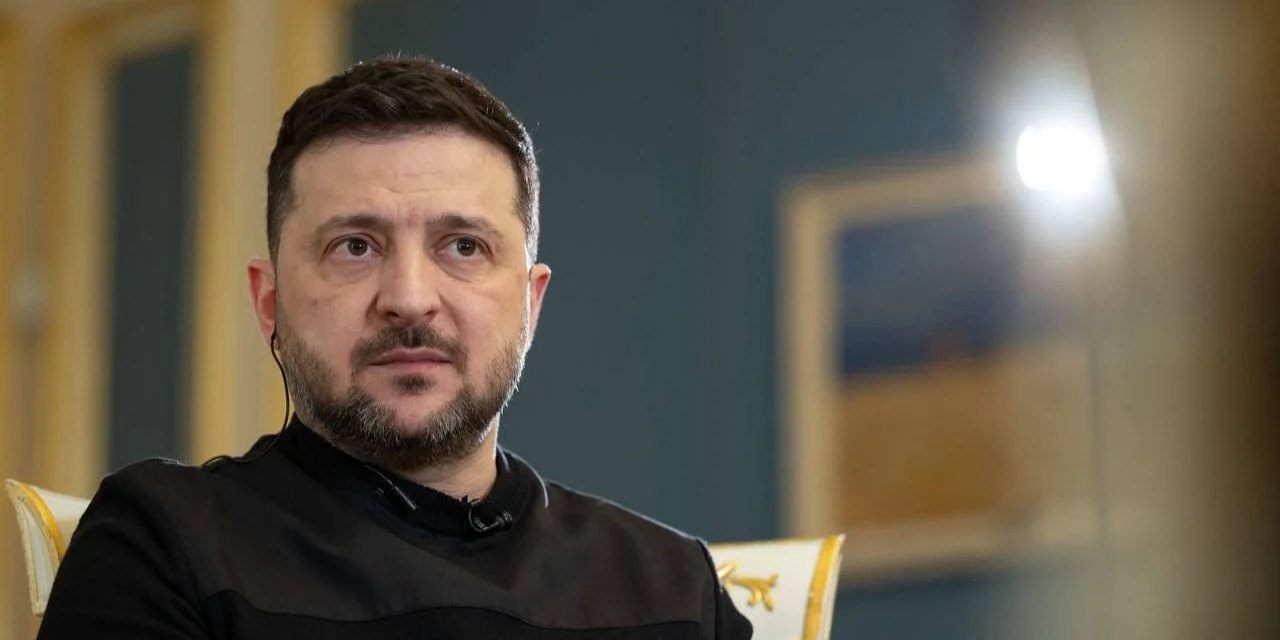
Ukrainian security services have obtained intelligence suggesting that, in September, Vladimir Putin ordered the Russian military leadership to lift the restrictions that had been in place during previous air campaigns against Ukraine. President Volodymyr Zelenskyy made this statement in an interview with the Financial Times, citing, in particular, intercepted communications from Kremlin officials. According to him, the gist of the information received boiled down to the phrase: «there are no rules now».
Briefly about the main points
- Zelenskyy told the FT that Ukrainian intelligence had obtained information about a new order from Putin regarding air strikes.
- According to him, the restrictions that had been in place during previous Russian air campaigns were lifted in September.
- The intelligence includes intercepted communications from Kremlin officials.
- The Kremlin denies deliberately targeting schools and hospitals.
What Zelenskyy told the Financial Times
The President spoke to Financial Times journalists in the shelter of a school in Kyiv, which had been attacked by a Russian jet-powered drone shortly before. According to Zelensky, Ukrainian security services have intercepted information suggesting a change in Moscow’s approach to the air campaign.
Zelenskyy stated that the relevant order Putin allegedly handed over in September, when Russia began to ramp up its military build-up sharply air strikes on Kyiv and other Ukrainian cities. He said that the intelligence included intercepted communications from Russian officials. It was in this context that the president quoted the information received, saying: «There are no rules now.».
The FT interprets Zelenskyy’s remarks as suggesting that the restrictions which the Russian command had adhered to during previous air campaigns have been lifted. However, the publication does not report having independently obtained the text of such an order; therefore, this is specifically the Ukrainian president’s assessment based on Ukrainian intelligence data.
Zelenskyy links the order to a new wave of attacks
According to the president, Russian strikes had previously been largely concentrated on military targets and for energy purposes, whereas the number of attacks on targets in major cities – including schools, healthcare facilities, telecommunications infrastructure and data centres – is now on the rise.
One of the most recent examples was the attack on the school on 1 October in the Solomyanskiy district of Kyiv. There were more than a hundred children in the building at the time, but they managed to get down to the shelter and were unharmed. Reuters confirmed the strike on the school and reported that the building had been damaged.
On the same day, Russian drones attacked the South Bridge across the Dnipro. The strikes caused disruption to the metro and surface transport services, and on 2 October, following further attacks, the Pivdennyi Bridge and the Paton Bridge were closed to traffic, whilst restrictions were imposed on yet another bridge.
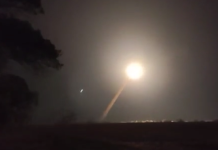
At the end of September, strikes also hit the building of the National Academy of Sciences and a medical facility in Kyiv. The Financial Times had previously reported that the new jet-powered drones are capable of travelling at speeds of up to approximately 600 km/h and pose a significantly greater threat to Ukraine’s air defence systems.
The Kremlin denies carrying out strikes on schools and hospitals
Kremlin spokesman Dmitry Peskov, in response to a question from the FT, stated that the Russian armed forces had allegedly do not carry out attacks on schools or hospitals. Throughout the war, Moscow has consistently claimed that it is targeting only military or military-related targets.
At the same time, attacks on civilian infrastructure have been recorded and the number of civilian casualties continues to rise. The UN Human Rights Monitoring Mission reported that between January and August 2026, the number of people killed in Ukraine was 2,222 civilians, more 13,058 were wounded. This is 55% more than in the corresponding period of 2025, and more than double the figure for the same period in 2024.
In August, it was long-range missiles and drones that were the main cause of civilian casualties: they accounted for 47% of all those killed and wounded that month. Most of these casualties were recorded far from the front line — in town centres.
The aim is to step up pressure on the rear, according to Zelenskyy
Zelenskyy believes that the intensification of the attacks is not solely for military purposes. In his view, Moscow is attempting to exert constant psychological pressure on the population, disrupt the normal functioning of major cities and force Ukraine to devote ever more resources to defending its rear.
This is taking place against a backdrop of limited changes across much of the front line and a simultaneous intensification of Russia’s air campaign. High-speed jet-powered drones have posed a particular problem for Ukraine, as the existing low-cost interceptor drones are not always effective against them. Ukrainian manufacturers are now rapidly developing new interception systems, but scaling up production is hampered by shortages of components and funding.
Zelenskyy has called on the West to step up pressure on Moscow
In an interview with the FT, the president also criticised the response of the US and European partners, stating that, in his view, there was insufficient political will to force the Kremlin to change course. He called for increased military support for Ukraine and for the delivery of air defence systems to be speeded up.
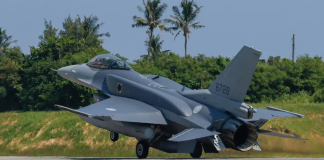
Zelenskyy identified the provision of services to Ukrainians as a separate issue F-16. According to him, the aircraft have proved effective against the new Russian jet drones; however, a significant proportion of the fighter jets have been undergoing repairs and maintenance outside Ukraine for some time. Kyiv is seeking to bring as much of this work as possible back into the country so that the air force can be returned to combat duty more quickly.
Consequently, the claim that Putin ordered «all restrictions to be lifted» is currently based on Ukrainian intelligence reports, which Zelenskyy disclosed to the Financial Times. It is not yet possible to independently verify the order itself. At the same time, international media and the UN Monitoring Mission have recorded a sharp increase in the number of long-range attacks and strikes on civilian targets in major cities.