Russia's massive attack on Kyiv on 24 May was one of the most dangerous in the history of the full-scale war. More than 90 missiles, hundreds of drones, and the alleged use of an Oreshnik missile marked a new level of escalation by the Kremlin. According to Ukrainian officials, the strike on Kyiv region had not only a military but also a psychological purpose - to intimidate Ukraine and the world by demonstrating Russia's missile capabilities.
Massive attack on Kyiv: what happened
On the night of 24 May, Russia carried out one of the largest-scale combined attacks in Ukraine. The main impact was on Kyiv and Kyiv region. According to official figures, the enemy used more than 90 missiles of various types and about 600 attack drones.
Residential buildings, schools, a market, shopping centres and critical infrastructure were hit. Dozens of fires broke out in the capital, and the buildings of the Ministry of Foreign Affairs and the State Emergency Service were damaged, Chernobyl Museum«, residential areas and administrative facilities.
Particular attention was drawn to the information about the launch of an Oreshnik missile in the direction of Bila Tserkva. Adviser to the Minister of Defence Serhiy Sternenko said that Russia had used a nuclear missile without a warhead as an instrument of psychological pressure.
What is the Oreshnik missile?«
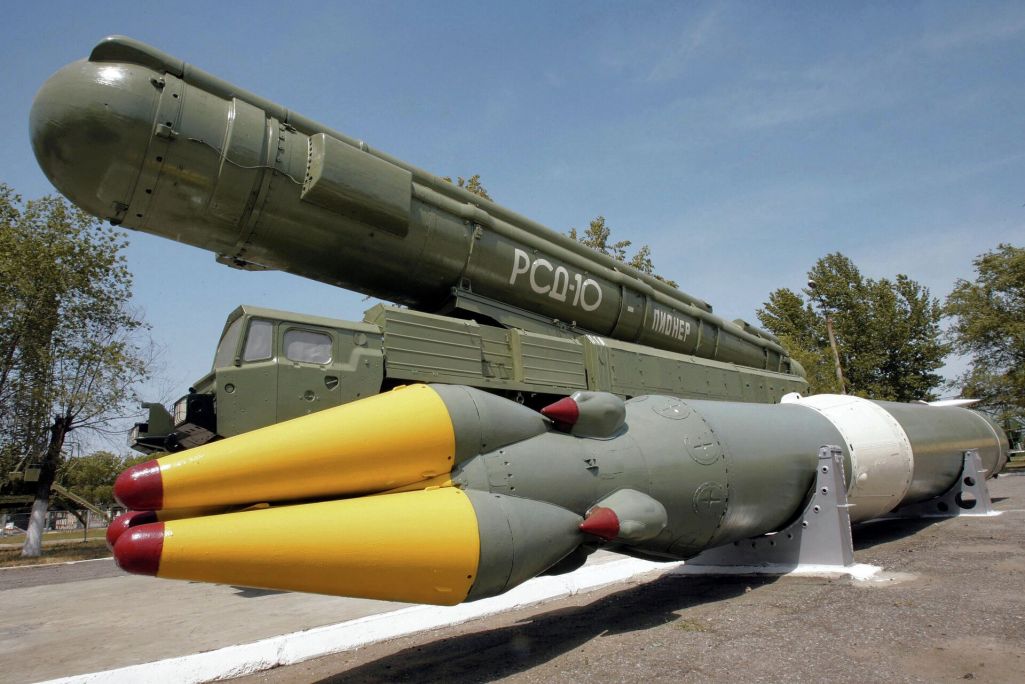
«Oreshnik»is a new generation of Russian intermediate-range ballistic missile, the existence of which was actively discussed after a series of tests and statements by the Kremlin in 2025-2026.
According to military analysts, the missile can be built on the basis of intercontinental system technologies with adaptation for medium-range strikes. Its main feature is its high flight speed and the ability to use separate warheads.
Main characteristics of «Oreshnik»
| Characteristics | «Oreshnik» |
|---|---|
| Type | Intermediate-range ballistic missile |
| Range | Up to 5000 km (estimates) |
| Speed | More than 10 Machs |
| Type of launch | Mobile launcher |
| Combat unit | Conventional or potentially nuclear |
| Features. | Division into several combat units |
| Purpose | Defeat of strategic goals |
Due to their hypersonic speed and altitude, such missiles are extremely difficult to intercept even with modern air defence systems.
How Oreshnik differs from Kinzhal and Iskander«
Russia has long been using missiles «Dagger»and Iskander, but Oreshnik has a different concept of application.
| Rocket | Type | Range | Speed | Main role |
|---|---|---|---|---|
| «Iskander-M» | Ballistic | Up to 500 km | Up to 7 Mach | A blow to the front |
| «Dagger» | Aeroballistic | Up to 2000 km | Up to 10 Mach | Damage to important facilities |
| «Oreshnik» | Medium-range ballistic missile | Up to 5000 km | 10+ Machs | Strategic pressure and intimidation |
Unlike Iskander, which is used primarily for tactical strikes near the front, Oreshnik is more global in nature. Its launch is not only an attack, but also a demonstration of a potential threat to other countries.
Why the launch of Oreshnik is dangerous for the world
President Volodymyr Zelenskyy said that the use of this class of missile sets a dangerous precedent for international security. If Russia begins to use such weapons regularly, it could encourage a new missile arms race.
Of particular concern is the fact that Russia has already deployed some of these systems in Belarus, close to the border NATO. This changes the security balance in Eastern Europe and increases the risks for Poland, Lithuania and Latvia.
In fact, the Kremlin is trying to use missile strikes not only as a military tool but also as an element of global blackmail.
Terror of civilian infrastructure as a strategy of the Russian Federation
During the attacks on Kyiv Russia targeted schools, residential buildings, markets, museums and government offices. This once again demonstrates that civilian infrastructure remains one of the main targets of Russian strikes.
The damage to the Chornobyl Museum and the building of the Ukrainian Foreign Ministry was particularly significant. In the centre of Kyiv, historical buildings that had survived even the Second World War were damaged.
This tactic has several goals:
- creating panic among the population;
- psychological pressure;
- destruction of critical infrastructure;
- destabilisation of government agencies;
- information effect for Russia's domestic propaganda.
How Ukraine responds to new threats
Ukrainian air defences shot down over 600 air targets during the latest attack. This is one of the best figures for the entire war. However, even modern systems Patriot and NASAMS have restrictions against new types of ballistic and hypersonic missiles.
In response, Ukraine is intensifying its own long-range weapons programmes and developing new drones and missiles. Special emphasis is placed on strikes against Russian logistics, oil infrastructure and military bases.
At the same time, Kyiv is calling on the West to speed up the transfer of additional air defence systems and to strengthen sanctions against the Russian military-industrial complex.
Why it matters
The launch of the Oreshnik in the Kyiv region was not only another stage in the escalation of the war, but also a signal to the whole world. Russia is demonstrating its willingness to use increasingly dangerous types of weapons to exert psychological and military pressure.
The strike on the capital, the destruction of civilian infrastructure and attacks on historical sites show that the Kremlin continues its missile terror tactics. At the same time, the effective operation of Ukraine's air defences and the growth of Ukraine's long-range capabilities indicate that the balance in the war is gradually changing.