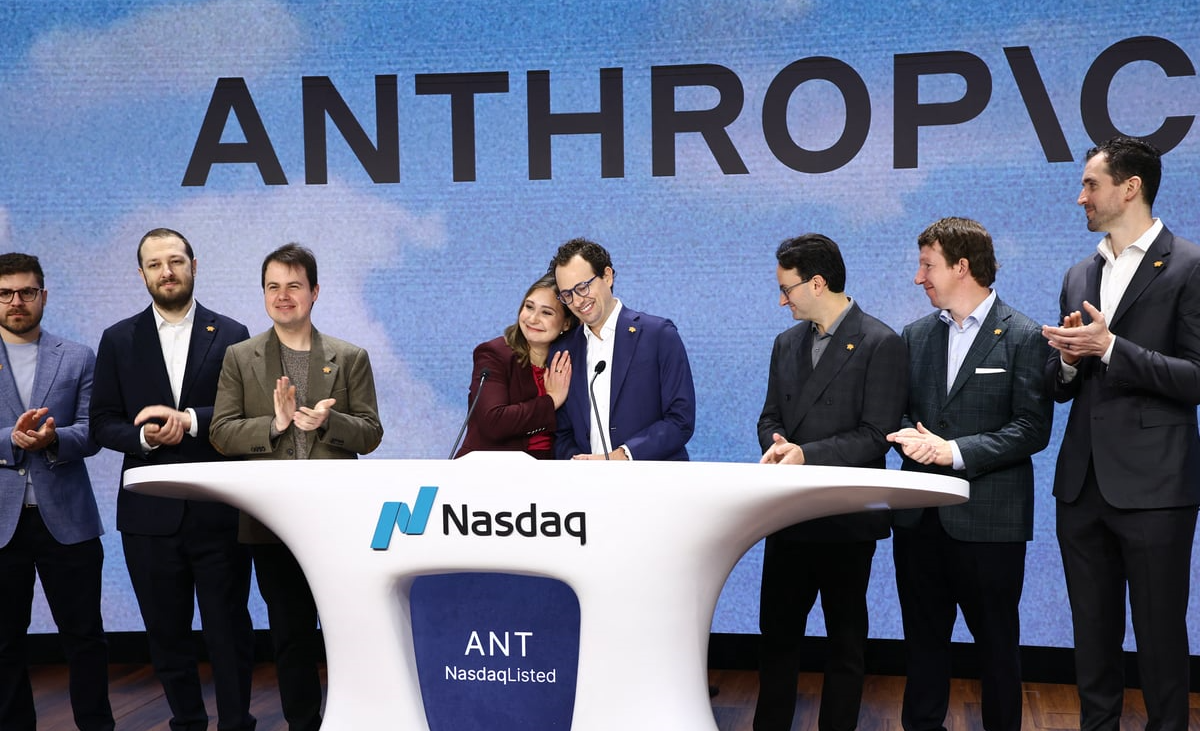
The American company Anthropic, developer of the artificial intelligence system Claude, saw its shares rise by 17 per cent on their first day of trading on the Nasdaq stock exchange. At the start of trading on 19 November, the company’s fully diluted valuation reached $2 trillion, and its initial public offering became the largest in stock market history.
Key points at a glance:
- Anthropic has carried out the largest initial public offering in history.
- The total value of the company’s share placement amounted to 81.3 billion dollars.
- At the start of trading, the valuation of the developer Claude reached two trillion dollars.
- Anthropic shares closed their first day of trading up 17 per cent.
How did Anthropic’s first day of trading go?
The company’s shares began trading on Nasdaq under the ticker symbol ANT at a price of $111.50. This is 34 per cent higher than the price of $83 set at the time of the IPO.
During the trading session, the share price corrected, and at the close of trading, the price per share stood at $97.17.
| Tender stage | Share price |
|---|---|
| IPO price | $83 |
| Opening of trading | $111,50 |
| Market close | $97,17 |
The day before, Anthropic held record-breaking IPO, the total value of which amounted to $81.3 billion.
How much is Anthropic worth at the moment?
At the close of the first trading session, Anthropic’s fully diluted valuation stood at around $1.77 trillion. This figure takes into account not only the shares in issue but also potential shares arising from the relevant financial instruments.
Market capitalisation, based on the number of shares actually issued, stood at approximately $1.3 trillion.
A total of 980 million shares were sold as part of the IPO. Approximately $79.4 billion was raised from the sale of shares by the company itself, before expenses; the remainder came from the sale of shares by existing shareholders.
The historic IPO did not halt the decline in the technology market
Despite a successful debut Anthropic, investors continue to scale back their investments in technology companies due to concerns about the massive costs involved in developing artificial intelligence.
On 20 November, Asian stock markets continued to fall and were on course for their worst weekly performance since 2020.