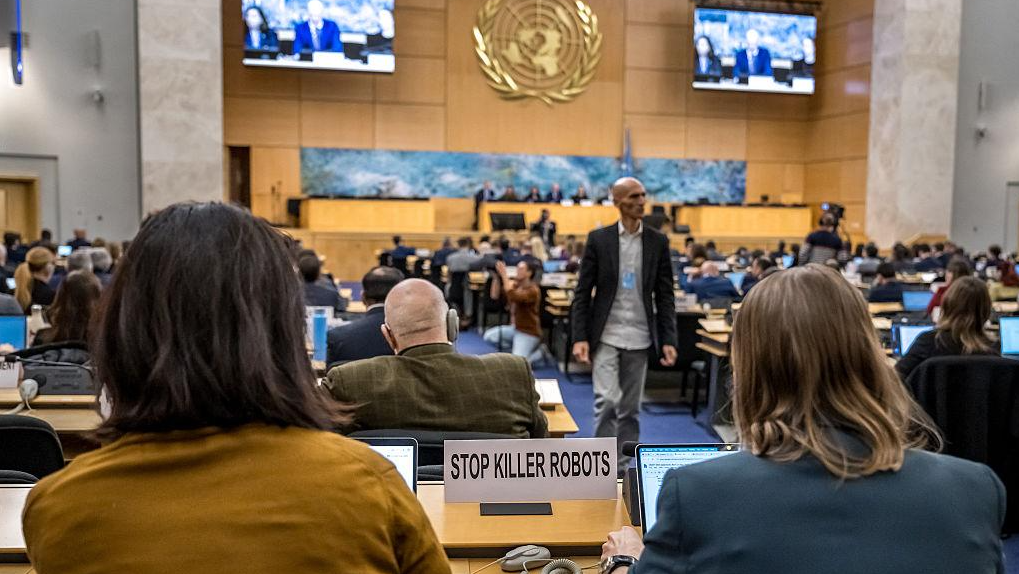
The countries participating in the UN conference in Geneva have agreed to continue negotiations on the international regulation of autonomous combat systems capable of independently identifying and engaging targets. The new rules are due to be drawn up by 2028; however, due to Russia’s objections, the participants were unable to agree on when to begin negotiations on a legally binding document.
- The UN will continue negotiations on the international regulation of autonomous combat systems.
- New rules governing the use of autonomous weapons are set to be drawn up by 2028.
- Russia has opposed the introduction of stricter international arms controls.
- The states have not yet agreed on the drafting of a legally binding international instrument.
Why do countries want to restrict autonomous weapons?
Representatives from 128 states party to the Convention on Certain Conventional Weapons took part in the negotiations. The Convention regulates the use of weapons capable of causing excessive suffering or having indiscriminate effects.
The rapid proliferation of military technologies incorporating artificial intelligence has provided the impetus for intensifying negotiations. Systems with varying degrees of autonomy are already being used in combat operations in Ukraine, Sudan and the Middle East.
Recently. The US Army has tested a system for the mass launch of attack drones from a ground-based robotic platform.
Russia is obstructing the introduction of restrictions
Around a hundred countries supported the idea of drawing up legally binding rules, but resistance from certain countries prevented a decision from being reached.
The consent of all 128 states is required for the adoption of documents under the convention. As a result, even a single country can block a decision supported by the majority of participants. Human rights organisations have already proposed exploring the possibility of holding negotiations outside the current framework.
Which weapons are referred to as «killer robots»?»
These are combat systems which, once activated, are capable of selecting and engaging targets without any further command from an operator. These may include unmanned aerial vehicles, ground-based platforms and other types of weaponry.
The key question is to what extent the military can delegate decisions on the use of lethal force to machines. Human rights campaigners insist on maintaining human control and establishing a clear mechanism for accountability in the event of mistaken strikes.