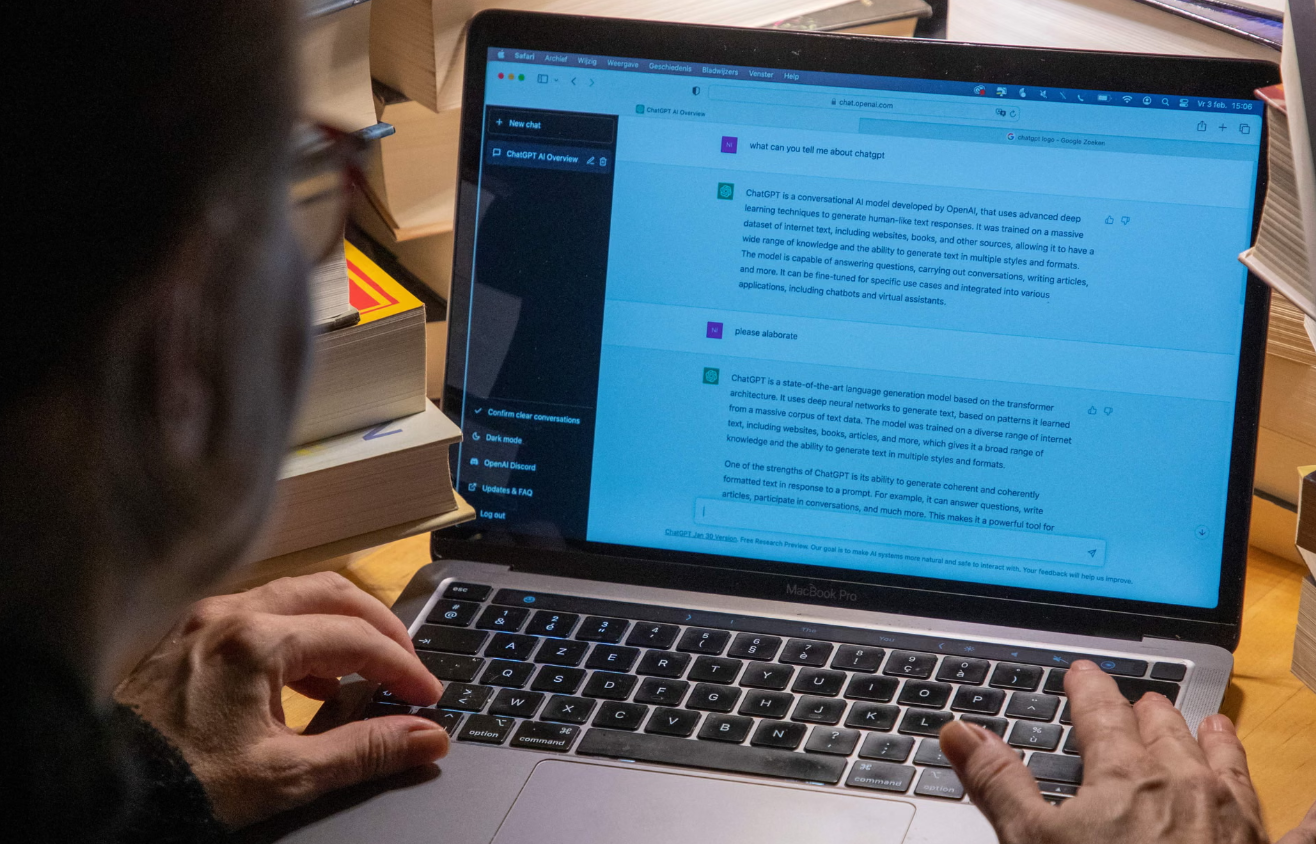
A study by the Massachusetts Institute of Technology has shown that over-reliance on chatbots such as ChatGPT and Claude reduces people’s ability to think critically and spot disinformation. During a month-long experiment, participants were better able to spot fake news with the help of artificial intelligence, but their ability to analyse information independently deteriorated. The findings have important implications for education and society as a whole.
- An MIT study has shown that overuse of chatbots impairs critical thinking skills.
- During the experiment, the AI helped participants to recognise fake news more effectively, but over time, the participants performed the task less well without its assistance.
- AI tools often provide an accurate answer, but do not help to develop analytical skills.
- A quarter of the participants believed that their skills were improving, even though this was not the case.
- Researchers emphasise the importance of integrating AI that fosters critical thinking, particularly in education.
The impact of chatbots on critical thinking
MIT research, which took place over four weeks, involved 67 participants who assessed the authenticity of pairs of news headlines and images. The use of chatbots Based on GPT-4 and integrated with Google Search, it helped to flag signs of misinformation, which improved the accuracy of determining the veracity of information by 21%. At the same time, when participants worked without AI assistance, their ability to spot errors deteriorated by 15.3% by the end of the experiment.
This paradox suggests that, whilst AI improves short-term results, over-reliance on it reduces one’s capacity for independent analysis and critical thinking.
The risks of cognitive dependence on AI
The researchers noted that chatbots often provide unambiguous, clear answers, which encourages users to trust the system unquestioningly. Around 25% of the participants believed that their skills were improving, despite a real decline in their performance. This phenomenon is similar to the effect previously observed with calculators or GPS devices, which can diminish natural cognitive abilities.
The authors emphasise that the style of AI interaction is of great importance: more interactive, thought-provoking approaches to learning can stimulate the development of critical thinking more than simple instructions or answers.
Implications for education and public information literacy
Given the rapid spread of disinformation in the news, medical data and political statements, society’s ability to analyse information independently is becoming critical. Scientists are calling on educators to consider the risks of over-reliance on AI in teaching and to introduce tools that not only facilitate access to facts but also develop analytical skills.
The study’s limitations include a relatively small sample size and a focus on participants from the US and the UK, which calls for further research in more diverse cultural and educational contexts.
Prospects for further research
The authors emphasise the need for long-term studies that track the impact of AI use on critical thinking over a period of more than a few weeks. This will help to better understand whether the trend towards a decline in independent analysis persists over time and how technologies can be adapted to support users’ cognitive development.
“As AI becomes more complex, it is important to ensure that these tools foster critical thinking rather than cognitive dependence,” the authors of the study emphasise.