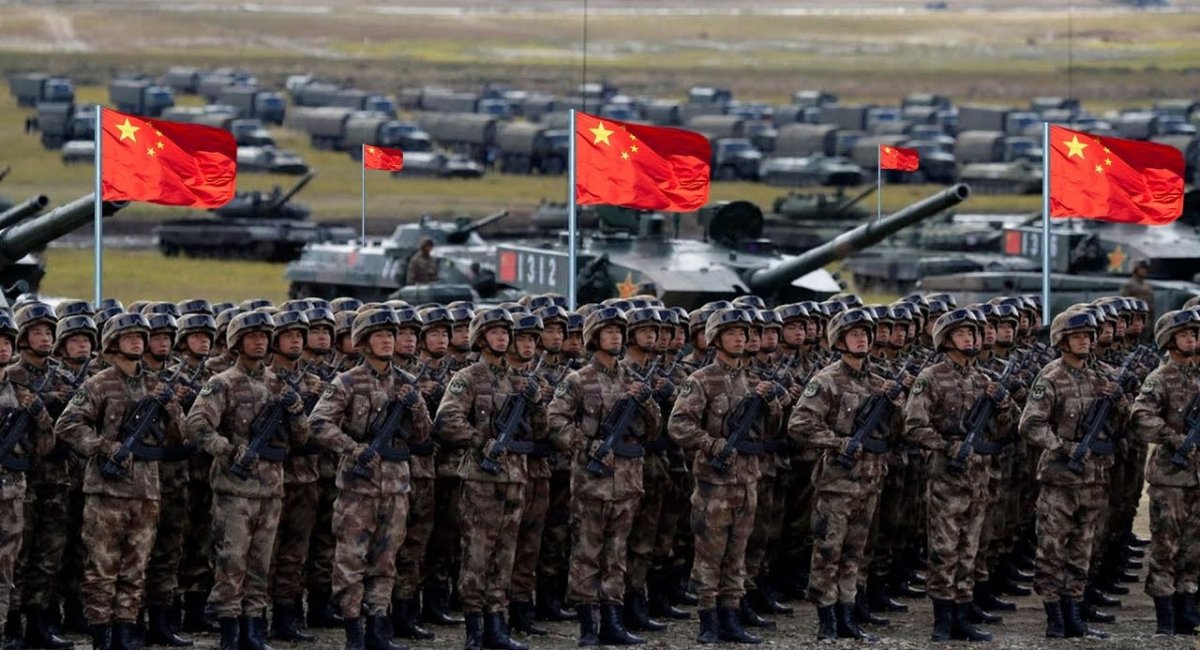
From 1 October 2026, China will introduce a new version of the National Defence Mobilisation Law — the first major revision of the legislation since its adoption in 2010. The law establishes more modern mechanisms for mobilising the economy, infrastructure, technology and human resources for defence in the event of a crisis or war; however, it does not constitute a decision to commence mobilisation or military operations.
Briefly about the main points
- The new law of the People’s Republic of China will come into force on 1 October 2026.
- The document updates the rules governing the transition from peacetime to wartime.
- Civilian property and infrastructure may be utilised subject to a separate decision.
- Businesses must fulfil some of the preparatory requirements in peacetime.
- Separate decisions by state bodies are required for actual mobilisation.
The document defines mobilisation as a rapid transition between peacetime and wartime
The Standing Committee of the National People’s Congress of China approved the new version on 28 August. It comprises 14 chapters and 82 articles.
The law explicitly defines defence mobilisation as a set of measures designed to facilitate a rapid transition between peacetime and wartime. Its aim is to transform the country’s economic and social potential into defence capabilities in the event of a threat to China’s sovereignty, territorial integrity, security or development interests.
It was precisely this emphasis on the coordinated use of not only military but also civilian capabilities that caught the attention of the foreign media and military analysts. Nikkei interpreted the changes as a strengthening of Beijing’s ability to control infrastructure and resources in the event of a large-scale conflict.
Local authorities will be able to temporarily requisition property when reserves are insufficient
Following an official decision on mobilisation, local authorities will be able to requisition or temporarily use civilian resources if state reserves prove insufficient. This applies to the property of citizens and organisations.
The law requires that requisitioned property be registered, returned after use, and that compensation be paid for any damage or loss. Essential items and citizens’ homes fall into categories that must not be requisitioned.
The legal mechanism for requisitioning existed in the previous version of the law as well. The current reform does not introduce it from scratch, but rather expands and modernises the procedure for its application.
- Vehicles and equipment
- Buildings, premises and production facilities
- Infrastructure and other resources of citizens and organisations
Special measures may affect transport, energy, communications and finance
In the event of a defence mobilisation, the authorities may introduce special operating arrangements in the financial sector, transport, postal services, telecommunications, information networks, radio communications, the energy sector, water supply, healthcare, food supply, trade and the media.
The law also permits restrictions on the movement of people and transport, the placement of businesses under special operating procedures, and the priority use of transport infrastructure by the armed forces. Consequently, the mobilisation model encompasses not only conscription but also the deployment of the economy and civilian infrastructure for defence purposes.
Businesses can build up reserves, whilst the system incorporates data and technology
Certain mobilisation obligations for organisations and citizens will remain in force even in peacetime. Enterprises may be required to build up production reserves, stockpile strategic materials, train specialists and maintain readiness to manufacture or repair defence-related products.
Failure to comply with the requirements will result in enforcement measures and fines. In the new version, compared with the 2010 Act, greater emphasis is placed on cutting-edge technologies, new sectors and the state system for handling data required for mobilisation.
Analysts at the Polish Centre for Eastern Studies (OSW) point out that the changes encompass technological and digital assets, supply chains and economic resources. This broadens the potential role of technology companies within the mobilisation system.
The tensions surrounding Taiwan provide the backdrop, but launching a mobilisation requires a separate decision
Legislative amendments are being considered in the context of tensions surrounding Taiwan. In Taiwan, these changes are seen as one of the measures that could enhance the PRC’s ability to sustain a protracted conflict and rapidly divert civilian resources to military needs. At the same time, OSW sees no sufficient grounds to link the law’s entry into force with preparations for a specific offensive in the near future.
A nationwide or partial mobilisation requires a separate decision by the Standing Committee of the National People’s Congress, following which the President of the People’s Republic of China issues a mobilisation decree. In the event of an immediate threat, the State Council and the Central Military Council may implement specific measures, with subsequent notification to the legislature.