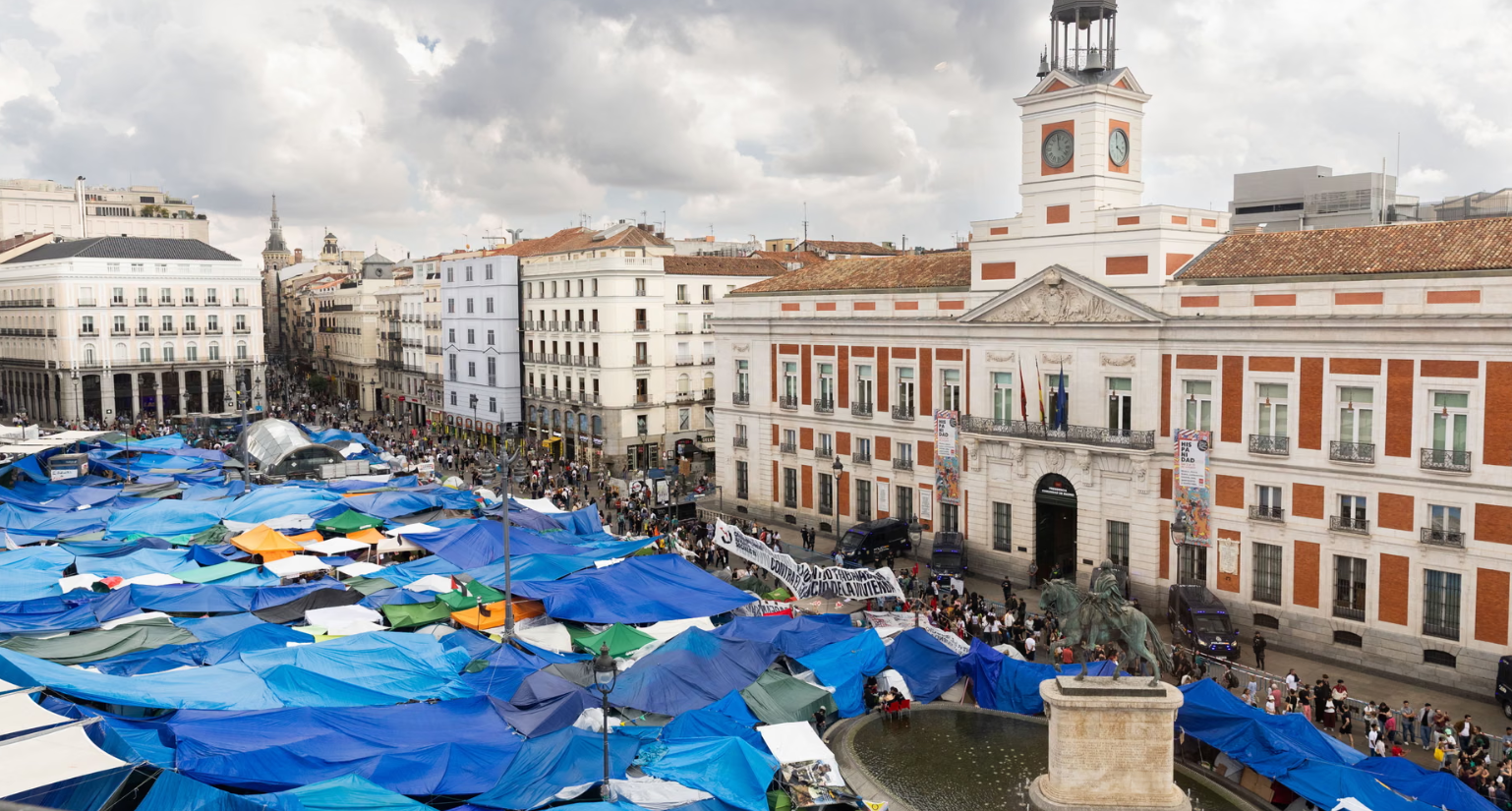
On 2 October, the Spanish Parliament rejected two housing decrees proposed by Pedro Sánchez’s Socialist government. According to The Guardian and the Associated Press, the conservative People’s Party, the far-right Vox and the Catalan party Junts voted against both measures; the vote took place against a backdrop of protests over high rents.
Briefly about the main points
- The Spanish Parliament has rejected two government decrees on housing.
- The proposed regulations have not come into force.
- The People’s Party has called for more active construction rather than new restrictions.
- The protests intensified following the eviction of an 87-year-old woman living in Madrid.
Which proposals did Parliament not support?
Government The package was intended to strengthen protection for vulnerable tenants against eviction, to curb certain speculative practices and to provide tax incentives for long-term tenancies. Among the proposals were the extension of eviction bans by 2030 and the regulation of short-term and room-by-room lettings.
The second decree contained a mechanism for the automatic renewal of a residential tenancy agreement at the tenant’s request. As both documents were rejected, these provisions did not become law.
The People’s Party explained its position by stating that, in its view, housing affordability should be improved primarily by increasing construction, rather than through new market regulations.
An eviction in Madrid sparked the protests
A new wave of protests gained momentum following the eviction, on 23 September, of an 87-year-old woman Maricarmen Abascal from her flat in Madrid, where she has lived for around 70 years. The woman uses a wheelchair; she says she was unable to pay the rent increase of 230% proposed by the property management company.
Following public and political pressure, the company announced that Abascal would be able to return to his flat. In our previous article Ukrmedia It was stated that her rent should not exceed 30% of her income.
According to a 40dB survey conducted for Cadena SER and El País, around two-thirds of respondents supported price caps on housing, whilst 84% described the housing crisis as a problem. This is the result of a specific survey and does not reflect the views of the entire population.
High house prices and political uncertainty
Sources agree that the cost of renting and buying property in Spain has risen significantly over the last decade, although the specific figures vary depending on the methodology and the period covered. According to figures from the Spanish Youth Council, published in May based on data from the end of 2025, the average rent for young people living on their own was 1,176 euros per month — 98.7% of a young person’s average salary.
El País attributes the crisis to a simultaneous rise in demand, the proliferation of holiday accommodation and the insufficient pace of new construction. The publication noted that in 2025, around 91,000 homes were completed in the country — fewer than the number of new households formed.
Following the parliamentary defeat, the government’s measures did not come into force. elDiario, citing government sources, reported that Sánchez was considering the possibility of a snap election, specifically on 29 November, although no decision to call one had been announced at that stage.