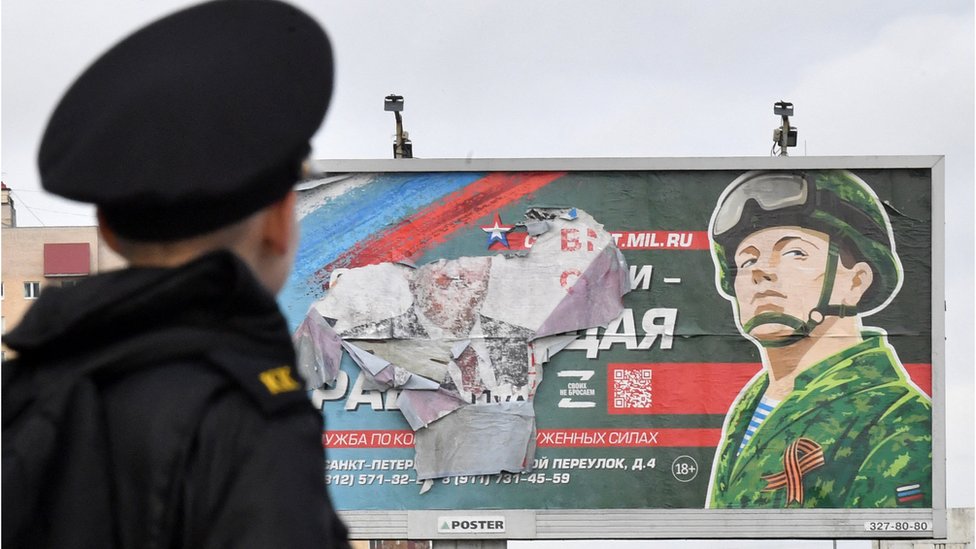
Independent Russian media outlets report that the Russian authorities have been preparing the infrastructure for several months in anticipation of a possible large-scale military mobilisation in the autumn of 2026. Sources cite October, following the State Duma elections, as one of the likely dates. However, no decision on a new mobilisation has yet been taken, and the figure of 800,000 conscripts has not been independently confirmed.
Briefly about the main points
- Russian media are reporting that preparations for the new recruitment drive have been underway for several months.
- Tens of thousands of people can be enrolled at the same time for accelerated learning.
- Contract recruitment in the Russian Federation is slowing down, and the estimated losses exceed the number of new recruits.
- The figure of 800,000 is linked to Russian forces in Ukraine, rather than to mobilisation.
- The autumn conscription period runs from October to December.
What scenarios for replenishment is the Kremlin considering?
«In late June, *Verstka* and *Vazhnye Istorii*, citing sources within the Russian President’s administration, military recruitment offices and a source close to the FSB, reported on discussions regarding various ways of bolstering the army. These included a new wave of mobilisation.
According to sources, preparations have been underway for several months. Training grounds, transport and logistics must be ready to accommodate large groups of people, train them quickly and deploy them in batches to active units.
Other options included «gradual mobilisation», rotation using reservists, and stricter recruitment methods should there be a shortage of volunteers.
Contract recruitment does not make up for the estimated losses
According to «Vazhnye Istorii», 71,200 people received payments for signing a contract with the Russian Ministry of Defence in the first quarter of 2026. This is approximately 20% fewer than during the same period last year.
In Moscow, the influx of new contract soldiers fell by about a third in the spring, according to *Verstka*: in April, the city sent 1,708 people, and in May, 1,378. The downward trend continued in June.
According to widely accepted estimates, Russia deployed around 221,000 people to the war in the first seven months of the year, whilst casualties during this period were estimated at approximately 226,000. Given this ratio, the number of recruits is insufficient to bring about a significant build-up of forces.
Regions are finding it increasingly difficult to pay bonuses to contract workers
Russian regions had previously attempted to speed up recruitment by offering large one-off contract payments. However, these incentives are becoming increasingly ineffective in securing the influx of personnel the Kremlin requires.
According to the Russian Federation’s Audit Chamber, 56 regions ran budget deficits in the first quarter of 2026, with their combined deficit reaching 294 billion roubles — almost double the figure from a year earlier. Some regions had already begun cutting their own allowances for contract soldiers.
Under such circumstances, compulsory replenishment mechanisms may be cheaper for the Kremlin than further increases in payments to each new contract soldier.
Why does 800,000 not mean a plan to mobilise that many people?
At the end of July Vladimir Putin has increased for the third time since the start of the year authorised strength The Russian Armed Forces number up to 2,426,130 personnel, of whom 1,535,000 are military personnel. This figure does not correspond to the number of forces deployed in the war against Ukraine.
The Commander-in-Chief of the Armed Forces of Ukraine, Oleksandr Syrskyi, previously stated that the Kremlin plans to recruit a further 409,000 troops during 2026, in order to bring the size of the Russian force in Ukraine to around 800,000.
Therefore, the frequently cited figure of 800,000 may derive from an estimate of the target total strength of this group, rather than indicating the simultaneous recruitment of that number of new conscripts.
October is associated with the autumn conscription drive
Sources most often cite October 2026 as a possible date. This follows on from the planned elections to the State Duma and coincides with the start of the autumn conscription period.
Conscription procedures in Russia are formally carried out throughout the year, but in the autumn, conscripts are sent to the armed forces between 1 October and 31 December. According to independent media reports, the system is preparing to enrol tens of thousands of people at the same time.
If the Kremlin opts for this scenario, it may deploy reservists, compulsory contracts or other measures, whilst avoiding the very word «mobilisation». There is currently no confirmation that a decision has been taken to recruit 800,000 people.